

Route: Highway 17 to Kaohsiung
Distance: 158 miles / 254 kilometers
Time: 9:11:21
Average Speed: 17.1mph / 27.5 kph
Wind: NW / South
The original plan had been a Paris-Roubaix tribute ride in honor of the Spring Classics. I decided I should do a ride of a similar length and flat terrain. Kaohsiung was the perfect destination. I was sold on the idea and made it my project for April.

"Fuck, I'm going to Kaohsiung!" I said aloud as I was only about 300 meters from my front door. The streets were still wet and I could feel a tenderness in my upper calf muscle, an overuse injury from a month of preparation. I had on my yellow backpack full of granola bars, bananas, a light change of clothes, cash, bike bag, peanuts, cranberries, Tylenol, Benadryl and a back-up mini-pump in case my CO2 cartridges failed again. I was wearing a new set of Assos bibs and rolling on new tires. I had been far more focused the week before, but the injury had filled my head with doubt. "Kaohsiung, fuck!", I growled under my breath.

The Coast
I was feeling fast and I had refreshed the ipod with enough new songs to keep me pleasantly surprised. Everything seemed to be moving in fast motion. This was the third time I had taken this route in a month and all the familiar landmarks were passing by sooner than anticipated.
As I hit the bridge to Changhua around 6:30am, the foggy morning light erupted with a loud ripping noise. I looked around to see what was going on. Off to my right a giant plume of white smoke billowed up from behind the river. About three dozen green and white flashes filled the sky. "Now I have to do it, if they're letting off rockets for me", I thought to myself. It was too perfect.

I am sure there is a way to interpret good luck into this... there always is.
I made excellent time to Lukang and I was in Yunlin County about the time I started waking up. The sun never really came out and it was one of those days that was perpetually morning... and felt like it. Everything was spinning so well my speed remained steady hovering between 34 and 36kph (21-23mph). I kept trying to dial it back as it was going to be a long day, but it just wasn't in my comfort zone so I just let my body tell me what speed was right. Every hour or so I would stick food in my mouth, but I really didn't want to eat anything.
Wetlands
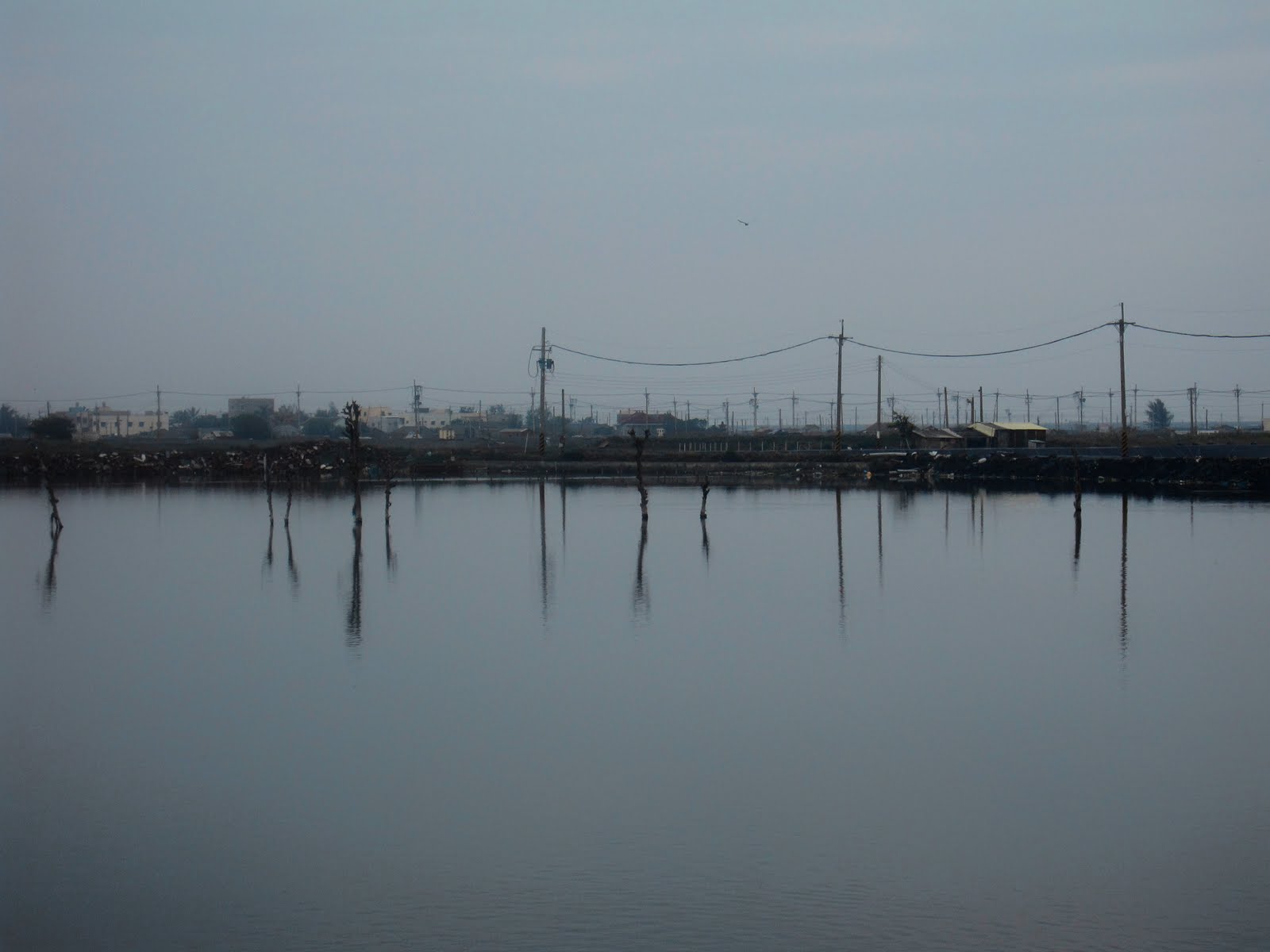
The area south of Mailiao is a wasteland of dilapidated concrete and brick buildings, used and disused fish and oyster pools, makeshift talking bars, and unfinished mega-temples. I don't recall seeing a single finished temple without huge sections of exposed concrete. The streets are lined with bales and stacks of grey and white oyster shells. Most of these small towns appeared to only be inhabited by little men with pipe-cleaner builds, oversized shorts and a limp. The coast of Taiwan seems to be where all the rough edges from all of Taiwan are collected and neglected. The townships and counties just throw a plastic tarp over these places and wish them away. There are few gas stations or convenience stores, so if you want to take this route be sure to bring extra water and food.


Fishermen
Every bridge doubled as a fishing platform and there was no shortage of folks relaxing in the roadway waiting for their catch. I was still keeping my speed up but my leg injury flared up as I had feared. The area behind my calf was in pain and an occasional shock of pain would shoot through my knee. I changed my foot position to the most comfortable position to pedal without aggravating my injury. I pointed my toe down slightly and managed the ache as well as I could. My mind raced for escape routes and I decided the best one would be the HSR station in Kaohsiung. A little nagging soreness wouldn't be enough to slow me down.

Southbound and Down, Loaded up and Truckin'
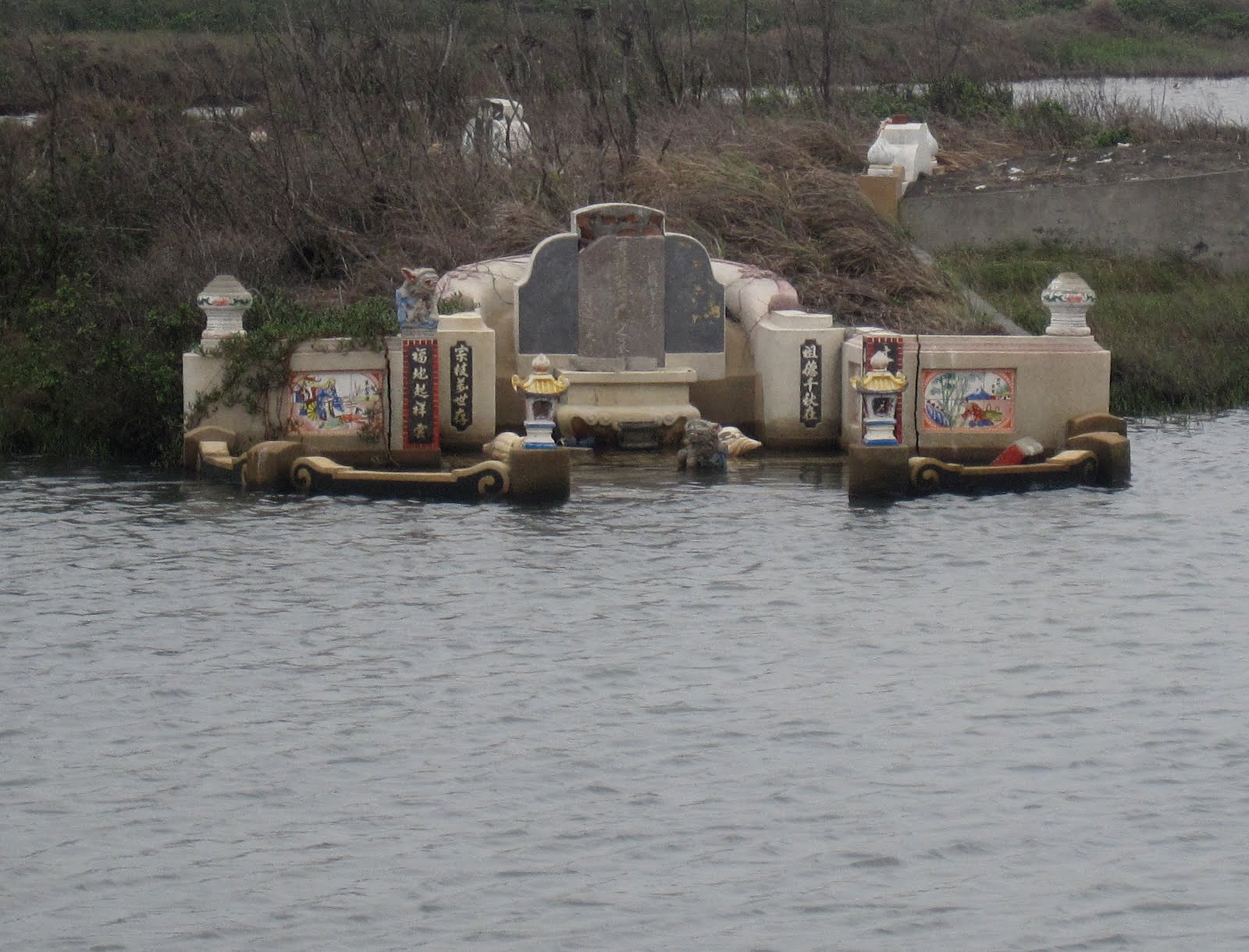
I was soon on top of my fastest century ride to date. I hit 100 miles in 4.9 riding hours and about 6 hours total. I was in Tainan county by 12:00pm. The scenery was still a desolate collection of mud puddles and brown wetlands. Between townships an occasional canal would creep inland to give me a bridge to cross or a little hill to climb. The most interesting part of Tainan county were the shrines along the road (which I didn't get a picture of). Many of the people who live along the southern coast are the ancestors of plains aborigines and they have incorporated many of their traditional religious practices into contemporary life. These ex-aborigines may not know their beliefs have a root in Austronesian Taiwan, but if you take a closer look at these shrines you will notice how different they are from Hoklo style shrines.

Canals
My neutral NW breeze turned into an annoying headwind after the town of Budai, but at least my leg pain had disappeared. I don't know whether it had abated or if I just failed to acknowledge it. After I had completed 100 miles I dialed it back a bit. I realized I was pacing myself too fast and needed to conserve energy. I also needed to pee a lot more. I made more potty stops on the final third of the ride than I have ever taken. My taste for granola bars and gels had begun to wane as well.

After a while more and more inland canals announced I was in Tainan city. I had to stop for a coffee and another pee. I am so non-pro... I just will not piss myself to save time. I stopped at a 7-11 but they didn't have coffee or a restroom. I stopped at another, but their restroom was closed because some jerk-off had crapped in the urinal and the poor clerk was getting paid NT80 per hour to scoop poo out of a urinal with a plastic soup spoon. The scene was revolting (and so I thought I would share it). I had to continue for another 15 minutes to find a suitable place to pee and then enjoy a Fin sport drink and a large coffee. I was really getting tired. I had just been driving a fast pace and by Tainan I was paying the price.

Tainan Beachfront
I seriously dialed back to 17-18mph and enjoyed the Tainan beachfront. I hadn't been out there in 12 years and it was nice to see that they cleaned it up and added a bike path. In Taiwan a bike path often means a pedestrian road with bikes pained on it where people can walk dogs and kids can hang out eating hot dogs and fish balls while blocking the way. Tainan was no different. After 5 minutes on the bike path I was back on the road.

Shrimp Pots in Taiwan

The Bike Trail

Kaohsiung
Something happens between Tainan and Kaohsiung. Tainan always feels very alive, electric, friendly and vivid... like an amusement park without the rides. As soon as you slip over to Kaohsiung county the mood changes to become more cool, muted and subdued. It is not necessarily bad, but a totally different feeling. I must say that when I first visited Kaohsiung a dozen years ago, it was a total shithole. Today it is a completely different city. It is still cool and subdued, but it is pretty with wide avenues and real public space. It is the polar opposite of Taipei. Taipei is cold, gloomy, heartless and filthy. Kaohsiung always feels like that moment of quiet contentment when you realize you are waking up in the morning, but your alarm hasn't gone off yet... if that makes any sense to anyone.

Design Inspired By A 1962 National Geographic
I slid into Kaohsiung and followed the signs to the High Speed Rail. It was not going to be long enough and so I passed it and tried not to get lost for 15 miles until I could get close enough to my original goal of 160 miles. I finally made my way to the station, disassembled my bike and took the escalator to get tickets. It was 4:24 in the afternoon and I had been on the bike for over 9 hours. I realized the station I had gone to was the local MRT train and not the HSR. Whoops! I trained it one more stop and was on the train to Taichung exactly 12 hours after I stepped out my front door. By 6:50pm I was back in Taichung.

Hooray!
If you want to go south there are prettier routes. A lot of cyclists like the Highway 17 because there are fewer stop lights. It was a fun physical test and I was pretty comfortable the entire way down. I keep thinking that Kenting isn't too far out of reach. Maybe next time. I am happy to make this my own little Spring Classic. Fabien Cancellara beat me by 2 hours and 35 minutes... with a cobblestone handicap. So, I was the official winner of the Hell of the East, the Taichung-Kaohsiung classic. Good enough for me. Damn I am tired today.

I Made It!


