body{background-attachment: fixed ! important; }

Friday, March 2, 2012

Wuling: A Cycling Icon Hiding In Plain Sight


Lee Rodgers, the Taiwan based British cyclist who writes for Velonews, has another report from the Tour of Langkawi in which he looks for another excuse to mention Taiwan's famed Wuling ride.

Iʼve mentioned this hill-climb before, but permit me to drone on. Itʼs a 90km beast of an event that lives in central Taiwan, and goes from a sleepy town that goes by the name of Hualien, meanders through the rather magnificent Taroko Gorge amidst and sometimes through enormous slabs of ancient rock so delightful that entices riders even mid-race to utter ʻooh wow!ʼ and up and up and up to a small makeshift stage where a septuagenarian Robert Plant look-a-like is doing an acappella version of Stairway To Heaven in a string vest, leather speedos and Uggs — and then up a little more, all the way up to 3,275 meters.

I mentioned this climb (named Wuling) to one of my Peloton Buddies the day before the stage up to Genting and he actually said that he found my tale hard to believe — as if Iʼd make it up! Ok, there is no septuagenarian Robert Plant look-a-like is doing an acapella version of Stairway To Heaven in a string vest, leather speedos and Uggs. Heʼs actually 64, but the rest is true.

I raced up it late last year alongside Euro-peloton veteran Michael Carter, and he, of the Grand Tours of Spain, Italy and France, said he had never seen anything like it.

So Gending, Stage 6. I suffered, yes, and my time wasnʼt knockout, but it wasnʼt really that bad. I have, as maybe you can understand if youʼve tried even jogging for a few hundred meters at close to 3,275 meters, had worse days. Yet it wasnʼt easy by any means. Itʼs very beautiful up there in the Highlands and the mountain deserves respect, with the bottom 8km close to 16% average and the same for the top 4km or so.


I think I understand what Lee is really trying to say. When you have such a badass climb in your backyard that you know would gain the respect of the sport's most talented climbers, you take a little local pride in it and then wish you could bring Marco Pantani back from the dead, just to hear him whimper about the final grade to the top.

I get the sense that Rodgers, much like myself, wishes the sport's elite riders might one day discover the climb to Wuling and validate it as exactly what it could represent to cycling--an iconic climb.

Today, the climb to Wuling gets little respect or recognition beyond our fair island. Sometimes it doesn't even get respect from local organizers.

The climb that stands to cement Taiwan's international reputation in competitive cycling as a place where legends are born, is again left out of the Tour of Taiwan (Maybe the Tour of Tai-Yawn might be a more fitting moniker).

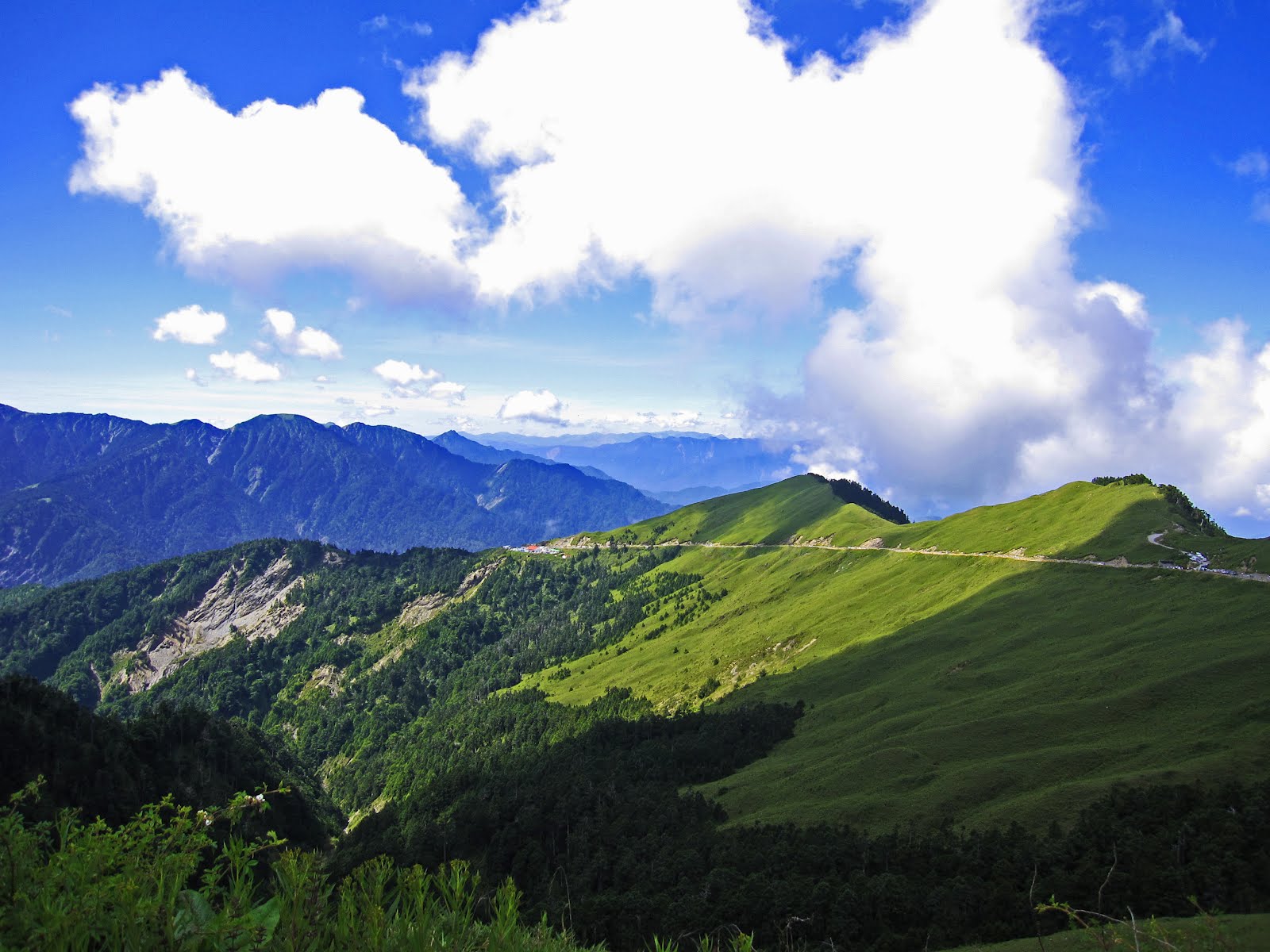
So, in reverence of Wuling and in gratitude to Lee Rodgers for his continued salesmanship of my adopted home and its magnificence, here is a pictorial look at the 90km of climbing that makes Hualien to Wuling a must for any cyclist looking to test their mettle.


--------------------------------------
Also:

If you are interested in racing to Wuling from Puli, the Nantou Cycling Association will be holding the Wuling Cup 6/17/2012.

The event will divide the field into a race group and a recreational group. If you can finish the climb in 5hrs 30min. you can qualify for the race group.

This might be a better alternative to the Neverstop Wuling Challenge, which saw 7000 riders converge on the mountain at the same time creating conflict with motorists and potentially dangerous conditions.

Saturday Commute


This morning I hopped on the Lincoln Continental and made the most of my Saturday morning commute.


I swapped out the stem for a shorter one to help with the fit after Li Chi, the disinterested Taiwanese distributor for Salsa, insisted on replacing my cracked frame with a wonderful Salsa La Cruz... that is just on the too big side of comfortable. It seems to be working out a little bit better.

The True Temper steel frame is buttery smooth with stable geometry. Pure plushness.
Switching between bikes always brings out the contrasts between the rides. There is always something to appreciate.

Ok, back to work!


MOTC Extends Caoling Bikeway


One of the best ideas the Taiwanese Ministry of Transportation has come up with, is to use disused railway lines as bike routes. In some areas this really works out for the better.

The Old Caoling Tunnel Bikeway is one of the best... and worst examples of how Taiwan reallocated existing infrastructure for bicycle travel.

I say this is a best and worst case scenario as the Caoling route at Fulong makes cutting across to the Iilan Plain a breeze without having to brave the truck traffic between Santiao Qiao and Tou Cheng.

On the down side, the tunnel is a frighteningly dangerous place to pass through on a weekend when the route is choked with wobbling tourists and small children who have no problem stopping in a dark tunnel. My greatest fear was that I might smash into a weaving child as I tried to pass quick enough to make the tunnel a short cut.

Mark Caltonhill writes an excellent report on the tunnel:

Anyone who has cycled through hilly countryside has, at sometime or other, prayed to the bicycle gods: “Let there be a tunnel around the next corner, and preferably one without cars.”

It was, perhaps, with this in mind that Taiwan’s cycling gods (OK, the Ministry of Transportation and Communications; MOTC) designated a 2.16-kilometer section of disused railway tunnel for development as part of the Old Caoling Tunnel Bikeway.

Offered the novelty of being able to cycle through a tunnel without sharing the road with countless gravel trucks – or maybe because the air is noticeably cooler inside – many Taiwanese tourists take a tour bus or train to the town of Fulong, near the tunnel’s northern entrance, cycle 15 minutes to the other end, drink a cup of coffee or eat ice-cream, then cycle back.

The MOTC recently extended the bikeway further along the coastal highway north from the tunnel’s southern entrance by constructing a barrier to ensure separation of the above-mentioned trucks with the soft flesh of cyclists. This route allows bikers now to safely cycle back to Fulong the long way after exiting the tunnel. On the way, its gentle slopes and curves take cyclo-tourists past a plethora of historical, cultural, and culinary places of interest.

Read the entire report HERE.

Also:

Taiwan's bicycle exports shaky, but bike makers have faith in the China market. “Our future lies in China and one of our goals is to develop this rapidly expanding market”--Giant Chairman,Tony Lo

Wednesday, February 29, 2012

Polishing NAHBS: Showcasing The Craft of Building Bikes


The North American Handmade Bike Show (NAHBS) will be getting underway this weekend in Sacramento, California. NAHBS is the world's number one craft bike show, featuring 171exhibitors who are leaders in both the craft and innovation of hand built bicycle manufacturing.

Crafting a tool by hand results in the innovation and attention to detail that is often cut from mass production. Each bike is unique to its build and the philosophies that each builder brings to their craft. Building a bike from the bottom up is part sculpture and part old-school workmanship. Some real beautiful and amazing machines.


This year will feature some of the usual suspects in Richard Sachs, Moots, Zanconato, Independent Fabrications, Chris King and a whole host of established builders.


Vibe Cycles will be showing off its innovative designs using bamboo tubing. We have seen some straight tubes used in Calfee bikes.


Some new faces will be bringing their own ideas to NAHBS this year. Bekes Wooden Bicycles, Moth Attack, Muse Cycles, Appleman Bicycles and many others.


From the press release:

According to NAHBS tradition, bicycle rides will take place on Saturday and Sunday mornings. Both are sponsored and fueled by Clif Bar and Company. Saturday's ride is organized by deVere's Irish Pub and starts from there at 8:30. This is a 14 miler to the US Bicycle Hall of Fame in Davis. Cyclists can ride back or catch Amtrak.
Sunday's ride is Sheila Moon's Mimosa ride, a leisurely 7-miler that stops at Revolution Wines for mimosas and other refreshments. This one departs from outside the NAHBS show hall, 9 a.m. Sunday morning.
Full information on the NAHBS rides will be available athttp://2012.handmadebicycleshow.com/2012-show/diary/


The show will run between March 2nd and March 4th. The awards will be announced at 1:00pm with the awarding party to follow.


*photos above are credited to markdawsonstudio.com*

_____________________________________

Although many of the exhibitors are small, one-man operations or at least very small operations, it is easy to consider them to be merely niche players.

Then I am reminded of the Seven Odonata, which sparked the innovative use of mixed material frame manufacture by bonding carbon fiber to titanium.

By the mid-2000s, many of the largest manufacturers were selling bikes made of mixed materials.

At NAHBS you just never know what will show up.

Seven Odonata

Seven 622 SLX

Tuesday, February 28, 2012

Fixing the Tour de Taiwan: How To Make A World Class Event

Taiwan Cycle is back and that can only mean another Tour de Taiwan is upon us. David Reid has done us all a big favor by posting an English translation of each stage. Moreover, Michael Turton pretty much sums up the sentiments of everyone in Taiwan with a passing interest in cycling when he recently wrote:

This route is ridiculous in the extreme, as if someone deliberately set out to avoid all the pretty parts of the island and instead sought to send the cyclists through all the flat, polluted, crowded, dull parts of the island.

I couldn't agree more. Taiwan has some world class routes, but the Tour de Taiwan seems to never explore them. It is always a disappointment when the route is revealed and it is a bunch of boring crap that simply reinforces dumb ideas about Taiwan.

The Tour de Taiwan (Why the French "de"?) faces a lot of challenges. Promoters and their political cronies need to look out for their own interests and often steer these events into their pockets. After all, The Tour de France and Giro d'Italia were simply ways of bringing tourists to ski resorts in the off season.

But the Tour de Taiwan also suffers from bad timing.

The international race calendar starts in March with smaller, warm-up races, before the day races of the Ardenne and the Spring Classics with Flanders and Roubaix closing out the day races before the fireworks of the Giro d'Italia and finally capping the season with the Tour de France. Of course, the UCI World Championships and the Vuelta de Espana officially close the season in September. There are some small stage races in the United States that are attracting some top talent in the lead up to the Grand Tours, but these are still just high profile training races that offer sponsors greater exposure in a larger market.

In Taiwan we all know that between July and October the weather is unpredictable. Typhoons can wreck havoc an the best laid plans. The weather usually dries out between April and the first week of June, but by then all the top talent is concentrated on Europe. This leaves November to January as the nicest time to hold a cycling event, but that is considered the off season when riders rest their weary legs and try to recover for another grueling season. Moreover, Taiwan's highest passes are often still covered with slush or ice between December and April.

As it stands, the Tour of Taiwan is a preparation race on the lower end of UCI priorities. It is considered to be way off on the other side of the world from where the action happens and is best left for training in the off season.

Like many people, I feel Taiwan deserves to shine a little brighter in the lore of competitive cycling.

That is why I have designed my own Tour de Taiwan. If I were the race director and I could hold this race under optimal conditions, this is how it might look.

Stage 1: Team Time Trial

The first stage is a TTT from the opening ceremonies in the city center, out to the Highway 2, which hugs Taiwan's scenic North Coast. The route is short and relatively flat for high speeds. The route ends in Jinshan for a short hop over Yangming Shan back to Taipei.

By opening with a TTT, the riders could warm up for the coming stages without risking too much for the GC.

Crowds could form along the route at many locations to cheer for the teams and attract visitors to Danshui and other locations along the coast. Jiufen and Jinguashi are also close by.


Bike route 1432802 - powered by Bikemap

Stage 2: Miaoli Foothills

Stage 2 opens the race up with a little more distance over rolling hills and punchy climbs between the Highway 3 and the Highway 13. This route offers views of the Mingde and Longtan Reservoirs, as well as the rolling Sanyi hills.

The roads are wide and well paved. The mixed topography gives riders an excellent opportunity for a break away that could shake things up. There may be room in there on the Highway 13 for some sprint points.

Miaoli could attract visitors to both Mingde and Sanyi. Taichung could highlight Dongshih.


Bike route 1432804 - powered by Bikemap

Stage 3: Taichung and Central Taiwan

The third stage starts to shake up the riders before the Queen Stage.

It starts in Taichung City at the Municipal Office (Politicians need to wring something out of this) and heads up out of the city through Dakeng and up the Route 129. Stage 3 connects to the Highway 21 over Baimao Shan to Puli and then to Sun Moon Lake and out to Shuili. I would recommend the Route 63 out of Sun Moon Lake, but with so many riders in a competitive ride, it might be too dangerous.

This route contains lots of good climbing and technical descents. Riders can make time on both. There may be both opportunities for sprinting and climbing points to be awarded.

Local governments can use this route to draw crowds to Hsinshe, Puli, Sun Moon Lake and Shuili.


Bike route 1432806 - powered by Bikemap

Stage 4: Wuling Pass (The Queen Stage)

After a rest day, riders launch out of Puli to conquer Wuling at 3275m. The challenge is world class and offers some of the most spectacular views comparable to the Alps or the Pyrenees.

The climb to the top only precludes a dash over Taiping Shan to Yilan and the East Coast.

This stage might break the race open. It is long and tough. Several locations for climbing points.

Crowds could cheer along the route and visit Chingjing scenic areas.


Bike route 1432808 - powered by Bikemap

Stage 5: Hualien to Taidong

After a grueling Stage 4, riders can regroup and recover on the long, flat stretch of roadway between eastern Taiwan's two largest cities.

There is only one climb of any measure in which a brave rider might try to put some time into a rival. A day for the sprinters and TT technicians.

Both Hualien and Taidong governments could attract visitors for the race.


Bike route 1432811 - powered by Bikemap

Stage 6: Hengchun Peninsula

The Hengchun Peninsula is an ideal transition from a recovery day. Riders are faced with a few short climbs and soaring flats through the Manzhou Valley before cruising to a finish at the beaches in Kenting and another rest day. The roads are in pretty good shape with a few sections that may be a little rough, but no worse that some of the hardpack featured in the Giro d' Italia. Ths route might have sprinting points and one spot for climbing points to be awarded.

Kenting would surely find some favorable press. The local governments could also draw visitors to Manzhou's picturesque beauty.


Bike route 1432813 - powered by Bikemap

Stage 7: Alishan

To separate the men from the boys, a stage from Chiayi over Alishan and back might be just enough to determine a winner in a close race. This is a chance to crown the KOM.

Alishan is already on the tourist maps, but the 159甲 is a wonderful road to discover. It may be a little narrow, so traffic control would be a must.

Riders would then head back into Chiayi past the reservoir with a finish in the city.


Bike route 1432815 - powered by Bikemap

Stage 8: Tainan-Kaohsiung ITT

An Individual Time Trial between Tainan and Kaohsiung might be a real bonus. This allows riders to finish in Taiwan's southern metropolis and giving equal weight to Taiwan's northern and southern cities.

Here, some of the sprinters could make up some time against the climbers. If the race is close, the GC can be settled here.


Bike route 1432817 - powered by Bikemap


Kenting Claims Another Cyclist: Japanese Cyclist Killed In Kenting

More sad news is coming out of Kenting, where another foreign cyclist was struck and killed by a truck.

Next Media has the story complete with the gruesome video and tasteless animation.

Apparently, the Japanese cycling tourist was struck while cycling along the coast in Kenting after drifting into the roadway.

A few weeks ago an American cyclist was also struck and killed by a truck in the same area.

The two deaths come just weeks before Taipei Cycle, one of the world's largest cycling trade shows, at a time when Taiwan is trying to showcase the nation's prowess in developing a viable market in cycling tourism.

Blame for these deaths can be placed at the feet of several parties, but riders and drivers need to hit the roads with the knowledge that despite Taiwan's great investment in cycling infrastructure, it is meaningless without an equal investment in educating the public on how motor vehicles, bicycles and pedestrians can safely coexist on Taiwan's roadways.

Until that happens, Taiwan will continue to be an unnecessarily dangerous place to ride.

Monday, February 27, 2012

The Lintrinsic Value of Jeremy


In 1986 Greg LeMond became the first American to win the Tour de France. Until that point cycling was still a European sport. It was where Italians, Belgians, Germans and of course the French could reign supreme. Americans did not have the pedigree to win the Tour... any Tour.

------------------------------

Taiwan's Jeremy Lin fixation has now washed over to taint cycling as well as every other aspect of daily Taiwanese life.

The Chinese language Liberty Times is reporting on a cycling club that rode from Bagua Shan in Changhua to Beidou where some of Lin's extended family resides. According to the report, the Taichung based Shanjiao Mao Bike Club rode 80km to Beidou Township to eat local delicacies and bother the Lin family, despite Jeremy Lin's explicit request to leave the family alone.

The bicycle club roused one of Lin's relatives into showing them the bicycle that had been ridden by the Knicks newest basketball sensation and darling of the Chinese language media.

--------------------------------

I find the Jeremy Lin story to be interesting on a number of levels and the Taiwanese fixation on Lin's success speaks volumes on the state of Taiwanese athletics, nationalism and the future of Taiwanese cycling.

The most obvious issue is the degree in which the unfolding "Linsanity" has hinged on concepts of race.

In the American media, Jeremy Lin has provided just enough of a shockwave to remind all Americans that prejudice still lurks in the unexpected corners of our minds. The fact that Lin's numbers, though commendable on a middling team, are nothing near the dazzling bombardment of shock and awe laid down by the likes of Jordan, Johnson, Stockton-Malone, Payton-Kemp and numerously more dominating and dazzling players and combos. The fact that many Americans were surprised that an Asian-American could slip between the triangle offense and the playground to make an impact is enough to bring out feelings of associated guilt. Commentators in America have been as quick to draw attention to the issue of "race" as often as they are to exploit it. Americans are aware that ideas of race are a sensitive issue.

What may be more interesting and worthy of attention is the manner in which Jeremy Lin's portrayal in Taiwan has also skirted the uncomfortable lines of race and ethnic nationalism with much less caution.

Ever since the Lin story broke, Taiwanese and Chinese nationalists have been clamoring for a piece of Jeremy Lin as the star has been used to represent Chinese, Taiwanese, Asian-Americans and everything in between to fulfill a desire for international recognition and plaudits. In Taiwan we frequently see this phenomenon when anything related to Taiwan or Taiwanese is singled out for international commendation. Sadly, this type of "racial pride" still plays to prior and existing colonial relationships between the Orient and the Occident, in which an entity referred to as "the West" is often still looked to for recognition and authentication.

The competition for ownership and recognition may be more related to where it lacks. As Taiwan has struggled for international recognition as either the R.O.C. or as simply "Taiwan", the desire to fill the void with anything prized has driven people in Taiwan into an arms race of clout against the constant bullying by the neighboring People's Republic of China (PRC), which seeks every opportunity to deny international space for Taiwanese to showcase a separate, non-Chinese national pride.

By the same "token" (ouch!)... Chinese nationalists would like to hop on Lin's coattails to both exert territorial claims to Taiwan as a lesser part of a Greater China, and also to affirm the Chinese nationalist mythology of persistent victimhood at the hands of the west. Lin is often propped up by these Chinese nationalists as a defender (or in this case, Point Guard) of "the race".

As Americans, with their immense baggage of a history smeared by racial conflict, try to play down and pass censure on the issue of "race", modern Chinese nationalism is founded on a bedrock of racialism that hopes to exploit the west's own vehicle for colonialism to further their own goals of territory and wealth.

For these types Lin represents an odd paradox.

Chinese Nationalism has taken a strange, ambiguously bifurcated path, toggling between definitions of "Chineseness".

Sun Yat-sen, the nominal founder of the Republic of China (ROC), who is revered in both the People's Republic of China (PRC) and Taiwan (ROC), as an important figure in establishing a post-dynastic China, was also a great practitioner of racialism and keenly wove the 19th century beliefs of social darwinism and racialism into his modern Chinese republic.

“Considering the law of survival of ancient and modern races, if we want to save China and to preserve the Chinese race, we must certainly promote Nationalism. To make this principle luminous for China's salvation, we must first understand it clearly. The Chinese race totals four hundred million people; of mingled races there are only a few hundred million Mongols, a million or so Manchus, a few million Tibetans, and over a million Mohammedan Turks. These alien races do not number more than 10 million, so that, for the most part, the Chinese people are of the Han or Chinese race with common blood, common religion, and common customs-a single, pure race.”

Sun Yat-sen in San Min Zhu Yi (1927)


On the one hand, Sun adopts the belief in a modern, multiethnic nation, where Han is the dominant and transformative culture that will unite the people. On the other hand he views the divisions in the now dated terms of "race" and "blood".

Sun left his definition of "Chinese people" ambiguous to achieve the goals of fueling anti-Manchuism among the Han ethnic-nationalists, while incorporating the vast territory in the west that was appropriated by the Manchu Qing empire (Taiwan was not a consideration at this point as it had been a Japanese colony since 1895).

Chinese nationalisms in both the PRC and the ROC, continue to use the dated and logically incongruous Sunist construct for defining "Chinese" and "Chineseness", as a shared system of culture, customs, language, history and people. The need to create uniformity in this model that might incorporate vastly different cultures, languages, customs, histories across a wide geographical area under a single national Chinese nationalist umbrella, took the form of a fascist style of state culturalism, in which the state became the creator and promulgator of a centralized and monolithic state Chinese culture. China is not a homogenous place by any means and the fear of regional nationalisms was, and still is, a real threat to maintaining the old Qing borders.

This is where the problem of Jeremy Lin comes into play.

Lin, an American born, non-Chinese speaking Christian, must give Chinese nationalists fits. This is where ideas of lineal descent from the mythic Yellow Emperor come into play-- Chinese nationalism's own race card to extend power and influence beyond its borders and rise up in the face of western hegemony-- while playing to that same hegemony in a quest to be granted validity or authenticity.

Both of Lin's parents come from Taiwan, which was, itself, not "Chinese" enough for the Chinese nationalists and their centralized state culture.

Moreover, Lin grew up in the United States, which, as the leading consumer of professional sports, has an established system of recreational, prep and collegiate athletics.

Race is a colonial construct, and ethnicity is merely something shared, negotiated and renegotiated.

Lin is the only person who can, with good conscience, claim himself for any of these competing groups.

Lin's success is the result of a culmination of factors that are unique to Lin. He was raised where he was raised. He made choices based on his experiences. He studied and trained like many other successful Americans, with the resources he had available. Lin's experience is an American experience if, for the only reason, it happened in the community of the United States.

If others would like to seek inspiration from Lin, that is their choice. If Taiwanese would like to look at Lin and question the balance in Taiwan between academics and athletics, that is fantastic.

What the racial nationalism does with "Linsanity", is that it adroitly shifts the emphasis away from the systemic changes that are needed for Taiwanese to emulate Lin's own success, while oddly validating the existing systems (no matter how flawed) as having resulted in "our own" vicarious success through Lin.

It is easy to see why any shift in the status quo is unlikely, and the continued appropriation of Jeremy Lin and others like him will be inevitable.
  • The system of Taiwanese education is based on standardized evaluations, which not only supports a massive economy of peripheral education (cram schools, certification, publishing, alternative education...etc.) but it also appeases the Taiwanese cultural demand for the perception of fairness. The competition for higher placement on entrance examinations has led to greater and greater reductions in P.E. classes (90min/wk).
  • Finding parity between education and athletics might also threaten the racial/class based perceptions of athletics. Although early Chinese nationalists believed that a strong nation required strong citizens, the pre-existing association between physical athleticism and barbarism or racial degradation, has largely left athletics to be regarded as the vocation for the poor or the indigenous people. These divisions between the "civilized" and "uncivilized" have been negotiated and traversed for centuries on Taiwan and it seems unlikely, at least in the in the short to medium term, that Taiwanese society is ready to redraw these hard fought boundaries.

---------------------------------------

It would be easy to demonstrate how Taiwan's education and athletics systems would, more often than not, discourage the rise of a local Jeremy Lin. I recall a heated debate between departments last year in which the foreign teachers were reprimanded for rewarding students with a little basketball. The idea of a school basketball team was D.O.A. as it would interfere with valuable cramming time. Now the Education Bureau is calling for more basketball time in schools. Taiwanese students have little choice other than cramming for test scores, or, if they would like to pursue athletics, going to a vocational school specializing in physical education. No, pointing to the systemic hurdles in replicating Lin would be easy.

Instead, I think the focus on Lin is masking the real success of Taiwan's direction in athletics--cycling.

Taiwanese have embraced cycling for a variety of reasons and the sport has enjoyed nearly a decade of sustained growth. Taiwan's topography and infrastructure, with its well maintained road surfaces, provides an amazing training ground for the future of professional cycling.

The Taiwan-based RTS Racing Team just finished up competing in the Tours of Oman and Qatar. The team DS is Taiwanese and three of the team's riders are also from Taiwan.

Lee Rodgers from RTS reports in Velonews:

The pack splintered from there and I just dug in and pushed. The first 2km were 10%, the third 12% and then finally it leveled slightly at 6% for the next kilometer. Popovych (Radioshack) was chasing and up ahead my ‘nemesis’ from Champion Systems dangled. Then up again, the final 2km at 13%.

Ouch.

Again I dug in. I reminded myself that though this was hurting, it was nothing compared to the climb I did in Taiwan just 5 weeks ago. Zero meters to 3275m over 90km. The final 2km kick up at an average of 17%. Now,that is a climb. So, 6km? Nothing…


Taiwanese might really want to step out of the sycophantic game of racial ownership, and focus more on promoting and developing local athletes by giving them choices beyond the current binary of either academics or athletics.

Cycling may be able to provide a better source of national pride for Taiwanese and it seems inevitable that a Taiwanese will one day arrive at a grand tour.

With all this "Linsanity" it seems Taiwanese have lost focus on their real assets in competitive athletics.

The best I can hope for is that Lin will inspire Taiwanese into demanding more than just a few superficial changes in these systems to provide more opportunities for everyone interested in professional and amateur sports.

Moreover, I hope, for the sake of diversity, Taiwanese will one day reject Chinese nationalism with its racialist root, in favor of a system that can put every citizen equidistant from the center.

The problem of race is not just a western problem.

UPDATE:

Maxxis, the Taiwan based maker of auto and bicycle tires, has signed Jeremy Lin as the company's newest spokesman.