body{background-attachment: fixed ! important; }
Showing posts with label Lukang. Show all posts

Thursday, September 23, 2010

Temple Politics: The Lanterns of Lukang


Lukang's Tien Ho Temple

A huge part of the Taiwan cycling experience for me is not necessarily where I go, but what I see when I go there, or more accurately, how I see it. The landscape is full of meaning and it does not always come in the prepackaged bunting supplied by the Tourism Bureau. Not to brag, but I feel fortunate that I have spent significant time reading and researching Taiwan, to the point that seemingly ordinary things pop out of the landscape and the moments of saddle-top discovery are ceaseless.

Over the past two months I have made several trips to and through the coastal town of Lukang and I would like to spend a little time sharing some insights on the temple as a nexus for cultural, political, religious and economic life in Taiwan. In particular I would like to use Lukang's famous Tian Hou Temple as an example of the politics within the Taiwanese temple and the expression of identity politics within Taiwanese religious life.

Buddhist and Daoist temples in Taiwan are often high on the list of sites tourists would most like to visit. To many tourists and especially "Westerners", temples represent a sort of "authentic Chinese culture" that they seek to view in all its exotic glory, and it fulfills a certain desire for life's "secret mysteries". One recent poster to a bike forum attempted to define east Asian cultures as, "more spiritual and enlightened". Temples and the practices we often see conducted within them are often cited by "Westerners" as demonstrations that Taiwanese culture is undeniably "Chinese". I feel very strongly against this assumption as it neglects to look beyond the superficial and fails to consider the experiential and performative aspects of temple life in Taiwan. Beneath the superficial veneer of glazed tile are symbols and meanings unique to the Taiwanese experience, much in the same way Catholicism, once the domain of another religious based holy empire not unlike the Middle Kingdom, is interpreted by its adherents around the world to fit their own society and experience... making it more an expression of the local through the symbolism of the global.

The idea of a non-nationalist "Chinese" is a often exists in the same place we used to find God in the "Western" sciences; an unproven, undefined, untested, unquestioned truth... a given fact. People often regard the concept of a non-nationalist Chinese in a sort of Potter Stewart-esque construction... "I know it when I see it." But do we really know what we are looking at and how much construction does it require to fit the structures of vastly different governments with vastly different motivations, histories and tropes?

A closer look at Taiwanese temple life demonstrates the dialectic between the various identities that converge in the temple, like spokes to a hub, and how Taiwan's unique experience manifests itself in the displays of a living temple. It also shows how the symbols and meanings within the Taiwanese temple reflect a societal response to a unique Taiwanese experience, changing governing structures and a Taiwan centered historical trajectory.

Couplet From Ma Ying-jiu in a Prominent Place

Upon entering the temple, beyond the ornate sculptures and burning incense, the visitor can see two large, ornate wooden plaques prominently displayed to the left and right of the goddess Mazu, each with a four character phrase wishing luck and bounty on the the temple and the visitor. One of the plaques was presented to the temple by the Secretary General of the Chinese Nationalist Party (KMT) and ROC President Ma Ying-jiu. The other by the former KMT Secretary General, Former ROC Vice-President, two time KMT presidential candidate, and Lien family scion, Lien Chan.

It is not unusual for temples and businesses to display plaques like these as a demonstration of their relationship and access to real power. Due to Taiwan's particular historical trajectory, politicians have come to mirror their counterparts in the pantheon of Taiwanese gods as points of power. The display of these plaques serve several simultaneous purposes. The first is for the politician to demonstrate his close relationship with the temple and the gods to imply a type of heavenly mandate, as if it was fated he should be in power.

Moreover, the temple can demonstrate its importance and access to the real power to make things happen that can bring benefit and prosperity to the loyal and the faithful. While the gods are given the authority to bestow luck, change fates, interfere in daily life and secure fortunes in the abstract, the modern Taiwanese politician has the power to make these prayers a reality in exchange for electoral devotion. The politician can control zoning, attract investment, and resolve disputes. At the higher levels politicians also have the ability to influence the outcome of court cases. Politicians offer a real and imagined blanket of security in the mortal world and the Tian Ho Temple is keen to align itself with those who currently hold power. I am aware of several instances where a temple works in conjunction with a local politician for mutual gain. The politician patronizes the temple and brings adherents (who will buy incense, offerings, supernatural favors etc...) and in exchange the spirit medium at the temple will send troubled adherents to the politician for resolution and thus owing the politician his patronage.


Lien Chan's Couplet

In the case of the Tian Ho Temple, the ruling KMT party is clearly entrenched. Temples also serve as points to mobilize political support and many are said to serve as undeclared streams of revenue that flow into party coffers.

With such social and political forces at play within the temple walls, it is no surprise that organized crime syndicates are said to be heavily involved in the operation and mobilization of the temple's economic and political capital. Temples [may] serve as rallying points for organized crime bosses in which politicians can come into open contact with the figures who control several of Taiwan's most important industries.

Beyond the main hall of the temple lies a small court yard. At some point in recent history someone decided to paint a mural in dedication to the temple of origin in Fujian, China. At first glance this may appear to promote and symbolize a close relationship to the authenticity found in China; a major trope promoted by the KMT in over 60 years of ROC rule in Taiwan. The KMT has always sought to push China to the fore of the Taiwanese imagination as a much closer place than it actually is. Most Taiwanese have never been to China and, only after decades of ideological education, conceive of it as an abstract place of imagined ethnic origin, which may not be exactly the case as I argue here.

Over the course of Taiwan's experience between Dutch, Cheng, Qing, Japanese, KMT and democratic government structures and changing motivations of these structures, the Taiwanese temples have also changed-- if not in shape then in meaning. The importance of the temple and its function in society has not been fixed, but it has always been in a constant state of dynamic change and renegotiation to adapt to contemporary Taiwanese life and fulfill a multitude of purposes.


The Inner Sanctum

During the vast liberalization policies of the Lee Teng-hui administrations, Taiwanese were free to openly reinterpret the symbols and meanings of their land and the symbols presented to them by the authoritarian KMT regime. The economic boom of the 1990's, which coincided with vast democratic reforms, allowed new understandings of Taiwanese life and Taiwanese felt free to question their official historical narratives. Taiwanese sought new venues to reframe their world and adjust to the reality of how they viewed themselves and how they viewed Taiwan.


Home Temple

During this period the function of the temple also changed to meet the new social and political realities and religion played a leading role in the shift in the stated identity from Han, then "Chinese" to Taiwanese. Many local entrepreneurs transferred the temple to their own homes or built their own temples to give thanks for their new found fortunes and change in social status. When cross-strait travel was allowed and became less restricted, Taiwanese temples sent delegations to the "home temples", to not only worship at the home temple, but to symbolically transfer the god from the original site in China, to the newer Taiwanese temple; an act of declaring a permanent separation and a declaration of independence for the temple. These pilgrimages did not serve to unite, but rather to transfer authenticity away from the Chinese temple and bring it to the site in Taiwan.

History of Lukang

The role of the temple as a public center was also opened up to encompass local awareness, particularity and history. The sign above tells the story of Lukang, beginning with Plains Aborigines. This is especially important as it seems to intentionally deviate from the old Chinese nationalist trope that often begins with Han immigration to Taiwan and other Han-centric mythologies that frame Taiwan as a periphery of China.

For many decades research into plains aboriginal culture and history was discouraged in favor of a "greater China" view that sought to obscure the Austronesian contribution to Taiwan in favor of Taiwan as part of the Han-Chinese racial nation.


Lantern From The Shinto Shrine

Perhaps the most important, and telling, features within the Tian Ho temple are the two concrete lanterns at the rear of the inner courtyard. They seem to blend into the overall aesthetic of the building and largely go unnoticed.

These lanterns were formerly located at the site of the Lukang Shinto shrine, built by the Japanese during their 50 years of colonization in Taiwan, and later the name of the Showa Emperor was defaced by the KMT during the first several years of Chinese Nationalist (neo)colonization.

The fact that someone preserved and transported these lanterns into a major religious center is a poignant and revealing look into the complexity of Taiwanese cultural life. In both the KMT and the CCP, which both spent nearly a decade (presumably) fighting the Japanese, any symbol of the Japanese colonial period not only raises a deep seeded antipathy toward Japan from Chinese nationalists, but in Taiwan, it also serves to challenge the KMT's own authority as the state.


Defacement By Nationalists

From the earliest moments of contact between Taiwanese and the Chinese nationalists from the KMT, symbols of Japan and the Japanese colonial era have been deployed as a subtle means to challenge the power of the state and especially its implicit sinocentricism.

These are in no way symbols in support of Japan, but rather in support of an alter to the China centered ideology that has failed to reflect all but the views of a minority.

The preservation, and deployment of Japanese era symbolism is one way in which Taiwanese are forcing society and the state to recognize Taiwan's dynamic history from a Taiwan centered perspective and to resist ideological tropes of Chinese nationalism.

These temples are very much a demonstration of Taiwanese culture.


Man Wears His Japanese Military Hat


Wednesday, September 22, 2010

Moon Cycles: Mid-Autumn Festival Ride (55mi./89km.)

Joyce and Michael Pose

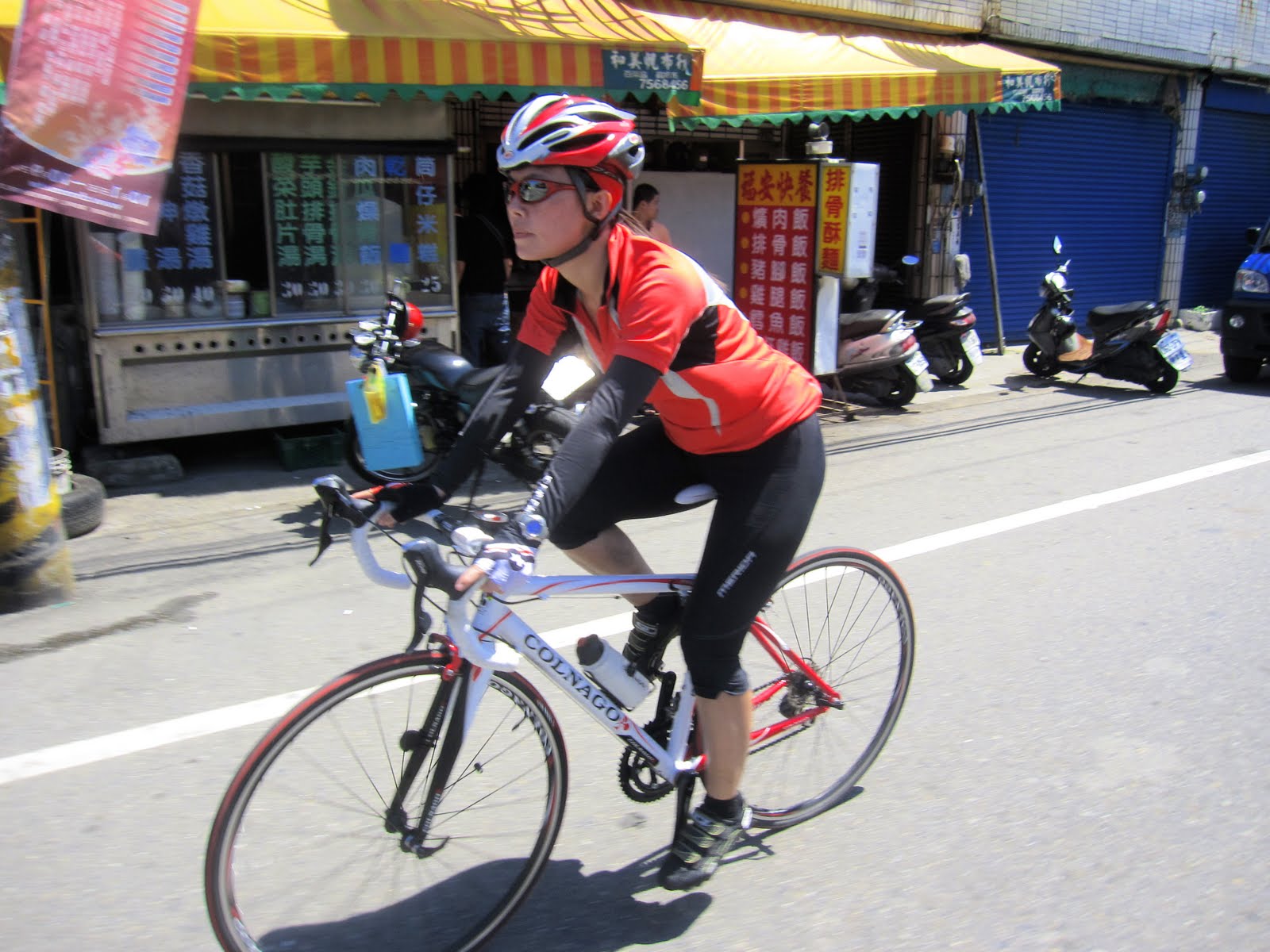
Today was a national holiday, where the boundary between religion and the state is blurred in the name of ideology. But that is a discussion for a different post. The Mid-Autumn festival, or "Moon Festival" gave us all a chance to break up the week with a little saddle time. My wife, Joyce, and I were joined by Michael T. for 89 wonderful kilometers around Taichung and Changhua counties.

Michael Knows What I Want

The horrendous weather we have been having finally gave us a break for the better and we enjoyed a glorious morning of sunshine with a cooling breeze. My wife has been hurting to try out her new bike on some longer rides, but time and weather just hasn't allowed that to happen. She has only made it out a handful of times and each ride no more than 40km.

She really wanted to get out and take a tour of old Lukang, the former central Taiwanese port that sent deer pelts out and immigrants in during the 17th and 18th centuries when there were still herds of deer numbering in the thousands. Lukang was formerly an indigenous village and had once been promoted as a potential capital of Taiwan prefecture, but a pushy elite and a silty port quickly derailed those plans. Lukang currently enjoys the status of hosting a large number of buddhist and Taoist temples, giving the whole area an air of religious authenticity.

Temple Surfing In Lukang

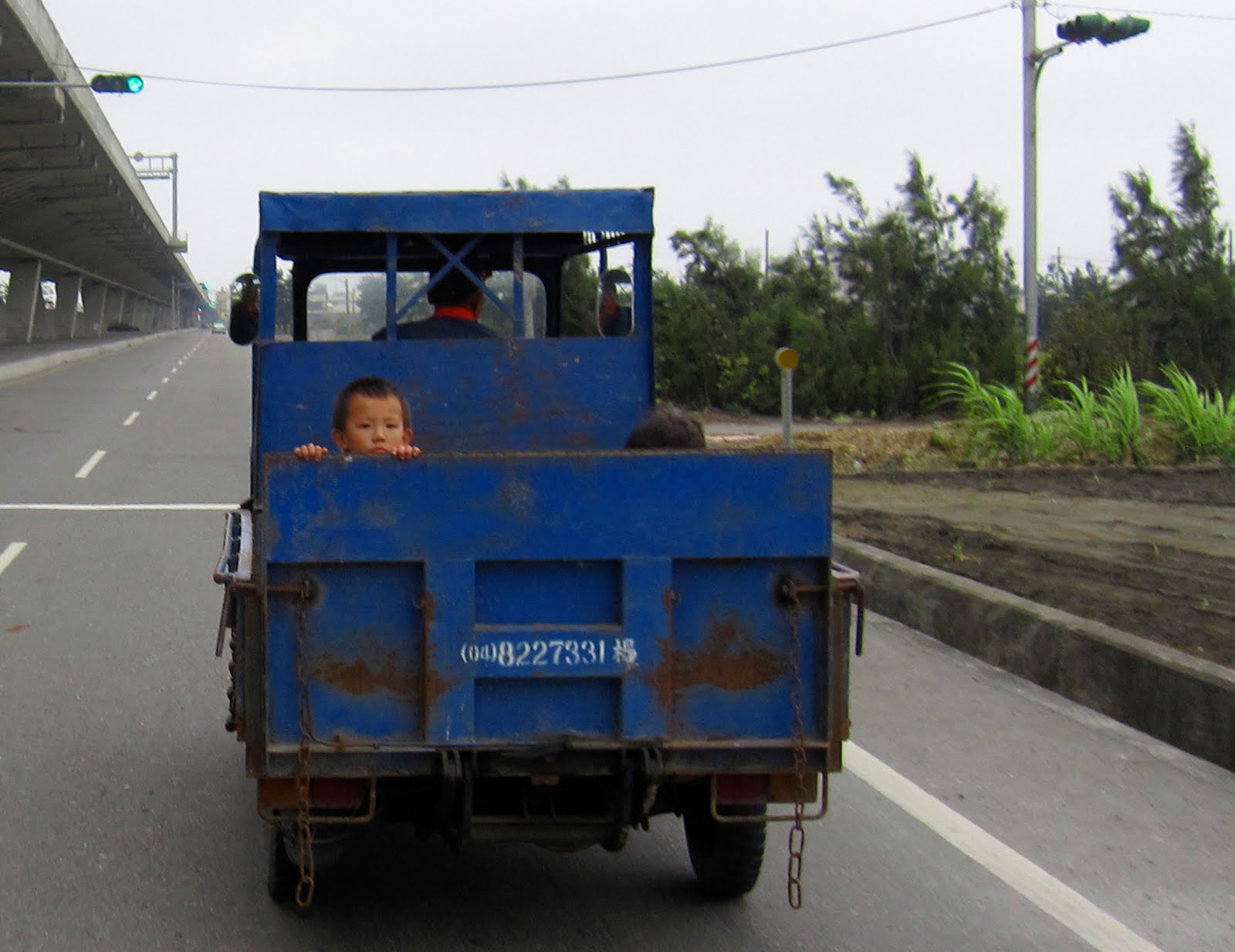
Lukang was awfully quiet for a holiday, but that simply meant there were more locals to observe. What was so wonderful about today was that many of the locals still use the bicycle as a form of transportation to ferry goods or pick up groceries. The stigma of utility cycling (and class) that many affluent Taiwanese hope to avoid, was on full display in central Lukang.

Pedaling His Wares

We then zagged around the busy streets to the Lukang Folk Art Museum, which was formerly the center of political and family life for the Ku family, an established family of local elite who cooperated very well with every colonial power to establish itself on Taiwan since the Qing. The Ku family worked very closely with the Japanese and KMT governments to ensure their status as gentry remained unchanged. Needless to say the Ku family remains one of Taiwan's wealthiest family enterprises.

Ku Family Home

Upon leaving Lukang we took the old familiar roads that wend along the flats by the ocean. There was plenty of time for posing and messing around on the bikes. My wife was spinning a mean pace for a beginner and Michael and I wondered if she would have the steam to keep going for the rest of the ride.

Michael Puts The Heat On

We passed several groups of Taiwanese oyster farmers diving for their quarry in several of the oyster farms that line the coast. Michael showed his recent title, King of the Century, was well deserved as his energy level remained high throughout the morning heat. 1200km in a month will do that to a man.

The noontime heat started to bear down on us pretty hard and it was about time for lunch. We just took it easy and had a bit of lunch in Long Jing.

Strategy Meeting

Away!

Get Down!

Speedy

Somewhere (and I am not telling where) along the Highway 17 on the coast, we stopped at a bike store to take a look. Parked outside were two identical Primavera Cessena bicycles, designed and produced by a small company out of Taichung, run by the fabulous Ms. Sabinna Den.

My wife got a first-hand look at the comraderie of cycling; a bond of recognition that can only be described as something akin to the Freemasons.

We chatted with the bike owners for a while and then the owners of the shop invited us in for water and a chat over their cycling photos. We were all surprised when the owners expressed their dismay that we were all on road bikes because, "they are so uncomfortable". Neither of them had actually ever ridden a road bike and Michael offered his up for a tester. It is really amazing that shop owners like that could have such misinformed ideas about bikes. They seemed to believe flatbars are inherently more comfortable. Anyway... they were really nice people... just misinformed and inexperienced in road cycling. We still enjoyed them and their hospitality very much.

Cycling Alloy Cesena

We made the turn back toward Dadu Shan toward home. Joyce was very good at concealing the hard work of a day in the saddle and bravely pushed onward. Nobody could have ever guessed she is still a novice.

Fields in Changhua


We finally made our return in the afternoon after logging over a half-century.

Michael is always a lot of fun to ride with and I am grateful for his time today. He really made things easier for Joyce as she takes her first steps into greater adventures of riding.

I can not fully express my happiness in seeing my wife enjoy herself on a bike. I haven't really told her how much joy I feel when I take a peek over my shoulder and see her seriously working away on the crank. Her drive and determination is nothing but heroic and I am truly awed by her early effort in cycling. We now have one more language in which we can communicate. Shhhhh! Right now she is exhausted and asleep on the couch... and I totally understand what she is going through. She's got a lot of heart to do what she did today and I am glad I have a piece of it. She is my cycling hero.


My Hero

Sunday, May 30, 2010

Beyond Lukang


Dog Watching

I hadn't planned on doing any riding today and was feeling good from yesterday's ride, so I thought a little stretching the legs might be about it for a lazy Sunday. I work hard all week and ride hard when I can. I figured I deserved a day to laze around.

Then I got the call that Nathan M. would be on his way down to sell one of the bikes in his stable and intended to do a little riding before meeting the buyer. The biking addiction turned on and I was ready to fly out the door for another ride. Michael T. was also on his way down to my area and the weather wasn't rainy. Yes!

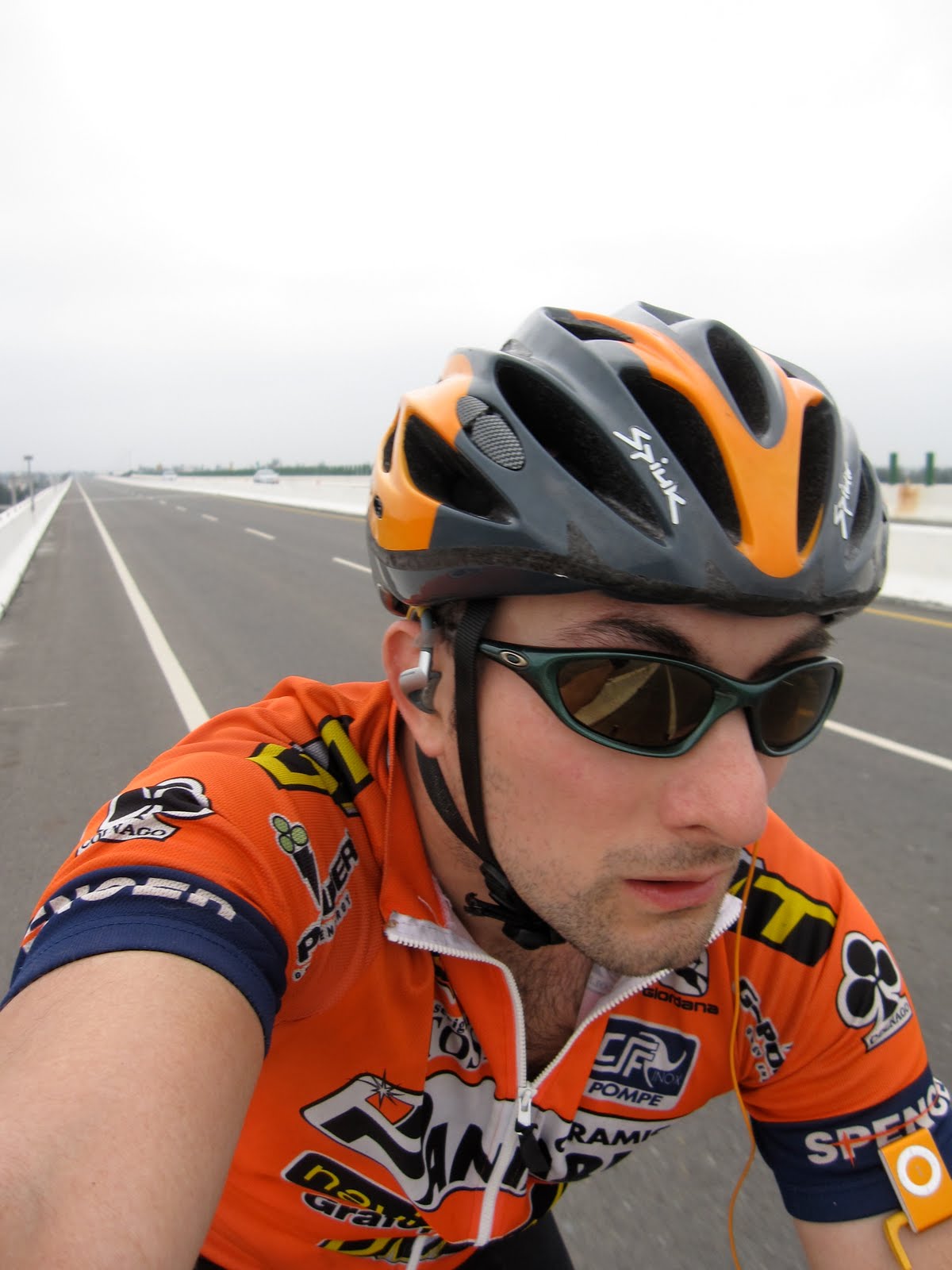
Nathan is a really strong and dedicated rider who brings his big-city Taipei style of cycling down to quaint little Taichung every so often. Nathan is fast and powerful, so I was eager to stretch my legs out a bit.


Old Power Line

We passed through Lukang and headed into the tangle of roads that cut through the mud flats and fish ponds along the coast.

Following the Freeway

I really wish I could fully describe where we went so that any interested readers could check it out for themselves, but the roads out there are just a scramble of little lanes and alleys that follow along the Number 61 Freeway. That's about all I can say to describe our route. I highly recommend just getting out there and if you have the time, try to get a little lost.


Nathan Opens A Can Of Whup-Ass!

I had a great time exchanging pulls with Nathan. We pushed the speeds up into the mid 40's and made use of the flat terrain to open it up... to run the carbon out... er whatever.


Navigating The Landscape

As we headed North, the headwind really picked up. I like to call it doing "flat hills." Both hills and wind involve a force pushing you backward that you must resist.


Overpass

We passed through all sorts of concrete bridgeworks and coastal construction projects. At one point Nathan and I exchanged pulls on a long, open bridge with a nasty headwind. We each managed to sustain a paltry 28kph the entire way and were both pretty much ready to turn the wind off by the end.

We wound our way back to the HSR station in time to meet the buyer and make a successful sale. It was a really nice day of riding. I felt great to be in good company with Michael and Nathan, and we had enough challenges along the way to give me the satisfaction of getting a good ride in. I love days like this.

Michael and Nathan Pose On A Dike

Nathan's Report with maps here

Sunday, April 4, 2010

Tour of Changhua County: 144km of Wind

My Route

I thought I would use my Sunday to train a little bit for my ride at the end of the month. I was hoping to pull in another century ride today, but I fell 10 miles short. No biggie. I just wanted to be sure of my initial route to the Highway 17 and to get a feel for my optimal sustained speed for my trip down. For these long haul days it takes a bit of planning to estimate how long I can maintain a certain speed to calculate into my overall trip. I was curious about the winds coming off the ocean as well. My last century ride I was feeling a little off. I think it was due to my dinner the night before. I usually like to load up on something bad that I can burn the next day. That night I didn't stick to my guns and was goaded into a stinky tofu dinner. Good food, but not what I needed. This time I did it right. I filled my glycogen stores beginning mid-week and my dinner was fish, beans, bread and veggies with a couple apples for dessert. Fuel to burn!
Pilgrims in Lukang

I took off from Taichung through Changhua City and made good time into Lukang, where they were having all kinds of commotion. I was hoping to take a few pictures for a couple upcoming essays I hope to post later, but it was just too busy, so I connected to Highway 17 and headed due South.
Roadside Produce

The road was wide and smooth with a bit of a breeze coming off the ocean, but it wasn't too bad. I had been keeping my speed up in the low 20's (21-24mph/33-38kph). I felt comfortable and strong as I passed the occasional old man on a scooter.

Tiger Trap

Just as everything seemed to be rolling smooth, I was snared by a tiger trap. Not one, but two long staples were embedded in my tire. I am kind of getting sick of this. It seems like every long ride I have been on in the past month has included someone getting a piece of metal lodged in in their tire. I don't know if there are than many random staples roaming the highways, or if some asshole is having a little fun in stopping cyclists.


Ninja Weapons?

I took out my repair kit and went to work on my tire. I quit carrying my mini-pump in exchange for emergency CO2 cartridges. I felt they would fit better in the seat bag. The tube was changed in minutes, but when I went to fill the tire with CO2, the cartridge contained only enough CO2 to seal the bead. I gingerly made it to the 7-11 that was 400 meters ahead and went looking for a pump. Many, but not all 7-11s in Taiwan carry bicycle pumps and this one did not. I would have to carry on and keep looking. Just before I hit the road again, a couple who were cycling out from Nantou, came by and I borrowed their mini-pump. It wasn't very good, but i had enough air to keep going with the possibility of finding a better pump.
Shooting The Bridge

I continued along with a badly deflated rear tire, hoping I wouldn't hit a rut or bump that would make me pinch flat. I had one more tube and no more air. Despite my soft tire, I was able to crank back up to 20mph.

Cho Shui River

I rolled on toward Mailiao (麥寮) and crossed the Chou Shui River. The Cho Shui has gained the political symbolism as the border between North and South. The power of the Kuomintang party-state had great difficulty making inroads into the areas south of the Cho Shui, where the KMT culturalization efforts were generally rejected by the locals.

Fellow Cyclist

The wind really started picking up on the Cho Shui and the whole landscape had long been enveloped in marine haze and fog. There was a hint of drizzle and it seemed it could actually rain. When I took off it looked like the sun was burning through the clouds... by late morning not a chance. I wished I had brought a wind breaker.

Rolling on the 17

I rolled into Mailiao and almost spaced my turn onto the Yunlin Local 154 as I was busy looking for a bike shop.
John Cougar Melon Farm

Mailiao Public Transportation?

I hadn't been on the 154 too long when I was hit by a heavy wind. I realized this wan not going to be an easy ride. As I rolled through one of those "Green Tunnels" Taiwanese like so much, the wind was ripping down the tunnel of trees.
"Green Tunnel!!!"

I headed North on the Highway 19 against a rough head wind and crossed the Zi Chiang Bridge (自強大橋). By this point the wind and rear tire was beginning to take their toll. I progressed across that bridge at 12mph and it made my legs burn to push forward. It is in these moments the mind fills with doubt. "Am I out of condition? Did I burn myself out? Did I bonk?"


Riding Against The Wind

Just over the bridge I found a 7-11 and stopped to get a little more water and food. Maybe even take a break with the hope that my legs would come back with a little rest from the wind. There, in the corner, I saw a floor pump. Saved! As I connected the Presta valve to my rear tire the needle jumped to a taut 30psi. Yes... I had just ridden 30 miles on a rear tire that had only been inflated to 30psi. I filled back up to 100psi and was off.
Rolling On A River

The rolling was much better, but the wind was still beating me pretty hard. The good thing about drop bars is that I could change to a narrow grip to keep my elbows in and my body as scrunched up as possible without the unwieldy feeling of a flat bar. This seemed to work well and my speed rose to 20-21mph despite the wind.

Most Of My Trip Looked Like This

The road back was a rough ride but as I neared Changhua city the winds subsided and the weather became a little brighter. I was soon hammering away in the mid-20's again. I discovered with relief that I hadn't bonked and I wasn't out of shape. I logged a slower time than I had hoped, 17.5mph average with the wind, traffic and stops. My total riding time was 5-hours three minutes.
High Five!