body{background-attachment: fixed ! important; }
Showing posts with label circling Taiwan. Show all posts

Wednesday, March 23, 2016

Taiwan Cycling Maps and Routes: Relaunch

Untitled

I would like to use this opportunity to relaunch my catalogue of Taiwan Cycling Routes and Maps. After a series of very unfortunate and untimely technical glitches, I have painstakingly recreated the maps I had on display.

They are now ready for your perusal.

I would like to apologise for any problems or inconveniences the missing maps may have caused.

These are not the only routes in Taiwan, but they may serve as a conversation starter.

Enjoy!

A.

Sunday, March 13, 2016

Taiwan's Round Island Trip: The Cultural Zeitgeist of Circling Taiwan's Center

IMG_3808.JPG
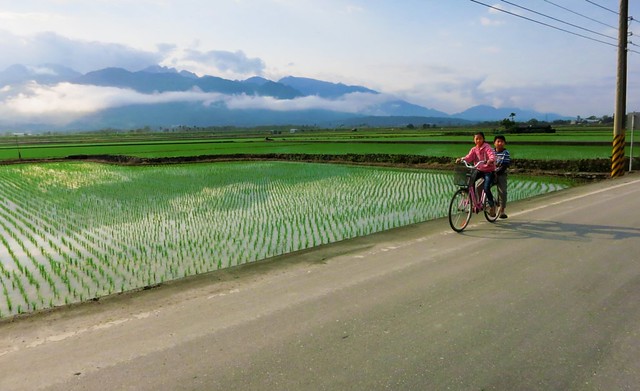
Jhuolan: Highway 3   


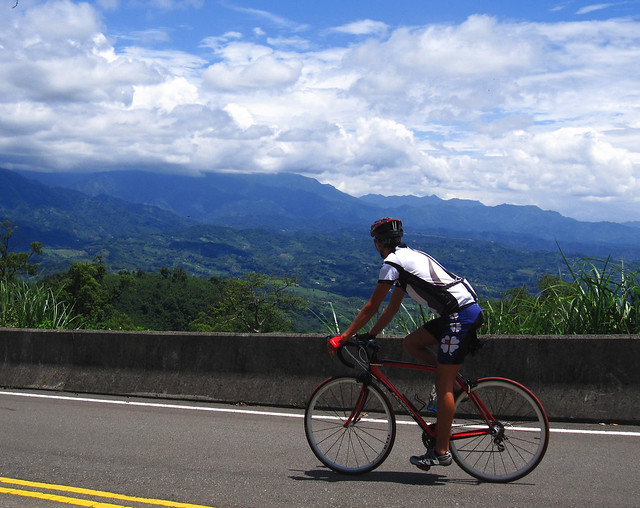
Many cyclists who live in Taiwan or come to Taiwan to visit, at some point or another, get the idea to bike around Taiwan. Locals call it the 環島 (huan dao) trip, and it has become an indelible part of local Taiwanese culture, often as a rite of passage or personal challenge. Although the idea of biking around Taiwan is nothing new, the huan-dao experience really gained traction following the release of the 2006 sleeper hit, Island Etude. Inspired by a true story, the plot is driven by a young man who, along with his acoustic guitar which he incredibly straps to his back, attempt to circumnavigate Taiwan by bicycle and in the process encounter a variety of people, their lives and ideas. The movie found salience in Taiwan at a time when the culmination of pro localization policies that had begun under president Lee Teng-hui, and continued under his successor, Chen Shui-bian, had reached their nadir before 2008 ushered in the reactionary policies of Ma Ying-jiu-- policies that hoped to both reign in Taiwan's 本土化, or localization movement, and reframe Taiwanese culture into a greater Chinese context. Island Etude did not serve to instil in Taiwanesea sense of a unique and separate Taiwanese culture, but rather, it found salience-- especially with younger Taiwanese-- in its ability to provide a visual representation of an identity that has been regularly challenged and denied by Chinese nationalists on both sides of the strait who have chalked up the Taiwanese identity to the fortunes of political actors and their ethnic politics rather than an expression of popular sentiments. Island Etude served as a very powerful symbol as circling Taiwan sketched a defined border as both a loving embrace and as a defensive shield that is understood by those within as belonging to a collective "we/us" vs. an undefined them. Within the closed loop of Island Etude's huan-dao trip, the film deals with overlapping ideas of identity, culture, environmentalism, cosmopolitanism, localism and ethnicity within the meaningful symbolism of Taiwanese cultural life.

Over the next eight years, the Ma administration would attempt to both promote Taiwan's huan-dao trip with the creation of Taiwan's first official round-island bicycle route, while attempting to obscure and reframe Taiwanese culture as a mere subgroup of a glorious Chineseness.

The power of Island Etude can be indirectly felt in the firm rebuke of Ma Ying-jiu'diminutizing cultural policies, and in the rise of several social movements, many of which were led and organized by Taiwan's younger generation-- movements which are loosely united through a shared sense of a Taiwan-centered identity and the feeling that the policies enacted by the Ma administration were antithetical to the goals of protecting Taiwan's security, environment, economy, culture and, most important,Taiwan's precious democracy. It was the generation of the Sunflower Movement that really made the huan-dao into the cultural phenomenon it is today, as it is the generation that has has filled the act with meaningful symbolism that weaves together identity, social action and the imagination of what Taiwan is and what it can be. 

---------------------------------------------------------------------------------------------------
In the spirit of Island Etude's 10th anniversary, I would like to present my own huan-dao 環島 route for those looking to also embrace Taiwan and learn the contours of land through the physicality of cycling.

There are so many options and so many roads. There are so many things to see and do. 

This route is a winter route running counter-clockwise assuming the rider will be arriving at the Taoyuan, Taiwan International Airport for a couple weeks of cycling without camping equipment.

I would advise the rider to be in good physical shape and have gearing for climbs. 

I'll start this route in Sanhsia 三峽 as it is near the end of the Blue-Line of the MRT and close to the airport.

Untitled
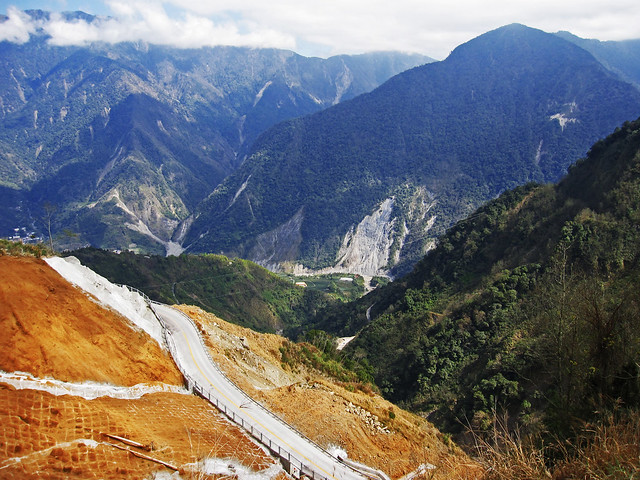
Highway 7 (Northern Cross Island Highway)

Untitled
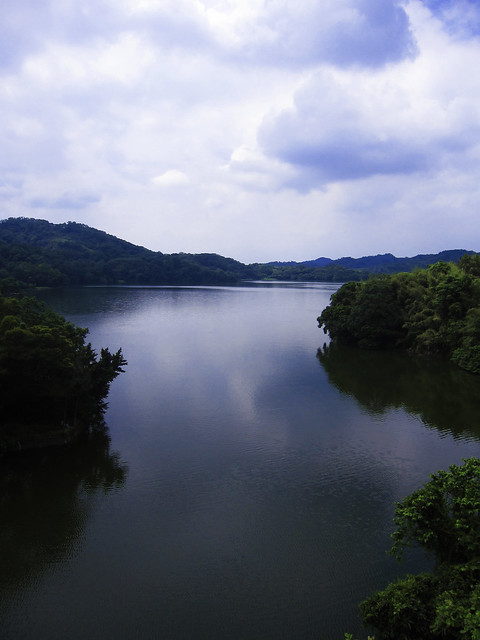
Mingde Reservoir: Miaoli Route 126

Untitled
Guoxing Township: Highway 21

Wujie
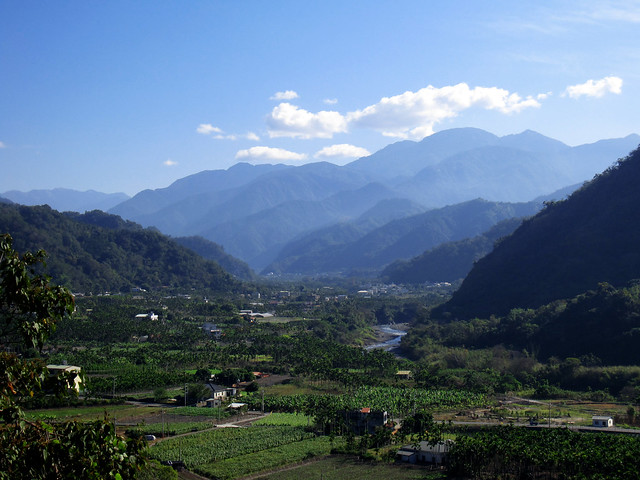
Wujie, Nantou: Route 83

Untitled
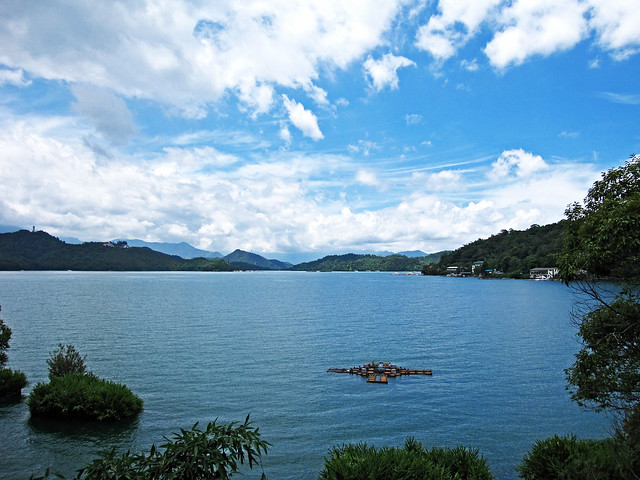
Sun Moon Lake: Route 21

  Untitled
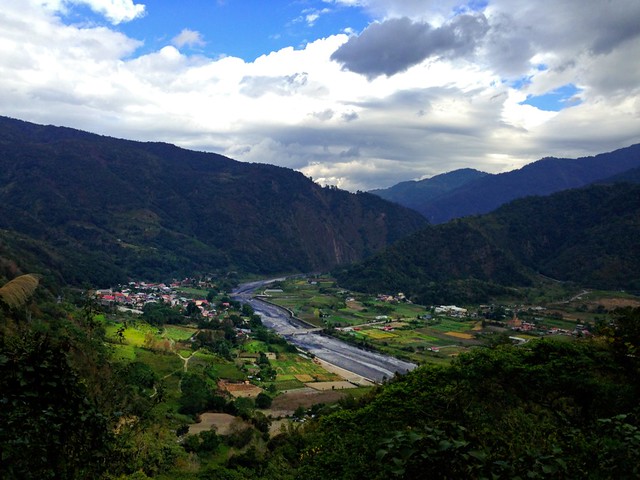
Renai Township: Nantou, Route 56

Untitled
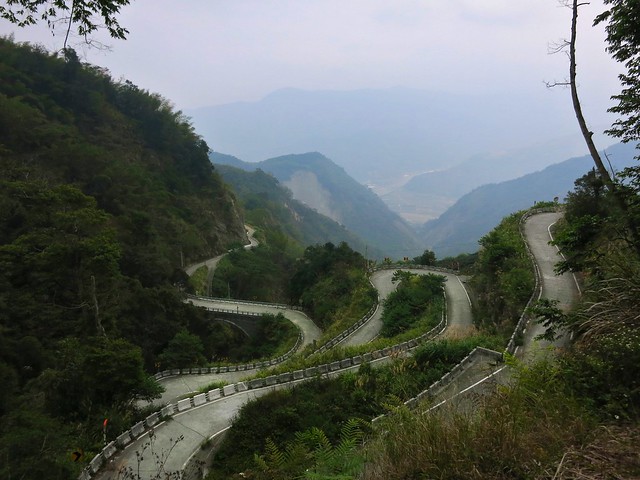
Tataka (Tatajia), Alishan: Highway 21

IMG_4774
Highway 27, Kaohsiung

Untitled
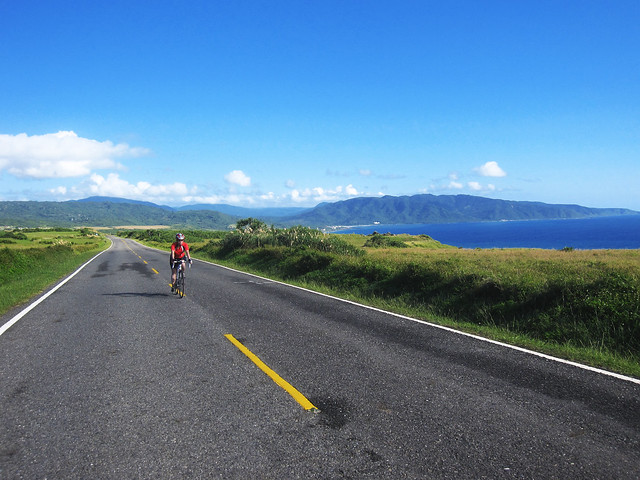
Kenting: Route 26

Untitled
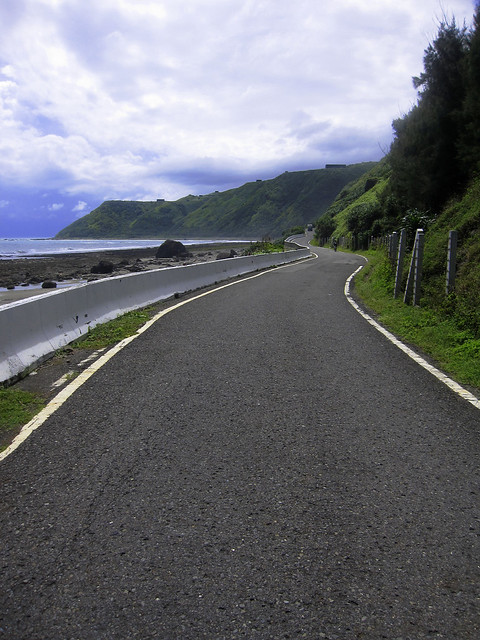
Manzhou Township: Highway 26

IMG_3566
Zhuofu Industrial Rd., Fuli, Taidong County.
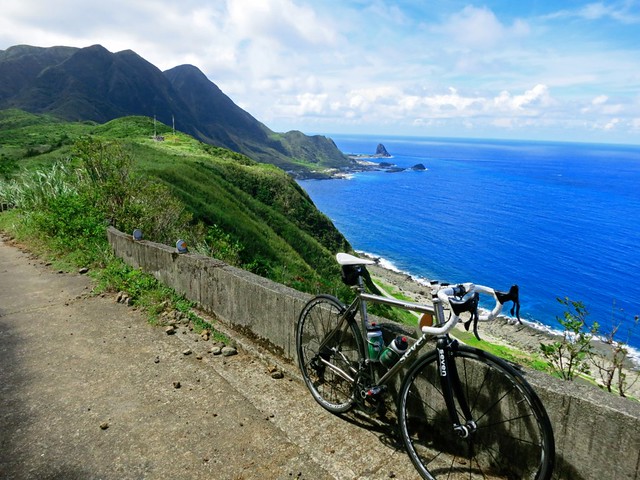
Seven Cycles Axiom SL: Biking Lanyu
Lanyu

IMG_0597   
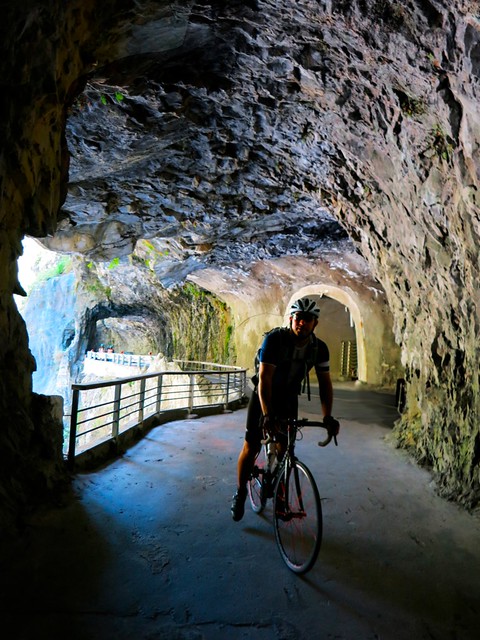
Taroko Gorge: Highway 8, Hualien


Untitled      
Iilan: Highway 9


Route 3,435,248 - powered by www.bikemap.net

Saturday, May 21, 2011

Hot Blooded Cycling Around Taiwan: Tea, Cycling and Imagined Communities


Check out this brilliant piece of marketing that taps several Taiwanese cultural memes to reach the consumer.

The advertisement is titles Hot Blooded Cycling Around Taiwan, for the Tongyi brand of fresh Taiwanese tea that is packaged and sold by the carton. The term hot blooded does not translate very well into English as the term can be confused with being "easily angered" or "horny". In Taiwan the term "hot blooded" means "enthusiastic and motivated by something". Sorry to all you Foreigner fans out there.

The drinks are sold in black, green and oolong varieties, with the green tea providing a sugar free option.

The advertisement shows a group of young, hip Taiwanese on a bicycle tour around Taiwan, an activity that is particularly popular with college students. Circling Taiwan by bike has become regarded as an informal rite of passage in recent years.

The script for the ad might be translated as follows:

Taiwan... We're coming!

Now is the time!

Ooh Ahhh!

Oh so cool.

If you don't do it. It doesn't hurt. If you do it, you'll make a difference.

When it's fresh, it's original.

Try It! Tongyi Chun Chi Cha (Pure Drinking Tea)

The marketing department used several images to associate the product with various memes that are closely associated with the Taiwanese cultural and national identities. Although the marketing department may not be out to make a political statement (I assume they are doing what marketing departments do and trying to better sell products), by taking a semiotic look at this little ad it is possible to understand the salience of these images in contemporary Taiwan. It is no accident the bicycle plays a major role as the symbol of the Taiwanese identity... even if these images are being exploited in the name of Mammon.

First, the ad explicitly screams "Taiwan", which is not only the common name for the country, but also a demonstration of how Taiwanese imagine their community.

The ad also focuses on youth, which has also been a major focus demographic for political actors as they try to appeal to all Taiwanese, but youth will represent change this year as they are increasingly dissatisfied with the number of opportunities available after graduation.

Next, the ad focuses on the activity of circling Taiwan, which is seen as an essential part of learning and knowing (and imaging) that community. Circling helps denote the important borders of the inner and the outer.

Lastly, the advertisement uses the bicycle, which, for many Taiwanese, has come to symbolize Taiwanese culture and achievement as Taiwan is known as one of the world's largest producers of bicycles and bicycle components. The bicycle also symbolizes the values of freedom and mobility. It is also synonymous with a youthful, hip activity. There has been a recent sentiment of longing for change and a yearning for a fresh start--a breath of fresh air.

Although this is only a short ad, The marketing strategy betrays powerful sentiments of identity and the aspirations of more than just a few Taiwanese.

Also: