body{background-attachment: fixed ! important; }
Showing posts with label Bonnie Tu. Show all posts

Tuesday, November 14, 2017

Bruised Bicycle Bellwether: Giant Reeling in China Market

Untitled
China, once the most promising bicycle market is now a heavy burden for Giant harming the company’s financial results. There are even no signs for improvement as Giant points to China’s slow economy. Even the country’s booming bicycle sharing systems, in which Giant is involved directly as well as via its own bicycle sharing program YouBike, could not give much financial relieve.--Bike Europe (11/14/2017)
The bicycle industry is already suffering with multiple pressures from a shift in retail channels to currency exchanges and cultural change in areas traditionally more favorable to higher-end cycling equipment. For most of a decade we have heard one of the industry leaders beating the drum for Taiwan's economic (and political) integration with the People's Republic of China. 

Or as Ralph Jennings wrote in 2009:
TAICHUNG, Taiwan (Reuters) - Economic powerhouse China and export-reliant Taiwan, political rivals for six decades, agreed on Tuesday to negotiate a trade deal that would cut tariffs and bring the two sides closer. 
Of course ECFA was never intended to be entirely about economic, but rather a means to rein in Taiwan's independence, which is supported by a vast majority of the population, in creating an economic dependency with deep political implications. 

ECFA garnered vocal support from Giant Manufacturing and Ma Ying-jeou's re-election campaign even saw then Giant chairman, Anthony Lo, issue a last minute vote of confidence to Ma's Kuomintang Party in the closing days of the election with an urgent call for support of his China-centered policies. He continued to remain bullish on Ma's vision and brushed the issue with tones of urgency. 

In 2010 Giant put its money where it's mouth was. 
According to reports from Taiwan media, appreciating the huge potential of the mainland market after the signing of the ECFA, Taiwan Giant Global Group plans to strengthen the capability and competitiveness of the mainland headquarters this year by launching a new investment plan to invest an initial RMB 1.16 billion for the establishment of the Bicycle Industrial Park in Kunshan, Jiangsu Province.

Reports disclosed that with the expansion of the market, Giant Global Group will increase its investment to raise its market share in the mainland bicycle market. Based on its original SUV brand GIANT, the Group will vigorously develop a new brand MOMENTUM to raise the market share of passenger vehicles. The medium-priced brand will be aggressively promoted through about 2,000 distribution channels.

Giant Global Group plans to increase its investment to build a bicycle plant in Kunshan, which has gained great support from the mayor of Kunshan Guan Aiguo. The 40-hectare new plant will consist of plants for bicycles, frames, carbon fiber and electrical vehicles. Besides, the cycle track & bicycle theme park plan will also be pushed forward. The investment in the initial stage amounts to USD 36 million (NTD 1.16 billion).

Reports disclosed that with the expansion of the market, Giant Global Group will increase its investment to raise its market share in the mainland bicycle market. Based on its original SUV brand GIANT, the Group will vigorously develop a new brand MOMENTUM to raise the market share of passenger vehicles. The medium-priced brand will be aggressively promoted through about 2,000 distribution channels.
 
Giant Global Group plans to increase its investment to build a bicycle plant in Kunshan, which has gained great support from the mayor of Kunshan Guan Aiguo. The 40-hectare new plant will consist of plants for bicycles, frames, carbon fiber and electrical vehicles. Besides, the cycle track & bicycle theme park plan will also be pushed forward. The investment in the initial stage amounts to USD 36 million (NTD 1.16 billion). (6/2010)
Giant's self proclaimed "Godmother of Women's Cycling", Bonnie Tu, doubled down on ECFA and the China market. According to a Bicycle Retailer article (7/2010), Tu could barely suppress her enthusiasm for the post ECFA China boom.
Bonnie Tu, Giant Manufacturing’s chief financial officer, told the Financial Times the agreement could help the company better manage its production. Giant has factories in Taiwan and China. Giant builds its high-end bikes, particularly carbon fiber, in Taiwan. Lesser value models are made in China. 
“If there is no tax issue, we can really integrate our factories and shuffle production as we like,” Tu said. “China’s economy of scale for high-end bicycles could be really big,” she added.
This despite the beginnings of a quiet exodus of Taiwanese firms from China. 
Our future lies in China and one of our goals is to develop this rapidly expanding market”, said Tony Lo, CEO of Giant Global Group at the press conference hosted by the Taiwan External Trade Development Council (TAITRA) at last week’s Eurobike show. “The best platform to build up this emerging market is the Taipei Cycle Show which is taking place from March 7 – 10, 2012,” said Lo.-- Bike Europe (8/2011)
... and later: 
Anthony Lo (羅祥安), chief executive officer of local bicycle maker Giant Global Group (巨大集團), said the government needs to establish a vision.
“What Taiwanese enterprises want to see is the government striving to help businesses build unique brands that can provide innovative products and services,” Lo said on the sidelines of the forum. 
Lo said Taiwan needs to integrate into regional markets as soon as possible so local firms can enjoy the trading privileges that other nation’s companies do, such as tariff exemptions. 
“The markets are changing so fast that the rules have been reset, and if we don’t catch up, it is going to be harder for us to hold our own in the global market,” he added.--Taipei Times (4/3/2013)
The China market has been a quagmire for some time and several indices have highlighted this situation.
The Chinese market for Taiwanese bicycles declined by 33% to 79,000 units. Though not yet that large, the Chinese market was seen as a main growth market for several years. This development has now stopped due to the economic decline in China.--(11/17/2015)
This past year Bicycle Retailer reported:
The weak link in global sales for Taiwanese companies, including Giant, remains China. "Giant China's performance continues to suffer from soft demand and the popularity of bike sharing, which affected sales recovery in the first half," Giant said. 
China's infatuation with bike sharing has forced companies like Giant and Merida to close some company-owned stores as retail sales have plummeted, particularly for higher end models. Independent shops have also been hurt by a lack of demand brought on by bike sharing. 
Still, Giant said it believes its co-sponsorship of pro-cycling's Team Sunweb, and its performance in the Tour de France and the Giro d'Italia, has elevated its global brand awareness and will drive future demand, especially for its carbon frames and accessories.
"Looking forward to the second half of the year, Giant projects Europe and the U.S. will continue its growth momentum," the company said. However, it cautioned that unpredictable exchange rates as well as continued turmoil in the Chinese market would be of concern for the remainder of the year. 
But if we just wait a bit longer...maybe China will do us a solid....

Friday, April 29, 2016

Bikes, Sex and Power: Taking Back The Bike

Untitled

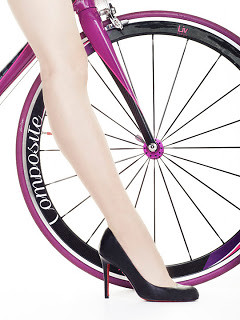
A few years ago I wrote a small article--one of my earliest-- in regard to Giant's Liv Giant line of women specific bicycles and related products. The marketing campaign at that time--the one from which I found the title picture of this post-- featured a whole assortment of sizzling glamor shots depicting a menagerie of pixie-waif models painted in couture make-up, exquisitely styled hair, wrapped in flowing designer gowns, and capped with nine-inch heels. The models were on boats and, in one case, seemingly out beyond the Dune Sea, with the occasional Giant branded downhill mountain bike or road bike in partial view.

The Liv/Giant project was the pet project of Bonnie Tu, Giant CFO, who enthusiastically took to the cycling press to promote her vision of women's cycling.
“To get more women on the road, we have to get them to think of these things as accessories... Natural, everyday accessories, like handbags."-- Bonnie Tu, Giant CFO 
Imagine if the above statement had been uttered by a man.... Being a woman does not excuse Bonnie Tu from overt sexism.
"Obstacles still exist: Asian women don’t want to get a tan from being outside and they fear looking masculine on a bike. But with a focus on fashion and lifestyle, Giant’s boutique is making inroads with upper-class, executive women, said Tu while giving BRAIN publisher Marc Sani and I a tour the day before the Taipei Cycle Show."--Bonnie Tu, Giant CFO 
"What she’s
found: “Men are concerned more
with tech and performance. Females take technology for granted — it’s important, and they assume that they are getting the best. But as women, we believe we are entitled to something chic, beautiful, and distinctive. We believe design should be better. We care about the total look.” --Bonnie Tu, Giant CFO(2016) 
At the time I was completely astounded by the amount of absolute contempt a successful female business leader in Taiwan could have for both her customer and her gender. and I wrote:
Bonnie Tu presumptuously claims to be the "godmother" of Women's cycling and yet I can't help but feel she views Taiwanese women through the chauvinistic and dismissive lens shared by so many men. Although many women (and men for that matter) in Taiwan (and elsewhere) buy expensive name brands and buy into modern materialism, Giant's concept feels even more awkward and patronizing considering the new roles of women in contemporary Taiwanese society... including Bonnie Tu, who holds the deputy post in one of the nation's largest and most successful companies. Compared to many countries around the world, including the United States, it is not uncommon for women in Taiwan to excel to become leaders in their respective fields and vocations. Taiwan has already had a female vice president and may very well have a female president or at least presidential nominee in the near future. Women not only hold high positions in politics, but also in every major vocation in Taiwan. Women in Taiwan have taken the agency to plot their own lives and careers to pursue a variety of interests. I am always surprised by the great plurality I have experienced in Taiwan. This is why I am so puzzled that Giant would reduce women's cycling to "an accessory, like a handbag". This is an insult to all the strong, intelligent and capable women out there who do not need to be coerced into buying a bike just to go with a good pair of pumps. Women in Taiwan are perfectly capable of buying a bike for any number of intelligent reasons, and do so.
I wrote a follow-up with a little more insight into the problem:
" under capitalism, patriarchy is structured so that sexism restricts women's behavior in some realms even as freedom from limitations is allowed in other spheres. The absence of extreme restrictions leads many women to ignore the areas in which they are exploited or discriminated against; it may even lead them to imagine that no women are oppressed"-- bell hooks
In the wake of that first article I learned that Bonnie Tu and several high ranking decision makers at Giant had, in fact, read my article (I honestly felt flattered) and I learned they had actually discussed my observations, but they felt steadfast in their decision to move forward with their marketing campaign--a campaign that served to depict women as sexualized objects too weak and too insipidly stupid to not only dress appropriately for cycling, but to not even be able to feature them using a bicycle. Yes, the women in the advertising were not even pictured using the products they were hired to sell. I was disgusted by the blinding arrogance in the upper echelons of a company where nobody dared to step up and point out such a disastrously wrongheaded mindset for such a forward thinking company. 
"All major brands claim they design specifically for women, but it’s not true. It means something when I say I’m the godmother — nobody should doubt that our women’s bikes are designed for women by women."--Bonnie Tu
 That was back in 2010.

The bicycle is one of the most egalitarian inventions to come out of the machine age. It is a great equalizer that has been leveraged to not just provide physical mobility across the strata of age and gender, but it has also provided socioeconomic mobiliy and empowerment to the powerless. The WorldBank even commissioned a report on the impact of transportation and empowerment of women. So it is a shame to see how it is marketed.
One of the most advocated interventions by development agencies has been provision of bicycles in the rural areas. Though it might seem a positive, benignant intervention on surface, a little unearthing of the gendered aspect of bicycle usage will reveal that many cultures do not accept such movement of women primarily due to rigid culture underpinnings in women’s movement and its representation. Overton (1996) documents a case in rural Mozambique where bicycles that were distributed to poor village women to alleviate their extreme transport burdens were taken from them by their husbands or other male relatives, who often only used them for recreational and status purposes. 
Now, we come to see how little attitudes have changed, especially at the highest level of cycling for sport where the embedded sexism of the entire sport was encapsulated in the one utterance of Shane Sutton, (resigned) head of British Cycling, who glibly told cyclist Jess Varnish that se was "too old" and to, "just move on and go have a baby."

Lee Rodgers boils it down:
“The men get all the glory and TV coverage as they are doing a ‘proper job’,” she writes, “while the girls are ‘allowed’ to be there on the day. That would be sexual discrimination by design. The rewards would follow the coverage, so the men would get the prizes and the girls some token gifts. Welcome to the reality in the world of elite cycling where sexism is by design. And cycling is not alone. 
“When challenged, those at the top of these sports are well versed in the platitudes they need to put out to deflect the temporary criticism. A well-crafted statement of intent, a desire to rectify; but the reality is decades of inaction. Sexism spins all the way down from the top to the bottom. Somewhere in the middle of this are Shane Sutton and Jess Varnish.” 
She’s right, and anyone who would argue against is nothing less than stupid or willfully misogynistic – or both, as the two do both go hand in hand. What will happen here, once the initial hullabaloo has died down (and it wasn’t exactly a cacophonous din in the first place), is absolutely nothing. Sutton will retain his job, Varnish will be labeled a trouble maker as Cooke was, and the world will trundle on as before.   
When I think about the gendered state of cycling and when I think of cycling's non-gendered potential, I see no difference between the opinions of Bonnie Tu, Shane Sutton and the men of Mozambique. They are all misogynists. Like the men from Mozambique, Bonnie Tu wants to reduce the bicycle and therefore the woman, into a mere status symbol, a tool of recreation, and an image to be consumed by a male. Giant's marketing scheme is aimed entirely at the male gaze, not the female cyclist. Shane Sutton's views are those of the consumer. He wants to consume the female cyclist, use her for her powers as long as she is useful to him, and then disempower her by separating her from the source of her power and mobility so that she can assume a gendered social role.

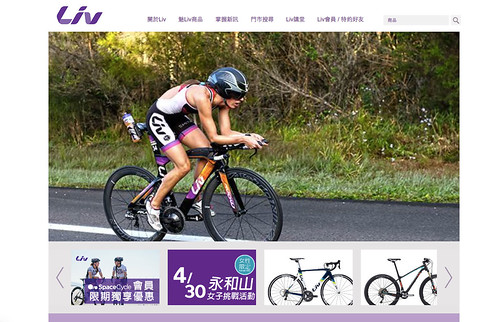
As I go back, six years later, I am pleased to see that someone more important than myself has gotten ahold of Giant's ear and redirected Liv/Giant toward a more inclusive culture of what women's cycling can be. UPDATE: (The voice comes from Mark Stocker's DDG agency in Taipei...read between the lines here.) Giant's new website is full of women enjoying almost every aspect of cycling and actually using the products. These are athletic women, these are independent women, these are muscular women, these are woman with an entire range of identities; mothers, daughters, wives, people, athletes and cyclists. These are more like the people I see on the bicycle. The next boundary to break might be age. There are no senior cyclists pictured.

Over the past month I have been involved with two solo tours of Taiwan undertaken by two different and inspiring women. Neither of them were in gowns and make-up. They were covered in road grit like everyone else. 

My point is, if over the course of a few years Giant is able to see its erroneous thinking, and reimagine how the company imagines women in cycling... then why can't the rest of the sport and industry make the same choice. Of course, I am not going to believe the change in heart has anything to do with anything other than good business sense, but even in the shrewd world of making money it is evident that bringing women's cycling on par with the men's sport, is simply good business.   

Giant is not perfect by any means, and they have numerous other issues, but this is one case where being Giant did not stop them from making some serious changes in realigning themselves with the realities of its customers without demeaning them. Now if Ms. Tu would kindly step away from the mic.  
   

   Untitled

Thursday, August 19, 2010

Treatise On Superfluous Things: Giant "Woos" Women


The New Face of Women's Cycling?

“To get more women on the road, we have to get them to think of these things as accessories... Natural, everyday accessories, like handbags."-- Bonnie Tu, Giant CFO

As a man talking about women and women's cycling, I am sure I am putting myself in great danger of talking like an ass. When was the last time a man really understood women? I also have to say that in order to write this I had to... er... man up and actually put my sophomoric maleness aside or at least under a critical light to better do justice to this topic in a more mature way than I am usually comfortable doing. Since when has acting mature ever been fun? I am also inspired by the many women riders I have met and seen in my time as a cyclist in Taiwan.

Ok! Here goes nothing...

Now that my wife has finished her thesis, she has been exploring the idea of buying a bicycle for exercise and recreation. I have tried to keep my distance and only offer help when she asks, as I have a tendency to get really excited about bikes and then kill the buzz. Shhhh!

My wife has been doing a really good job with her research and I am having fun watching her do all the responsible stuff that comes with buying a bike. She has bought books, magazines and searched online for as much information as possible for what she should be doing.

And then I got the following email:

"I hate how they promote women's bikes"

Along with the email she included a link to the the Liv/giant website.

Liv/giant is a company-wide concept of products and retail space aimed primarily at women and at increasing the number of women who ride bicycles. According to Giant CFO, Bonnie Tu, who is also taking point on the Liv/giant campaign, the goal of the concept is to "woo women into cycling".

On this blog I have explored the idea of how women approach and interpret cycling, and moreover, how increasing women's involvement in cycling can transform the cycling landscape. Although Giant offers a range of bicycles for women, I am sadly disappointed in the way Giant perceives women and women's cycling. Despite the company's massive revenues and leading R&D, Giant by no means lives up to its name as a leader in the future of women's cycling.

The Liv/giant website linked above provides a fantastic opportunity to analyze and discuss the semiotics of Giant's message; a message that makes me increasingly uncomfortable.

The Website:

The link leads to a slick, modern website with large photo images and soft graphics. The sequential photo montage depicts a glamourous young woman in fashionable clothing, make up and stylish hair, relaxing and enjoying a life of leisure outdoors and on a boat. The images are indistinguishable from those you might find in the scented pages of the top fashion magazines, like Elle, Cosmopolitan, Vogue, and Marie Claire. In every picture the model is wearing a skirt or tube dress, and high-heels. At first it is difficult to discern what exactly is being advertised as a bicycle only appears in only four of the ten slides, the other slides seem completely irrelevant to cycling. It actually appears that the bicycle is merely an accessory to the clothes, make-up and the girl. That may be Giant's point after all... not to sell bikes, but to sell bicycle clothing to women.

Ready To Ride?

"We should not be too familiar with the lower orders or with women."--Confucius

It is obvious the model depicted in the advertisement does not ride a bicycle. If she were riding a bicycle she would not be wearing skirts, heavy fabrics or clothing that might drape into a chainring. Her hair would surely not be glossed into place and her make-up would have run down her face in the heat and humidity. She would not be white, and would have much better muscle tone. Unless she has clips in the base of those heels, I don't see how she does it. Nothing about the woman indicates that she rides a bike.

I am actually having a hard time believing this concept and marketing campaign was headed by a woman and a cyclist. Not only does Giant buy into and promote the oft repeated stereotype of women in Taiwan as vapid, silly creatures, who shallowly concern themselves with fashion and spend someone's money on handbags and accessories, but Giant, a company that sells one of the greatest tools for mobilization and liberation, employs imagery of their object from what feminist theorist, Laura Mulvey, identifies as the "male gaze", a term which borrows from Jacques Lacan to demonstrate how media images can be gendered to reflect the sole view of the heterosexual male as the predominant frame.

The fetishized, gendered images of the slender female body with ample necklines, bare, airbrushed skin, and voyeuristic glances up skirts, long, slender legs, appeals more to the mass-marketed male frame of of the eroticized woman that has been the the predominant grammar of fashion photography for decades. This type of fetishization of the sexualized female (for the pleasure of the male) does not empower women, but rather reinforces feelings of insecurity and a negative body image: These are not empowering images for the majority of women and they do not reflect women's athleticism, strength, power and determination. They are the exact opposite of how cycling should make a person feel. Nothing can encourage positive ideas of body image faster than by pushing the body to do amazing things and to accomplish the "impossible".
Gear For Cycling?

"Nobody should doubt that our women’s bikes are designed for women by women.”-- Bonnie Tu, Giant CFO

Bonnie Tu presumptuously claims to be the "godmother" of Women's cycling and yet I can't help but feel she views Taiwanese women through the chauvinistic and dismissive lens shared by so many men. Although many women (and men for that matter) in Taiwan (and elsewhere) buy expensive name brands and buy into modern materialism, Giant's concept feels even more awkward and patronizing considering the new roles of women in contemporary Taiwanese society... including Bonnie Tu, who holds the deputy post in one of the nation's largest and most successful companies. Compared to many countries around the world, including the United States, it is not uncommon for women in Taiwan to excel to become leaders in their respective fields and vocations. Taiwan has already had a female vice president and may very well have a female president or at least presidential nominee in the near future. Women not only hold high positions in politics, but also in every major vocation in Taiwan. Women in Taiwan have taken the agency to plot their own lives and careers to pursue a variety of interests. I am always surprised by the great plurality I have experienced in Taiwan. This is why I am so puzzled that Giant would reduce women's cycling to "an accessory, like a handbag". This is an insult to all the strong, intelligent and capable women out there who do not need to be coerced into buying a bike just to go with a good pair of pumps. Women in Taiwan are perfectly capable of buying a bike for any number of intelligent reasons, and do so.

On A Pedestal: Liv/giant Boutique in Taichung

Lastly, I feel this marketing approach is short sighted and irresponsible in many ways, not the least of which is the impact of selling bicycles as simply accessories. If this is a successful approach and manages to convince more women to buy bicycles it is easy to view it in a positive light. It might even be economically savvy and make lots of money for Giant. More power to them if women respond to this type of marketing. The downside is that although cycling is more friendly to the environment than automobiles, they do not come without an environmental price tag. The metals have to be mined, the materials transported, the electricity spent, and all the other little things that go with industrial production . A bicycle can only negate that footprint if it is actually used and used well. Selling bikes as superfluous fashion accessories that may do lots of sitting really does little to negate the environmental deficit of the bike's production.

I see nothing wrong, and lots right about a large bicycle company targeting women and giving women a space in the marketplace to explore cycling without the feelings of intimidation and inhibitions in dealing with a male dominated sport. The Liv/giant store does a lot of things right, but I DO wish Giant would approach women cyclists with more respect and the acknowledgement that Taiwanese women have the ability and the intelligence to approach cycling for its obvious merits and not for the superficiality of the runway.

"Let me tell you what I think of bicycling. I think it has done more to emancipate women than anything else in the world. It gives women a feeling of self-reliance. I stand and rejoice every time I see a woman ride by on a wheel... the picture of free, untrammeled womanhood."-- Susan B. Anthony


She Pedals Magazine


For an excellent alternative in the portrayal of women's cycling, I suggest the approach taken by SHE pedals magazine, a magazine devoted to women's cycling that depicts women cyclists enjoying the sport while maintaining their femininity without falling into a dated male caricature. I picked up a copy in Palm Desert and found it to be a provocative portrayal of the sport. Even in the cover image we see a silhouette postured to display independence and power. Her physique is not waifish, but fit. She is confident and assertive.

Good Advice

I would also suggest picking up a copy of Every Woman's Guide to Cycling: Everything You Need To Know, From Buying Your First Bike To Winning Your First Race by Selene Yeager. It offers more confidence building information for beginning female cyclists than Twiggy. Muscles like those will never get her in a Giant ad, but I bet she can kick some ass on the bike.

Women deserve far better treatment from Giant.