body{background-attachment: fixed ! important; }

Sunday, May 8, 2016

A Whole Lotta Lovely!: Ride and Links

Untitled

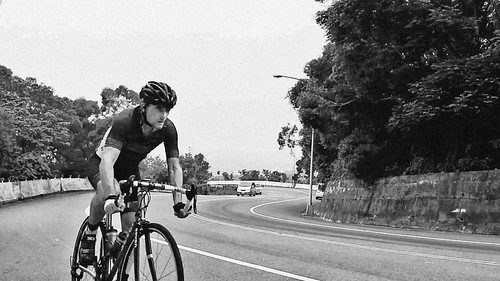
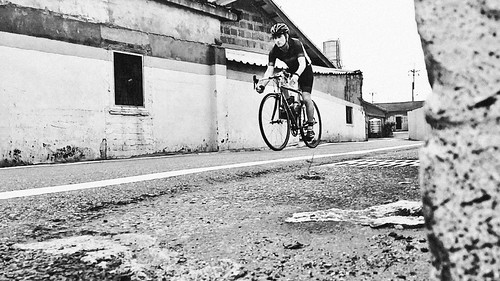
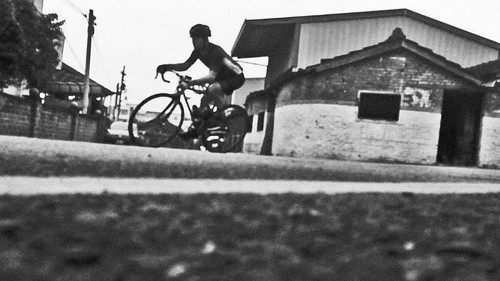
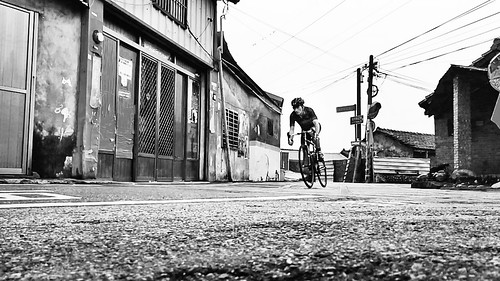
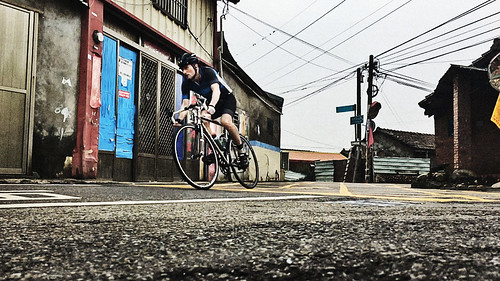
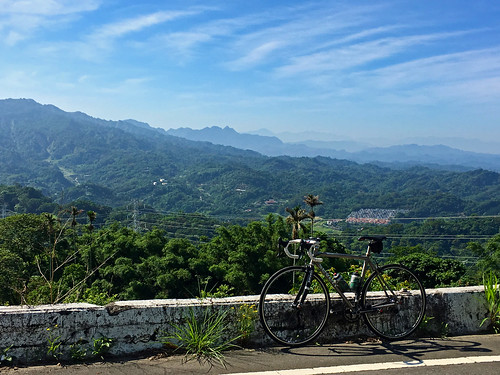
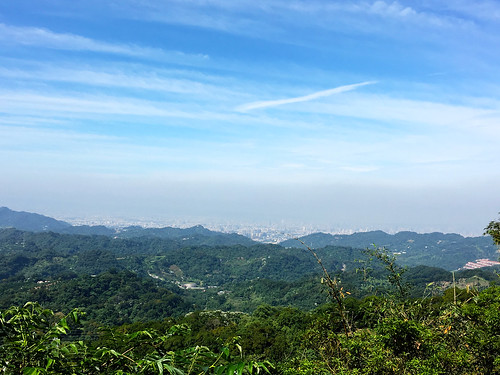
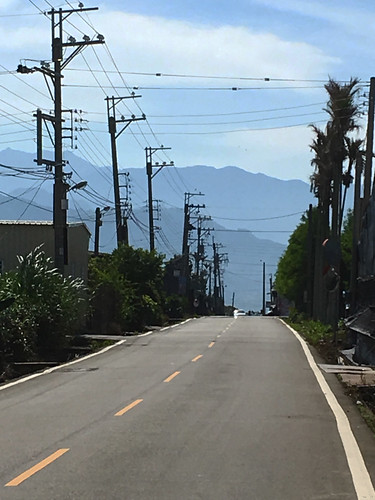
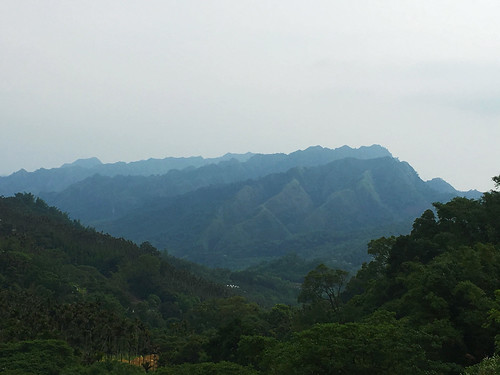
One of the great things about living in Taichung, is the close proximity to the hills. Taichung allows the rider innumerable combinations of hilly routes that sit right above the city. Unlike some other areas of Taiwan, most of these routes offer up the climbs and the scenery, without ever having to backtrack on the way home.
Untitled

I have done this route dozens of times but it never feels old. I might... but the route never does. This time out I was testing some equipment for a future post and project, and there is no better testing ground that the mixture of high velocity descents, tight corners, distance and heart stopping climbs.
Untitled
I normally would post on this route as I have so many times in the past, but there is something to be said of the sensation of descending on a well built titanium bike not everyone understands. It allows you to use your hips to fling the bike into the corners as you stomp the outside pedal. It is wonderfully reactive to rider input.

Then, while climbing over the dreaded 136, my body told me to do this route much more often and get used to the heat. The cramps hit like firecrackers. It was a lovely Saturday on the bicycle and it was the type of ride that keeps me scheming for the next adventure.  
Untitled

Links:

  • Over the weekend, Taiwan's Huang Ting-ying on the Women's circuit, took the opening stage of the Tour of Chongming Island in Shanghai. It is remarkable that these incredible Taiwanese cyclists such as Huang and Hsiao Mei-yu and Sally Wang, among others, have been able to accomplish so much in the sport while viewing their bicycles as accessories, like handbags.


As goes Taipei, so goes Taichung, with other cities around Taiwan following suit. And as go the big cities, so go the smaller towns around Taiwan, thousands of them connected by bicycle-friendly roads, and in many cases dedicated cycling paths.
Readers can assess this one.   

Friday, May 6, 2016

Short Rides: Friday Links

Untitled Ebikes: 

Beginning July 1, Taiwan's Ministry of Transportation will be tightening regulations on Ebikes requiring riders to be licensed and the vehicles to be registered with the MoT. The new regulations will view the Ebike as a light motor vehicle as opposed to a bicycle. The move was due to the sharp rise in collisions between Ebike riders and pedestrians. Taiwan's strategy is a bit more subtle than the heavy-handed approach China has taken to address the problem by banning the vehicles in several major cities. 

Travel and Politics: 

A traveller from Hong Kong uses the bike to take a gentle dig at Beijing by contrasting Taiwan's urban development to Hong Kong's recent trajectory. 
On our first stop in Taipei what struck me was the freedom of movement; there are bikes everywhere. 
It’s similar to the mainland in that regard, but you soon notice how the government has been responsive to the needs of its citizens. 
Everywhere you go in Taiwan there are bike paths, sloped shoulders to drive on and off the pavement, and even lights specifically set up for cyclists to bike diagonally at crossing. 
As a tourist I felt I could travel anywhere with little concern for practicality.
 Pollution and Commuting: 

The Guardian has put out a piece that claims the benefits of cycling outweigh the harm caused by inhaling exhaust fumes in traffic.
The researchers modelled the effects of cycling and walking at different levels of air pollution and established a tipping point – the length of time after which there was no further health benefit, and a break-even point, when the harm from air pollution began to outweigh the health benefit.  
For Delhi, the most polluted city on the World Health Organisation’s database, the tipping and break-even points for cycling were 30 and 45 minutes per day respectively, while for walking they were 90 minutes and six hours and 15 minutes respectively.
While the researchers looked at the levels of particulates – PM2.5 – in the air and not NO2, which has also been established as harming health, “we did lots of sensitivity analyses and the message would have been the same”, said De Nazelle.
Personally, I don't feel braving PM2.5 levels over 150 is enough to convince me to test the researchers hypothesis. I do know that my asthma will flare up after riding in that shit and we should all be lobbying to not have to make the choice to bike in it at all. I guess they are trying to get us all to feel better about the realities. 

Disc Brakes: 

Don't throw away that disc brake equipped bike just yet... it appears the UCI has decided to give limited testing another go this June.  

Wednesday, May 4, 2016

Ride of Silence: May 18th in Taipei

Untitled
"The graphic above represents Taiwan's bicycle casualties over the past year:
Each broken bicycle on this page represents a broken home. We located the corresponding information from the accident data provided by the government, although it has been difficult to find (and not entirely a full account), I hope we can remember those lost riders. They were once a story with blood and tears in their lives, not just a government statistic. May they rest in peace."
--Ride of Silence-Taiwan (for the full interactive graphic in Chinese, please go to the Ride of Silence Taiwan website)

Taipei will be joining over 250 other cities worldwide in the commemorative Ride of Silence; a rolling memorial to all the cyclists who have been killed on the streets in Taiwan and around the world in cycling solidarity.

Where: The Ride of Silence starts at the Ximen MRT Station and follows a 10k route to the Songshan MRT Station. (MAP)

When: 5/18/2016, 7:00-7:30pm.

What: 

  • Organizers hope riders will show their solidarity by wearing either black or white clothing, while keeping the mood respectful of the victims.
  • Riders should keep the mood subdued and ride in silence at no more than 20kph for the duration of the ride.
  • Riders will be required to wear helmets and obey all traffic laws for the duration of the ride.


Tuesday, May 3, 2016

Taiwan's Public Cycling Decline

Untitled

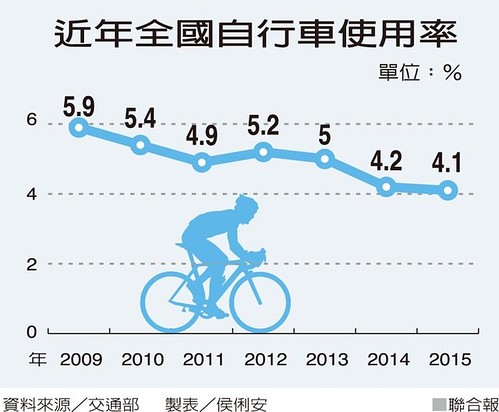
The United Daily the Liberty Times both have reports detailing the Ministry of Transportation's report on a steady decline in bicycle use nationwide.

Taiwan, which often bills itself as the "bicycle kingdom" in promotional material, is experiencing a contraction in the use of public bicycles as well as bicycles for transportation.

The key factor, as pointed out by the Ministry of Transportation, was the easing of fuel prices over the past year, which has encouraged people to opt for the use of personal motorized transportation for shorter trips. Many respondents also cited "convenience" as a factor.

While bicycle use has grown in Taipei, New Taipei City, Hsinchu, Hualien and Pingtung, ridership has fallen elsewhere, negating any gains. According to the data, Yilan, Yunlin, Miaoli, Kaohsiung, Taoyuan, Taichung and Tainan all experienced negative growth in ridership over the past seven years. The Ministry of Transportation feels the expected rise in gas prices could again fuel growth, but some experts are less optimistic.

It is also interesting to look at the areas that experienced the greatest growth and to wonder about infrastructure spending and government subsidies in those areas as they correlate to political alignment.

The study also found that riders between 15-18 years of age were most likely to participate in bike-share programs--a statistic supporting the assertion that Taiwan's bike share programs do little to cut emissions.

In most areas, there is still no real space for bicycles on the roadways, making commuting by bicycle inconvenient, impractical and dangerous.

While Taiwan's bicycle programs have been highly touted in the international press, this report really serves to highlight the disparities between Taiwan's far north, and the rest of the country, as well as how few reporters ever venture out of Taipei.

It could also be that the bike trend is over in Taiwan.    

Monday, May 2, 2016

What's Wrong With The Bicycles?

IMG_8380 

  “Our future lies in China and one of our goals is to develop this rapidly expanding market”--Giant CEO, Anthony Lo (2011)


Despite all the glad handing and praise the bicycle industry is facing some serious challenges in the short to medium term. There are increasing signs that things are not all well in paradise despite the passage of the Economic Cooperation Framework Agreement (ECFA), which was rapidly pushed through Taiwan's legislature and signed by Taiwanese and Chinese representatives in 2010.

“The markets are changing so fast that the rules have been reset, and if we don’t catch up, it is going to be harder for us to hold our own in the global market,”--Giant CEO, Anthony Lo (2013)
Aside from the chemical and mechanical doping scandals that have plagued the professional peloton--bicycling's advertising juggernaut--and possibly squelched interest in the sport, brands have been looking toward new technologies to buoy the industry and churn profits in a sluggish year. Shimano had been a major proponent of disc brakes in the pro ranks for some time and had been expecting reap the benefits. Now with both the UCI and the French Cycling Federation banning the components, a major source of market stimulation has been destabilized. 

Shimano profits are down 20% in the first quarter of 2016, and SRAM is tightening its belt with layoffs due to flagging sales. SRAM's plan to layoff 40 employees deemed "redundant" by the company will be spread over the company's global business, including the United States, Europe and Asia. 
“No one ever wants to be in position to request that people leave an organization, but sometimes it has to happen. I am confident that this restructuring positions us where we need to be and puts us on a firm foundation to drive forward into an evolving bike market.”--SRAM President, Stan Day
Wholesalers carry too much inventory into the first quarter, with the new product year looming (what is it now, May?). 
The lack of sales growth over last year is worrying in light of better weather conditions in much of the country this year. The Upper Midwest and Northeast were slammed with heavy snows in early 2015 but saw better conditions this year. However, the BPSA figures show that sales to retailers in January and February still lagged, though March wholesale sales showed a 6 percent improvement over 2015. 
Suppliers are seeing slow road and cruiser shipments at the start of the year, with road bike sales falling 9 percent overall. But mountain bike shipments are up 13 percent, and hybrid and commuter are up 16 percent.
The trouble coming from the two largest suppliers of drivetrain components is especially ominous, especially as Shimano does not simply supply the high-end, but supplies drivetrain components for everything from Walmart children's bikes to the Tour de France. A sizeable dip says a lot about demand in all sectors and that may have some serious repercussions in Taiwan. But hey, China is where its at, anyway. It is the world's largest emerging market and Taiwan has a free pass, right. 
Now, as a little reminder, ECFA was supposed to stimulate trade between Taiwan and China, opening up China to imports from Taiwan, with the bicycle leading the way on Early Harvest list set for an immediate and lasting impact. In a report from 2010:
Giant Global Group plans to increase its investment to build a bicycle plant in Kunshan, which has gained great support from the mayor of Kunshan Guan Aiguo. The 40-hectare new plant will consist of plants for bicycles, frames, carbon fiber and electrical vehicles. Besides, the cycle track & bicycle theme park plan will also be pushed forward. The investment in the initial stage amounts to USD 36 million (NTD 1.16 billion). 
Sources revealed Giant Global Group currently possesses a bicycle plant in Kunshan with an annual output of 2.5 million. As the Group's largest manufacturing base in the mainland, the plant boasts about 50% of the products meeting the domestic market demands. After being put into operation, the new plant will meet the market demands for both GIANT and MOMENTUM and the plant will trade with Taiwan bicycle plants after the signing of ECFA.
So, how are things looking in the post-ECFA world
Taiwan’s economy contracted on a yearly basis for a second straight quarter as China’s economic slowdown dragged on the island’s exports. 
Gross domestic product fell 0.28 percent in the three months through December from a year earlier, according to preliminary data released by the statistics bureau Friday. That compares with a 0.6 percent drop projected by the median estimate in a Bloomberg survey of economists and the 0.63 percent decline in the third quarter. The economy grew 0.85 percent in 2015. 
Taiwan’s exports shrank last year as local manufacturers grappled with the double whammy of slower economic growth in their top market China and tougher competition from mainland rivals. It wasn’t all bad news though: The economy grew 3.22 percent at a seasonally adjusted annualized rate, the most since the third quarter of 2014, as lower crude prices helped consumers.
Exports totalled USD 22.2 billion in January, which represented a notable 13.0% contraction in year-on-year terms. January’s result represents a slight improvement over December’s 13.7% drop. Imports tallied a total of USD 18.7 billion in January, which was a sharp 11.7% fall over the same month of last year. The figure came in above to December’s 14.8% decline. 
FocusEconomics Consensus Forecast panelists expect exports to fall 0.6% in 2016 and to rise 3.9% in 2017.
But at least we have the growing demand for E-Bikes in China to make up for the dip in high-end/high-margin leisure bicycle consumption, right? The E-Bike is the fastest growing market segment for bicycle manufacturers and China is leading the way

Following legislation in Beijing, Shanghai and Guangzhou, it has been reported that Shenzhen may also start to limit the use of electric bikes. Chinese people are getting wealthier and buying more and more cars, which as we know has caused many problems, such as heavy traffic, serious air pollution and poor physical health in big cities. In fact a highly viable alternative to fossil fuel powered vehicles is already available; bicycles and e-bicycles together with public transit form a good system and a true solution to the problem.
The Chinese market for Taiwanese bicycles declined by 33% to 79,000 units. Though not yet that large, the Chinese market was seen as a main growth market for several years. This development has now stopped due to the economic decline in China.

Sunday, May 1, 2016

Portraits: Narcissism

Untitled

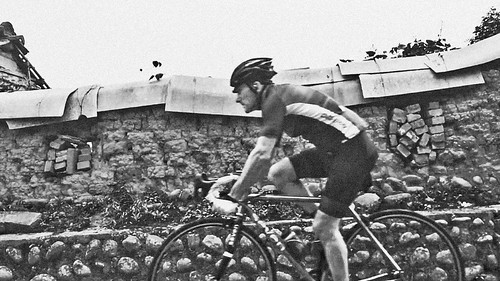
Funny, I rarely ever get to see myself riding a bicycle. I usually have to settle for pictures of the bike to add scale to pictures.

Here are a few outtakes from Saturday in and around the twilight villages nearLongjing (龍井) as I put these DT Swiss Dicut RR21wheels to the test on a few hill repeats and slo-mo captures.  

Untitled Untitled Untitled Untitled Untitled Untitled

Friday, April 29, 2016

Bikes, Sex and Power: Taking Back The Bike

Untitled

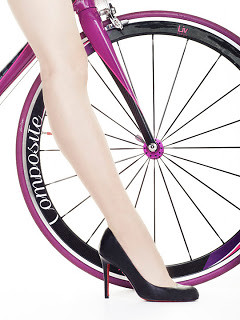
A few years ago I wrote a small article--one of my earliest-- in regard to Giant's Liv Giant line of women specific bicycles and related products. The marketing campaign at that time--the one from which I found the title picture of this post-- featured a whole assortment of sizzling glamor shots depicting a menagerie of pixie-waif models painted in couture make-up, exquisitely styled hair, wrapped in flowing designer gowns, and capped with nine-inch heels. The models were on boats and, in one case, seemingly out beyond the Dune Sea, with the occasional Giant branded downhill mountain bike or road bike in partial view.

The Liv/Giant project was the pet project of Bonnie Tu, Giant CFO, who enthusiastically took to the cycling press to promote her vision of women's cycling.
“To get more women on the road, we have to get them to think of these things as accessories... Natural, everyday accessories, like handbags."-- Bonnie Tu, Giant CFO 
Imagine if the above statement had been uttered by a man.... Being a woman does not excuse Bonnie Tu from overt sexism.
"Obstacles still exist: Asian women don’t want to get a tan from being outside and they fear looking masculine on a bike. But with a focus on fashion and lifestyle, Giant’s boutique is making inroads with upper-class, executive women, said Tu while giving BRAIN publisher Marc Sani and I a tour the day before the Taipei Cycle Show."--Bonnie Tu, Giant CFO 
"What she’s
found: “Men are concerned more
with tech and performance. Females take technology for granted — it’s important, and they assume that they are getting the best. But as women, we believe we are entitled to something chic, beautiful, and distinctive. We believe design should be better. We care about the total look.” --Bonnie Tu, Giant CFO(2016) 
At the time I was completely astounded by the amount of absolute contempt a successful female business leader in Taiwan could have for both her customer and her gender. and I wrote:
Bonnie Tu presumptuously claims to be the "godmother" of Women's cycling and yet I can't help but feel she views Taiwanese women through the chauvinistic and dismissive lens shared by so many men. Although many women (and men for that matter) in Taiwan (and elsewhere) buy expensive name brands and buy into modern materialism, Giant's concept feels even more awkward and patronizing considering the new roles of women in contemporary Taiwanese society... including Bonnie Tu, who holds the deputy post in one of the nation's largest and most successful companies. Compared to many countries around the world, including the United States, it is not uncommon for women in Taiwan to excel to become leaders in their respective fields and vocations. Taiwan has already had a female vice president and may very well have a female president or at least presidential nominee in the near future. Women not only hold high positions in politics, but also in every major vocation in Taiwan. Women in Taiwan have taken the agency to plot their own lives and careers to pursue a variety of interests. I am always surprised by the great plurality I have experienced in Taiwan. This is why I am so puzzled that Giant would reduce women's cycling to "an accessory, like a handbag". This is an insult to all the strong, intelligent and capable women out there who do not need to be coerced into buying a bike just to go with a good pair of pumps. Women in Taiwan are perfectly capable of buying a bike for any number of intelligent reasons, and do so.
I wrote a follow-up with a little more insight into the problem:
" under capitalism, patriarchy is structured so that sexism restricts women's behavior in some realms even as freedom from limitations is allowed in other spheres. The absence of extreme restrictions leads many women to ignore the areas in which they are exploited or discriminated against; it may even lead them to imagine that no women are oppressed"-- bell hooks
In the wake of that first article I learned that Bonnie Tu and several high ranking decision makers at Giant had, in fact, read my article (I honestly felt flattered) and I learned they had actually discussed my observations, but they felt steadfast in their decision to move forward with their marketing campaign--a campaign that served to depict women as sexualized objects too weak and too insipidly stupid to not only dress appropriately for cycling, but to not even be able to feature them using a bicycle. Yes, the women in the advertising were not even pictured using the products they were hired to sell. I was disgusted by the blinding arrogance in the upper echelons of a company where nobody dared to step up and point out such a disastrously wrongheaded mindset for such a forward thinking company. 
"All major brands claim they design specifically for women, but it’s not true. It means something when I say I’m the godmother — nobody should doubt that our women’s bikes are designed for women by women."--Bonnie Tu
 That was back in 2010.

The bicycle is one of the most egalitarian inventions to come out of the machine age. It is a great equalizer that has been leveraged to not just provide physical mobility across the strata of age and gender, but it has also provided socioeconomic mobiliy and empowerment to the powerless. The WorldBank even commissioned a report on the impact of transportation and empowerment of women. So it is a shame to see how it is marketed.
One of the most advocated interventions by development agencies has been provision of bicycles in the rural areas. Though it might seem a positive, benignant intervention on surface, a little unearthing of the gendered aspect of bicycle usage will reveal that many cultures do not accept such movement of women primarily due to rigid culture underpinnings in women’s movement and its representation. Overton (1996) documents a case in rural Mozambique where bicycles that were distributed to poor village women to alleviate their extreme transport burdens were taken from them by their husbands or other male relatives, who often only used them for recreational and status purposes. 
Now, we come to see how little attitudes have changed, especially at the highest level of cycling for sport where the embedded sexism of the entire sport was encapsulated in the one utterance of Shane Sutton, (resigned) head of British Cycling, who glibly told cyclist Jess Varnish that se was "too old" and to, "just move on and go have a baby."

Lee Rodgers boils it down:
“The men get all the glory and TV coverage as they are doing a ‘proper job’,” she writes, “while the girls are ‘allowed’ to be there on the day. That would be sexual discrimination by design. The rewards would follow the coverage, so the men would get the prizes and the girls some token gifts. Welcome to the reality in the world of elite cycling where sexism is by design. And cycling is not alone. 
“When challenged, those at the top of these sports are well versed in the platitudes they need to put out to deflect the temporary criticism. A well-crafted statement of intent, a desire to rectify; but the reality is decades of inaction. Sexism spins all the way down from the top to the bottom. Somewhere in the middle of this are Shane Sutton and Jess Varnish.” 
She’s right, and anyone who would argue against is nothing less than stupid or willfully misogynistic – or both, as the two do both go hand in hand. What will happen here, once the initial hullabaloo has died down (and it wasn’t exactly a cacophonous din in the first place), is absolutely nothing. Sutton will retain his job, Varnish will be labeled a trouble maker as Cooke was, and the world will trundle on as before.   
When I think about the gendered state of cycling and when I think of cycling's non-gendered potential, I see no difference between the opinions of Bonnie Tu, Shane Sutton and the men of Mozambique. They are all misogynists. Like the men from Mozambique, Bonnie Tu wants to reduce the bicycle and therefore the woman, into a mere status symbol, a tool of recreation, and an image to be consumed by a male. Giant's marketing scheme is aimed entirely at the male gaze, not the female cyclist. Shane Sutton's views are those of the consumer. He wants to consume the female cyclist, use her for her powers as long as she is useful to him, and then disempower her by separating her from the source of her power and mobility so that she can assume a gendered social role.

As I go back, six years later, I am pleased to see that someone more important than myself has gotten ahold of Giant's ear and redirected Liv/Giant toward a more inclusive culture of what women's cycling can be. UPDATE: (The voice comes from Mark Stocker's DDG agency in Taipei...read between the lines here.) Giant's new website is full of women enjoying almost every aspect of cycling and actually using the products. These are athletic women, these are independent women, these are muscular women, these are woman with an entire range of identities; mothers, daughters, wives, people, athletes and cyclists. These are more like the people I see on the bicycle. The next boundary to break might be age. There are no senior cyclists pictured.

Over the past month I have been involved with two solo tours of Taiwan undertaken by two different and inspiring women. Neither of them were in gowns and make-up. They were covered in road grit like everyone else. 

My point is, if over the course of a few years Giant is able to see its erroneous thinking, and reimagine how the company imagines women in cycling... then why can't the rest of the sport and industry make the same choice. Of course, I am not going to believe the change in heart has anything to do with anything other than good business sense, but even in the shrewd world of making money it is evident that bringing women's cycling on par with the men's sport, is simply good business.   

Giant is not perfect by any means, and they have numerous other issues, but this is one case where being Giant did not stop them from making some serious changes in realigning themselves with the realities of its customers without demeaning them. Now if Ms. Tu would kindly step away from the mic.  
   

   Untitled