body{background-attachment: fixed ! important; }

Thursday, January 20, 2011

Cycling Links with Video


Enjoy this funny video from the Netherlands where cars have been replaced with bikes.


Taiwan Links:
Tour Down Under:

The cycling season is starting up again marked by the Tour Down Under. So far the big sprinters are suffering with Mark Cavendish destroying more bikes in a spectacular crash.

World Links:
  • Is God too big to dope? With growing evidence against him, CBS Sports seems to think so.
  • Astronaut makes space flight look as easy as riding a bike... until he falls off his bike and misses his shuttle launch.
  • Teen phenom killed during training. Olympic dreams cut short in crash with vehicle.
  • Carla Stewart killed in South Africa. Female cycling sensation hit by truck while turning to pick up her cycling computer.
  • Copenhagenize says BAN CYCLING... in winter.
  • LA looks at immigrants as part of the cycling community. Much like Taiwan's own Foreign Workers.
  • Floyd Landis retires from cycling to become a professional skeptic.
  • After calling out professional cycling for its excessive culture of doping, and leveling charges against his former teammates that have resulted in a federal investigation into the former members of the United States Postal Service teams... Floyd Landis would like to legalize doping.

Wednesday, January 19, 2011

Government Sights Trained on Bicycle Transport


According to a report in the United Daily News, Taiwan's government is finally ready to address the urgent need for trains with bicycle carrying capabilities. The need for bike trains has become increasingly important as Taiwan's government has made cycling tourism one of the six pillars of its tourism plan.

The article reports that the Taiwan Railways Administration (TRA) is poised to procure new train cars for its local commuter trains, enabling each train to hold up to eight bicycles.

The first train cars are scheduled to arrive in September 2012, followed by a second batch of train cars by 2015. The plan expects to put 296 new bicycle equipped train cars into service around Taiwan and increase ridership for both bikes and trains.

Anything would be an improvement at this point. Under the current system you must apply to bring a bike on board and then you just rest it against the wall with everyone else. At your stop you practically have to beat the rest of the passengers over the head with your bicycle to exit.

Unfortunately, the new trains won't go into effect soon enough.

Tuesday, January 18, 2011

Blame The Victim: Nanny State Gives Riders Nothing But The Stink of The Onus


The China Post is reporting that New Taipei City has come up with some new rules to "help" cyclists survive on their daily rides and commutes. The article in full says:

The New Taipei City Government yesterday submitted a proposal to the Cabinet-level Consumer Protection Commission (CPC) requiring local bike makers to install warning bells and lights on their products to better safeguard the safety of consumers.

The NTC government filed the proposal based on findings that the failure to install warning bells and lights on bikes had led to serious traffic accidents in the city.
Statistics compiled by the NTC department of transportation showed that of the 9 serious traffic accidents involving bicycles, eight riders died, and another 1,226 bike-related traffic accidents left as many as 1,815 people injured in 2010.
NTC transportation officials said that according to traffic safety rules, bicycles should be fitted with a brake system, a ringing bell, lights, and a light-reflecting device, and riders of bikes without those accessories would be subject to a fine of NT$180 if found.
Accordingly, the officials last week held a meeting with representatives of four leading local bike suppliers, namely Giant, Merida, Pacific Cycles, KHS Bikes to discuss how to reinforce safety instruction on riding bicycles. At the meeting, the bike suppliers stressed that it should be up to the central government to work out a set of uniform specifications concerning the lights, bells and other necessary devices, and that the resultant additional costs may be passed onto to consumers.

Aside from selling bikes that look like Pee Wee Herman's, the New Taipei Government is taking a completely backward approach to the problem of keeping riders safe on Taiwan's streets.

The overall conclusion of the report is flawed to the extent that it could only have originated higher up the policy making chain of command.


The NTC government filed the proposal based on findings that the failure to install warning bells and lights on bikes had led to serious traffic accidents in the city.
Bingo! Great detective work Holmes. If only those bicycles had been equipped with bells and lights they would have surely avoided the truck that ran the red light. The weaving taxi would have taken notice and and yielded to the old woman. Maybe if that recreational rider had only used a slide whistle, that speeding car driving in front of the school would have taken notice.

Yes, blame the bicycle. It is easier than actually enforcing traffic laws. Enforcing traffic laws can be messy and you don't want police officers wasting their time enforcing laws when they are not breaking them as that might create an uncomfortable situation for both the driver and the cop where harmony might be broken. Someone might get upset and... lose face.


...bicycles should be fitted with a brake system, a ringing bell, lights, and a light-reflecting device, and riders of bikes without those accessories would be subject to a fine of NT$180 if found.
Fine the cyclist. They are easier to stop anyways.

Accordingly, the officials last week held a meeting with representatives of four leading local bike suppliers, namely Giant, Merida, Pacific Cycles, KHS Bikes to discuss how to reinforce safety instruction on riding bicycles.
What is even more flawed about this approach is the classic paternalistic top-down method used in dealing with bicycle affairs. Who does the government go to? They go to the manufacturer. Taiwan's cycling policies tend to originate in contact between the manufacturers and the government... and not between the government and the riders they seek to legislate. Rider's are rarely, if ever, a part of the conversation.

It is far easier to simply blame cyclists for their injuries than to come up with actual fixes.

If New Taipei really wants to do something radical to protect cyclists they can start by simply listening to us.

-----------------------

Monday, January 17, 2011

Facing The Rising Sun: Biking Through Taiwan's Japanese Legacy


Martial Arts Dojo (Taichung City)


Anywhere I go riding in Taiwan it is not too uncommon to discover hidden fragments of a built environment that has been actively obscured, defaced, replaced and recovered, not through the ravages of time, as much as through the clash of ideologies and identities. These fragments, and I call them fragments, as they are often just a few remaining structures that were once woven together comprising a whole of a much larger structure (and I mean this in the physical and metaphorical sense of symbols and meaning), despite appearing silent and dead, scream with meaning and insight into the dialectic between the state, ideologies, cultures, identities, coloniality and modernity, history and place. As fragments they simultaneously beg the questions, “Why are they still here?” and “Why aren’t they still here?” I am talking about the buildings and structures dating from the period when Taiwan was included within the realm of the Japanese Empire.


Martial Arts Center (Changhua City, Bagua Shan)

Let me first take a moment to explain the verbose language of that final sentence. The period of Japanese colonialism is often referred to by the politically and ideologically loaded term, “Japanese Occupation”. I disagree with this term as it masks the nature of the 50 years of Japanese control of Taiwan as a colonial project. An “occupation” suggests territory occupied by a foreign invader, which wasn’t the case as Taiwan was ceded by the Qing Empire to the Empire of Japan in 1895, “in perpetuity”. I chose to avoid simply using “Japan” to avoid conflating the cosmology of the former Japanese Imperial state apparatus with the current constitutional monarchy established after WWII. I think a definite acknowledgement of the discontinuity of state ideology needs to be made. Lastly, I feel the entire Japanese Empire was a dynamic structure that followed a particular trajectory of change throughout its existence beginning with the colonization of Hokkaido in the 1870’s and therefore the meaning of the terms “Japan” and “Japanese” took on different meanings in relation to space and temporality. We often imagine past structures, like Japan, based on their contemporary form and thus lose much of the meaning from past imaginings of our subject, therefore meanings of the past get easily confused with the sentiments of the present. From this point forward I will use the term “Japanese colonial period”, to refer to Taiwan’s experience between 1895 and 1945.


Bank (Changhua)

The salience in these structures comes from understanding Taiwan’s colonial and problematic post-colonial experience.
During the period prior to WWII, the Chinese nationalists embarked on a bifurcated culturalization and nationalization campaign that sought to validate Chinese nationalist elites claims to power trough their beliefs and expressions of modernism. Much like the Japanese, the Chinese Nationalists incorporated “western: concepts of modernity into a highly centralized ideology. Modernism provided the Nationalist elites with a basis from which they could claim legitimacy and the legitimacy of their program.


Modernist Architecture (Hsiluo, Yunlin)

On the other hand, as Chiang Kai-sheck sought to consolidate his power over the entire territory formerly governed by the Qing Empire, he sought to impose a highly centralized national culture on the citizenry. Much of Chiang’s claims to legitimize state culture were rooted in traditionalism, or imagined traditionalism. It was during this period of consolidation that Chiang codified these beliefs in the New Life ideology, which served to construct and for the first time codify the meaning of Chinese culture. Nationalist scholars and officials were tasked with identifying and selecting “guji 古蹟”, or “the vestiges of ancient times”. Under the Nationalist government these guji were to represent links to an unbroken “Chinese” past and symbolize the conflation of Han ethnic nationalism into Chinese state culturalism. The term was specifically used during the early Republican period to identify, establish and protect structures, sites and relics that could be deployed as memes of nationhood between the fractious territories that currently comprises the modern Chinese nation state. This was a dire task as much of the former Qing Empire was not interested in becoming incorporated into a single centrality and many regions sought independence or political autonomy from the central government.


Taisho Era School (Ching Shui)

Although the term “guji 古蹟”was used in an official capacity during the consolidation of the Republic and later enshrined in the 1946 R.O.C. Constitution, it was finally codified in 1982 under the Cultural Property Preservation Ordinance 文化資產保存法 and the Cultural Property Preservation Executive Act 文化資產保存法施行細則 as part of the greater Chinese Cultural Renaissance Movement; an unofficial program of state defined “Chinese” culturalism that sought to rein in growing cosmopolitan attitudes and better challenge the People’s Republic of China for cultural legitimacy of the Chinese nation. Another emphasis of the program was to promote and enforce KMT/Chinese cultural nationalism programs, which had primarily failed over the 40 years of Nationalist rule. Taiwanese attitudes were ambivalent at most toward the symbolism, imagery and more importantly, the Chinese nostalgia the Kuomintang and their followers hoped to promote and instill in mainstream Taiwanese society. On the contrary, beginning with the Chung-li incident in 1977, Taiwanese felt emboldened to reject KMT/Chinese cultural nationalism and explore alternative cultural and national narratives that were not China-centric and that included Japanese, Dutch and other cultural influences on Taiwanese histories, cultures and attitudes.


Ku Family Residence (Lukang)

As it was applied, the term guji served to officially signify buildings protected as historical treasures by the government. The term guji and its application has been closely associated with the ideals of Sunism and the Chinese nation-state. Jeremy Taylor points out that the stated goal of the Chinese Property Preservation Executive Act was “to preserve cultural property, to embody the spirit of the nation’s citizens, and to promote Chinese culture”1. The formulation of these goals fits closely with the KMT’s social project of civilizing and transforming Taiwanese people from something “degraded” into something “improved”—a form of colonization. The values embodied in these and similar acts of legislating culture were very specifically aimed at promoting a Chinese nationalist vision of the past, or more accurately, the Chinese nationalist’s imagination of an anachronous historical Chinese nation to better enforce Chinese Nationalist concepts of patriotism. The value of guji, heavy with themes of “patriotism”, martyrdom” and “nationalism” demonstrate the purposeful framing of the ancient to suit the contemporary ideological tropes of the Chinese Nationalist state and draw Taiwanese in from the periphery through a new set of socializing memes.
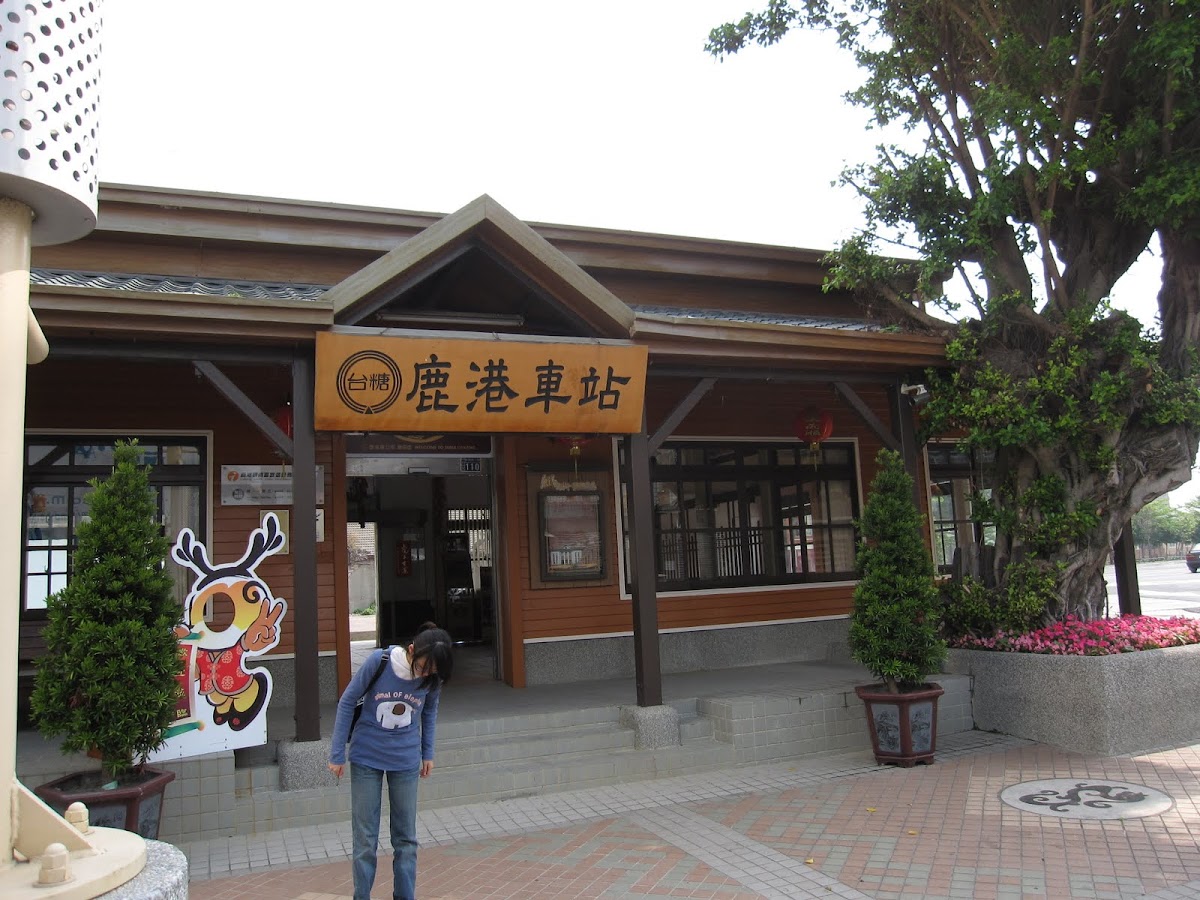

Lukang Train Station

One major development to emerge from the codification of guji in the 1980’s was an official definition of the “ancient” on Taiwan. The formulation conceived by the framers of the guji legislation was that the simple criterion that guji structures had to be “over one century old”, which not only adopts earlier formulations of pre-Republican structures, but integrates and imagines concepts of “ancient Taiwan” in the wider trope of “five thousand years of Chinese civilization”, which became a mainstay of Chinese nationalist ideology. The “century” clause not only integrated into Chinese nationalist imaginings of cultural inheritance, it also positioned Taiwan on the far periphery of Chinese authenticity in relation to the imagined authenticity of a mythic 5000 year-old center, degrading the historical significance of Taiwan in place of the glorious center of China. Furthermore, the “century clause” acted to dislocate Taiwan’s experience as a Japanese colony from being authenticated by official state recognition. It is for this reason that the Japanese colonial period is frequently misidentified as an “occupation”.


Art Deco in Hsiluo

This overt use of cultural relics to promote Chinese nationalism and nationalist ideology while denying Taiwan’s unique historical trajectory has inevitably led to a situation where a Taiwanese history and culture exists in a problematic post colonial world in which the ROC government has simply replaced prior colonial structures with its own model, but serving the same purpose. The amount of social engineering that has both propped up and encumbered the ROC state has also prevented Taiwan from truly entering the post colonial era.


Huwei Train Station and Administrative Building (Huwei, Yunlin)

Taiwan’s rapid democratization in the 1990’s led to a radical reinterpretation of Taiwanese history and cultural heritage as social and political actors sought alternatives to the schemes kept in place by authoritarian rule. The power of local memories directed against the monolithic state constructs pushed for a reinterpretation of Taiwan’s historical experience and a shift to viewing Taiwan, not as a periphery, but as a cultural and historical centrality.


Great Hsiluo Bridge (Designed by Japanese 1937)

Since the post authoritarian era ushered in by Lee Teng-hui, there has been a growing space for alternative histories to be debated in the public sphere. Taiwan’s Japanese colonial experience has since been continually reexamined and renegotiated against the backdrop of the Chinese nationalist orthodoxy as professional and amateur historians have assailed the grand national narratives preferred by the pro-nationalist elite; narratives which favor the Chinese nationalist status as social and cultural elites.


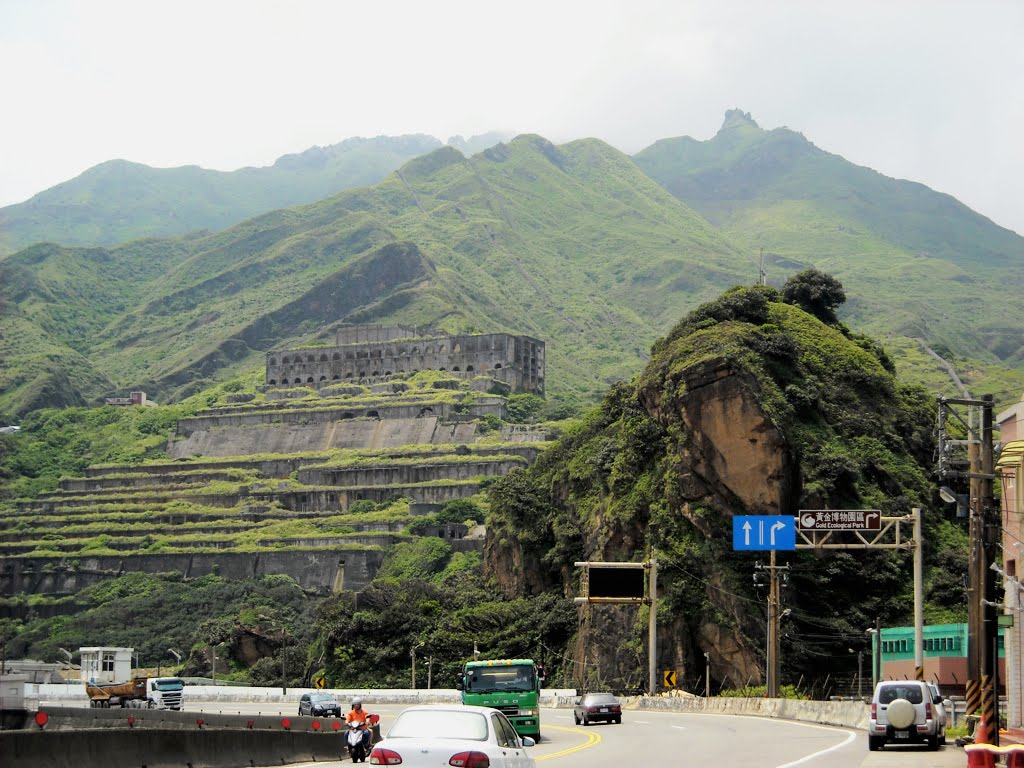
Jinguashi Mining Industrial Complex (Jinguashi, Taipei County)

The remnants of the built environment under Japanese colonial rule has emerged as a major battleground in the fight between these forces, which favor Taiwan as either a Chinese periphery or a Taiwanese centrality. With Taiwan maintaining its own government and social structures for the past half century, the rise in “local”/indigenous or people’s histories in opposition to the Chinese nationalist historical activism was almost inevitable. The structures remaining from the Japanese colonial era serve as a constant reminder of the juxtaposition between the shared Taiwanese historical memory and the official ROC history that is reified through public ritualization.


Rin Nei Shinto Shrine (Lin Nei)

Over the past two decades, Taiwanese academics and intellectuals, with the help of local governments, have actively sought to preserve and restore the dilapidated structures built during Taiwan’s fifty-year span as a Japanese colony. Structures marked for preservation no longer have to serve the purpose of promoting Chinese nationalism or a Han-centric culture.


Shrine For War Dead (Tanzih/Fengyuan)

It is impossible to avoid the Japanese imprint on the Taiwanese landscape. Taiwan’s modern cities owe their shape and structure to the Japanese imperial values of rationalized modernity. It takes little to imagine the tectonic shift that occurred in Taiwanese society as a modernist infrastructure project marked by grid-style city streets, public utilities, electric lighting and art-deco facades replaced the randomized Qing era red brick sprawl that centered around former plains aborigine villages. Not only did this new built environment constitute a new ideology, but it also brought with it new expectations as Taiwanese gained self-awareness as a collectivity in contrast to their Japanese rulers.


Shrine For Taiwanese War Dead (Fengyuan)

The growing interest to preserve the symbols of the emergence or recognition of a separate Taiwanese identity has put the built environment at the fore of the discussion regarding Taiwan’s cultural and historical space and future.
Taiwan’s Shinto shrines have become a popular subject for this debate. Many of the original shrines have been destroyed and replaced by gaudy symbols of the ROC, such as the Tse En Pagoda at Sun Moon Lake, or transformed into Buddhist monasteries like Ba Gua Shan in Changhua. Other shrines were simply defaced and turned into martyr’s shrines for the war dead of the ROC. For many of these remaining shrines, only lack of funding provided for their rescue.


Immorod Shinto Shrine (Orchid Island)

The local interest in preserving and restoring these relics and shrines has also provided an opportunity for Taiwanese to craft their own historical meanings at the community level and provoke discussion; an act that was discouraged and often illegal in the government paranoia in the decades before 1988.


Tong Xiao Shinto Shrine/Martyr's Shrine (Tong Xiao, Miaoli)

In many instances communities have not only readily embraced the reconstruction and renovation of Japanese symbolism in the built environment, but they have also embraced the reconstruction of historical memory from the perspective of the local. The preservation of these remnants of Taiwan’s colonial past are serving to help Taiwanese offer up a counterweight to the tropes and narratives thrust upon them from a non-Taiwanese state structure and therefore continue to be filled with symbolic meaning that finds salience today, especially as we consider the current drive to observe the centenary of the ROC.


Tong Xiao Shinto Shrine/Martyr's Shrine (Tong Xiao, Miaoli)

While riding through Taiwan it is quite common to locate these remnants of Taiwan’s colonial past. Just as it is important to stop and consider why they still remain and why the local community has kept these structures, it is also important to reflect on the places where there is lack. Why are they missing and for whom have they been obscured. Therein lies the riddle of Taiwan’s problematic post coloniality.


Lantern of Former Dahu Shinto Shrine (Dahu, Miaoli)

1. Taylor. Jeremy E.2005.Reading History Through The Built Environment in Eds. John Makeham and A-chin Hsiao, Cultural, Ethnic, And Political Nationalism In Contemporary Taiwan: Bentuhua. Palgrave Macmillan

Friday, January 14, 2011

Buying Into Cycling For The Environment


Bike Radar has an excellent piece on the impact mountain biking has on the environment. The article casts light on the ripple effect our cycling and our purchases have on the environment. The whole article it really worth a read.

When we ask bike distributors what eco-friendly products they stock, the answer is usually: “All our products are green.” It’s wrong, but it’s an easy and understandable trap to fall into. Isn’t cycling green? As a form of transport it is, and as a low impact way to engage with the great outdoors it’s a green activity, if you ride responsibly.

But consider the energy used in manufacturing frames, the carbon footprint of hauling components from their Far East birthplace, and the fact that most of us drive to the trail or bike shop, then we’re entering a grey area. For their product launch last year, one company even shuttled the press up to the test trail by helicopter. So, is mountain biking any greener than, say, playing squash?


Now, as I am poised to buy a new bike, I am confronted with including the environmental calculous into my purchase. I also need to evaluate where I failed in the past.

My current frame lasted 3 years. I was hoping to move it to secondary status after five years, but that didn't happen. At the moment the frame has opportunity to become smelting waste or wall art. I'll have to choose the latter. Luckily for me, the frame was the cheapest major part of the bike.

On the positive side, I believe that you often must pay a little more for quality and so many of my parts are still useable and should be for a long time. In the 16,000mi. or 26,000km I put on the bike, I replaced the aluminum stem, a couple chains, a rim (bent), a lock ring, bar tape a few times, and I just had a bottom bracket in stalled. The Bike Radar article rings of irony if you consider the magazine's most essential purpose, is to entice readers into consuming the (add superlative here) product being sold by the sponsors who buy ad space. One of the things I hardly ever felt over the past 3 years of owning my Salsa was bike lust. I rarely, I can't say never, but I rarely thought about "upgrading". I overspent a little in the beginning for parts that would satisfy me for the life of the parts. That was the beauty of my Chris King parts.

My Chris King hubs were able to be easily cleaned and refurbished without having to throw anything out. Many of my other components are still in great condition. They are not ultra light carbon, but they are light-enough, strong and reliable. My King headset did, in fact, outlast my bike. Longevity and Chris King's environmental practices are why I will continue to put Kings on future bikes despite the high short term costs.

I am also not a huge fan of Carbon Fiber composites. For bike components, this is where the metals...shine... over CF. Alloy can be recycled, steel is repairable and can last decades. Despite its initial price tag and difficult extraction, titanium can last a lifetime with no discernible change in performance. I think the jury is still out on the longevity of current composite frames, but once it breaks what do you do with carbon? You can't put it in the ground and let it biodegrade. You can't melt it down and make something new. You can't hammer it into key chains, salt shakers or church keys. The carbon fiber recycling industry is still in its infancy and there is still a long way to go to keep, not just your busted fork, but also the industrial waste from the production of your carbon fork, out of the incinerator or landfill. Cycling Satin Cessena has some insights into the future of composite recycling at the bottom of her great article on materials and efficiency. Currently, the best bet for a busted composite frame or fork is an expensive repair by folks like Craig Calfee.

Personally, I feel spending a little more for longevity and to support those companies that have made changes to be more environmentally friendly is an excellent first step.

Links:

Wednesday, January 12, 2011

Fashionable and Famously Forgettable Fixies For Formosa

The Taipei Times ran a lengthy article about the growing fixie trend in Taiwan. I have seen several around and just chalk it up to the general trend, which is now several years old, finally making it to Taiwan.

For those who are not in the know, a fixie, or fixed gear bicycle, is a bike with only one chainring in the front and the rear cog is welded to the rear hub. This makes for a light, simple bike that works well in flat, urban riding, but is not very practical for a lot of other riding.

The fixie trend originated originated among the urban bike messengers in major US cities as the motion and braking are applied through the pedals. The pedals are always in motion as long as the wheel is moving, just as you might find with track bikes. These make ideal trick bikes.

Unfortunately, at least in my own opinion, the trend has been taken over by "hipsters" who find a beautiful steel framed classic bike. Colnago, Pinarello, Nishiki, 3Rensho, Masi... you name it. They will then dremel off the cable and brake hangars, for a smooth frame, and then paint over the original paint in monochrome color schemes to render the bike more of a fashion accessory than a fully functional bike. In Seattle I saw more hipsters walking their fixed gear bicycles than riding them.

The saddest part is that, like most of us, these hipsters grow up to some degree or another and move on to new trends, thus rendering the bike more or less disabled.

There are a few companies out there that focus on fixed gear bikes exclusively. In Taichung IRO bikes on Zhong min South Rd. is a popular spot for fixies. I have seen a couple other shops in southern Taichung near the Art Museum, but I have not had a chance to get the addresses. I hope people who are interested in this type of riding will buy a dedicated fixie than cut up an old Nag.

Happy riding!

The Huffington Post Meets Taiwan Cycling: Michael Turton Writes A Gem


Michael Turton, a man I consider one of the keystones of Taiwan's blogging community, an excellent riding companion, and a good friend, has written a magnificent piece about biking in Taiwan for the Huffington Post.

What is riding Taiwan? Taiwan is going a thousand meters up a massive mountain in a single morning, and buying drinks from scantily-clad betel nut girls in their roadside stalls. Taiwan is piercing curls of smoke on a rolling dawn as the farmers burn off their fields, and speeding past the stink of mud and trash oozing from the muck of a canal next to the ocean. Taiwan is a landslide in the road and a viper lounging alongside it. Taiwan is bantering with the old women selling water and steamed buns on a chill winter morn, and exchanging hellos with farmers spraying fruit trees in the fading light of a summer's eve. Taiwan is gliding into the local fishing port for sashimi, and lapping up the last few klicks to the only noodle stand for a hundred leagues. Taiwan is looking down on the lovely Liyu Reservoir and peering up at the terrifying landslide scarp at Jiufen Ershan. Taiwan is riding next to chasms as deep as geological eras, and hearing the whistle of teapots in houses far above filling the mountains as a crisp dawn cracks across the peaks with forty kilometers of desolate mountain road in front of you. Taiwan is.

For me the article is extra special as the experiences he writes about are also my experiences. Michael and I have biked thousands of kilometers together and each kilometer is full of everything that IS Taiwan and everything that is friendship.

Only a person who is deeply attached to this land can really express it in words like Michael has done.

Taiwan is, like most places, a country of complexities, paradoxes and pluralities. When you live here a while, and even more so, when you experience it by bike, you come to see some of the beauty in the burning, the trash and chaos of the roads. It is not a fascination with the "strange" and "exotic". It is an appreciation of the nuanced complexity of life and lives going on. It is also an appreciation of being a part of it all for as little time as it may be. Biking in Taiwan is living.

Please follow the link and enjoy this piece and Michael's wonderful pictures.