body{background-attachment: fixed ! important; }

Monday, May 18, 2015

Invisible Taichung: Cycling The Shadows of Taiwan's Central City

Untitled
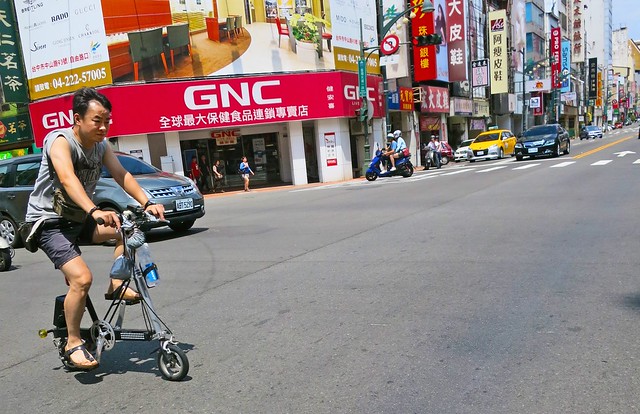
For almost seventeen years I have called the dusty Taichung basin my home. Although I am still a "foreigner", a fact that I am mostly but not entirely comfortable with, I have watched my city's narrative of unfolding gradually transform the city's culture and its built environment with a keen and sentimental eye.

In Taiwan, the center of any city can be found in and around the most popular and prestigious department store. When I first arrived, that title belonged to SOGO. The Taichung SOGO was brand new and marked a defining period of development in Taichung. SOGO represented the city's official separation from its historic center bound by Wuchuan Rd., Minchuan Rd., Taipei First Boy's School and the railroad tracks. It was as if the cultural center had been untethered and set free to drift westward along Taichung Harbor Rd. (now the unnecessarily renamed Taiwan Blvd.) away from the train station-- Taichung's traditional anchor.

I remember when the old downtown still had a pulse as the once towering Lai Lai department store struggled for resonance above the din of cheap knock-offs and other, newer department stores. The movie theatres were still mainly along the crowded, stall-filled streets of Changhua Rd. that once slung the border between rival street gangs, but later merely served as the dimly lit southwestern edge of a barely flickering red light. This busy, electric, wonderland of chaos was my first introduction to my new life in my new city.
Untitled

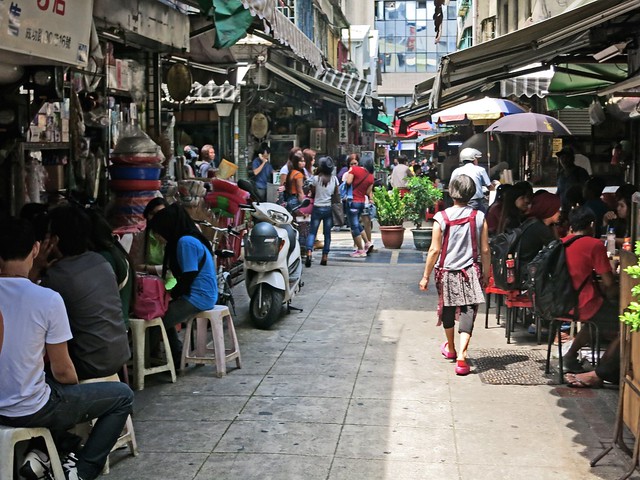
I decided on a light ride through time and memory along its narrow alleys, lanes to see what had become of my old Taichung.

Untitled

During Qing rule, Taichung was little more that a ramshackle cluster of hovels that hugged the Dadun mound on the Han/Barbarian border, that extended longitudinally along the Han River between sentry points manned by plains aborigine militiamen.

Following the Treaty of Shimonoseki in 1895, when Japan gained sovereignty over Taiwan, Japan initiated plans to transform Taiwan from an inconsistently administered frontier into a Japan's first modern colony after Hokkaido.

As part of Japan's effort to transform the people of Taiwan into loyal subjects while exploiting Taiwan's material wealth, the imperial government instituted a series of programs aimed at bringing an ideology of modernism and rationalism to Taiwanese culture from which the Japanese could exert both economic and cultural control.

As part of this program the remnants of the sloppily walled area of Qing era Dadu, was razed to the ground and replaced with Taiwan's first grid-style city plan complete with wide streets for carriages and automobiles, electric and telegraph lines, civic spaces, drainage, economic areas, public services, and utilities.

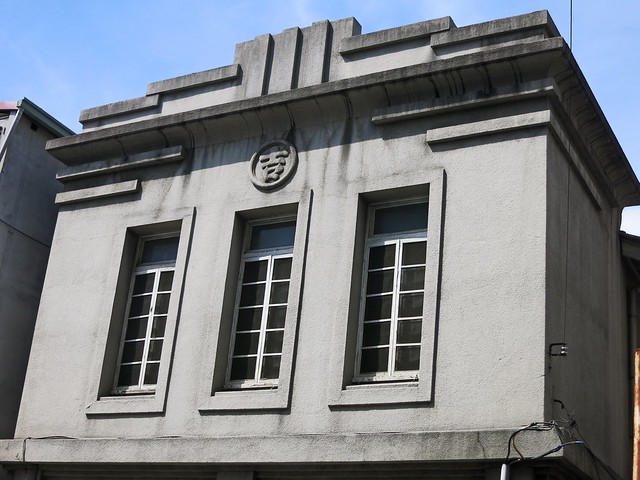
Most of the old Japanese era buildings have been torn down, but a few of the more prominent buildings remain, with their flair for American modernism as expressed through the heavy use of art deco motifs.

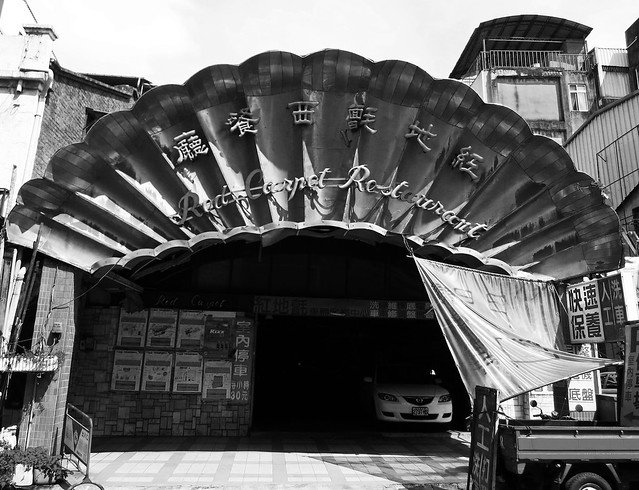
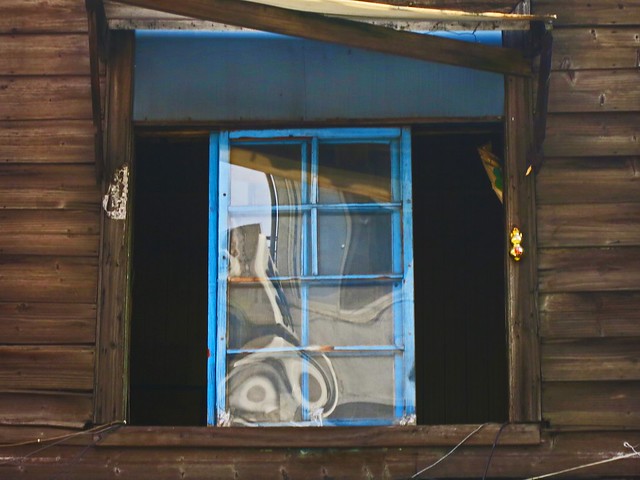
The area along Zhong Shan Rd. and its side streets still reveal the dirty brown veneer of Taichung's earlier life as Japanese Tai Chu.    
Untitled Untitled Untitled Untitled Untitled

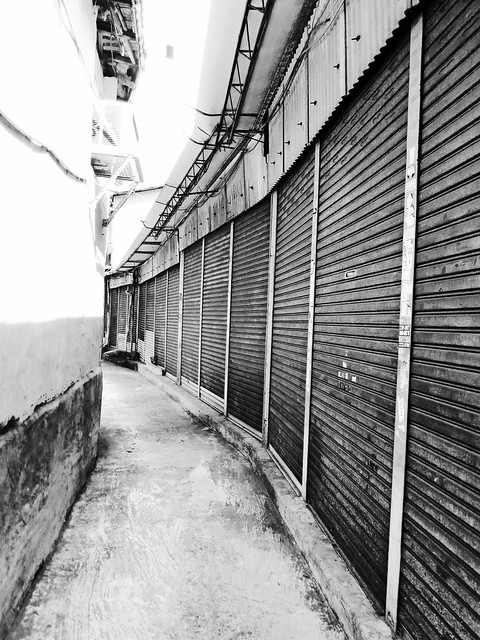
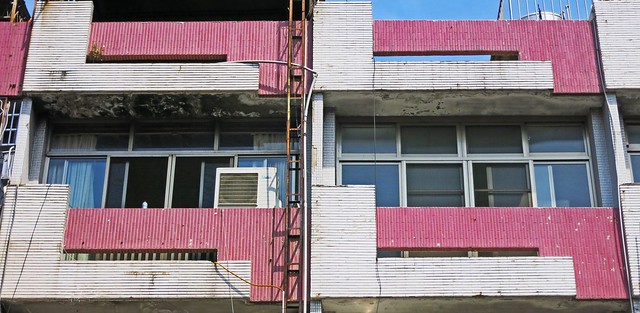
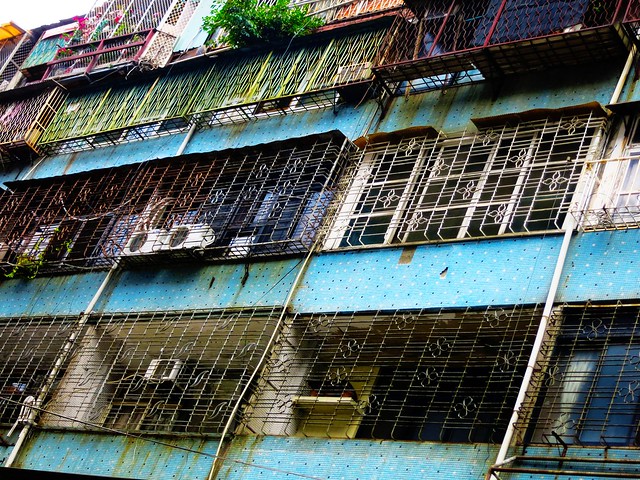
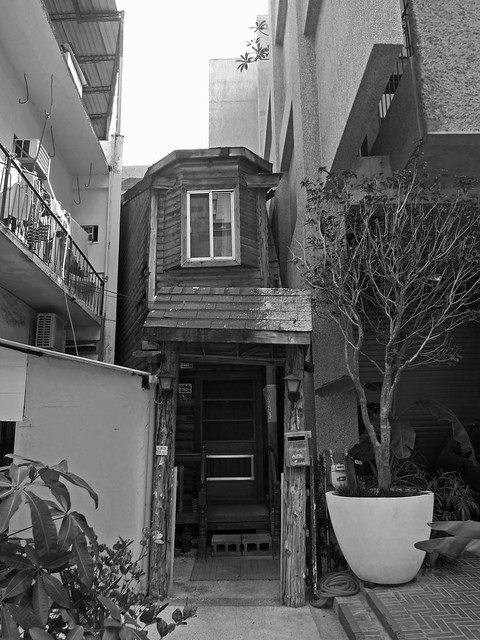
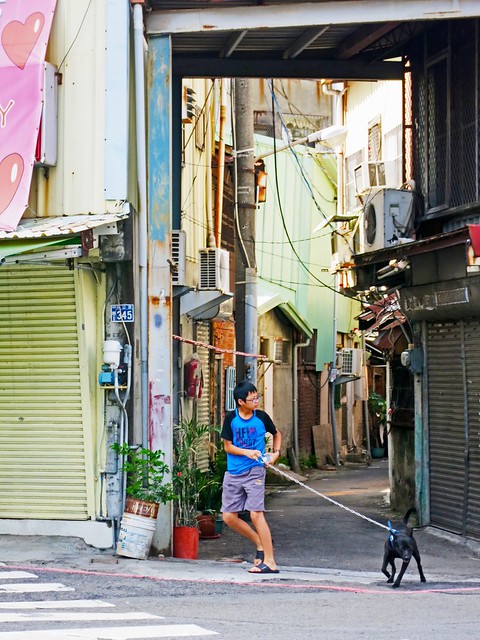
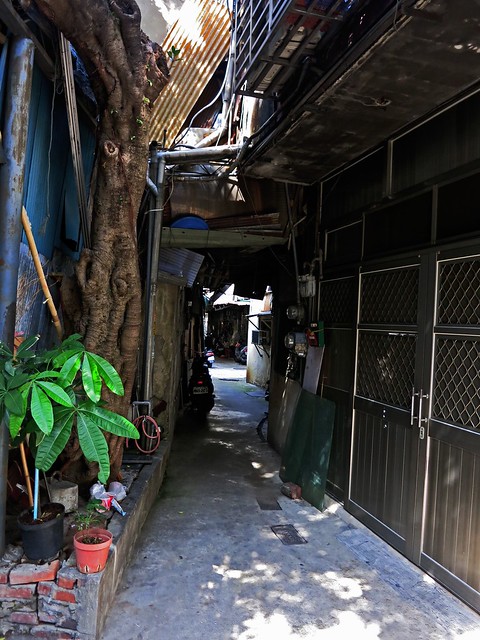
Old Taichung is filled with tiny lanes that snake between a warren of crumbling apartments that are held together with little more than corrugated metal and bailing wire. I am sure each unit is worth a small fortune. Many of these lanes are just big enough for a bike and its rider to pass through with shoulders scraping between screen doors. Each corner is a new surprise.
Untitled Untitled Untitled

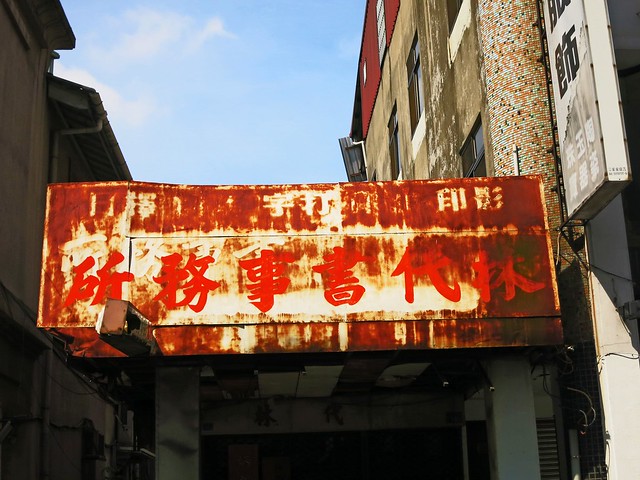
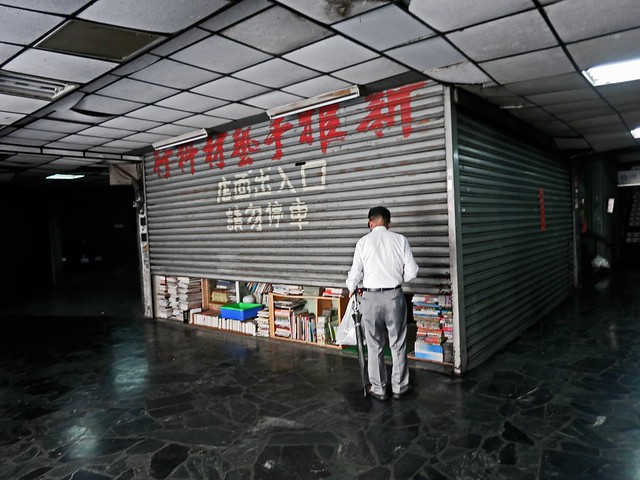
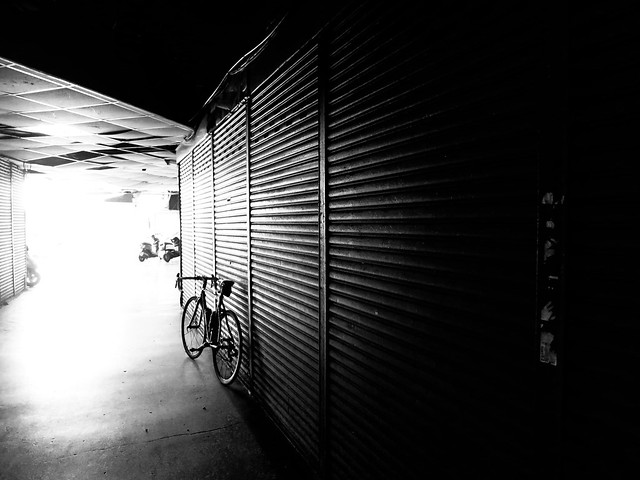
There are several lanes and underground pavilions that once rung with life from each vendor space. The spaces are now left shuttered and rotting with the occasional door cracked open out of little more than habit.
Untitled Untitled Untitled

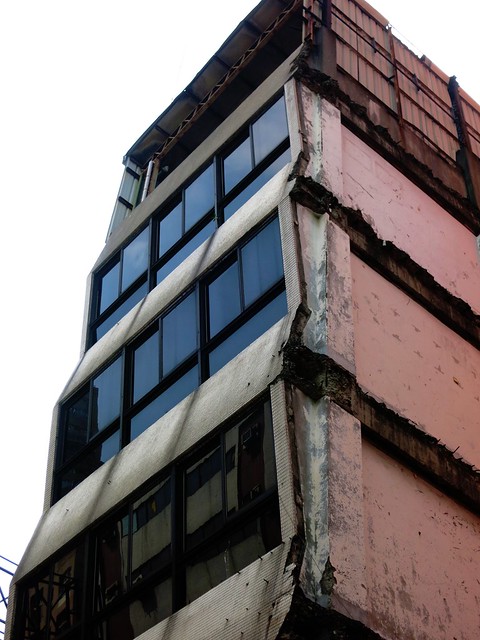
As I rode through the decaying world of chipped concrete, I realized I had never really spent much time looking up.

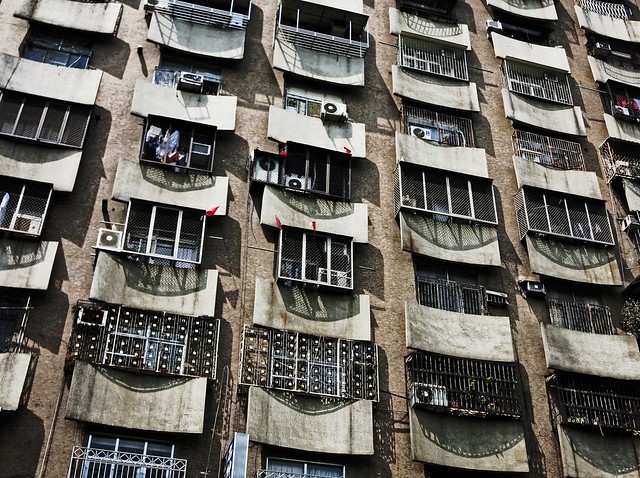
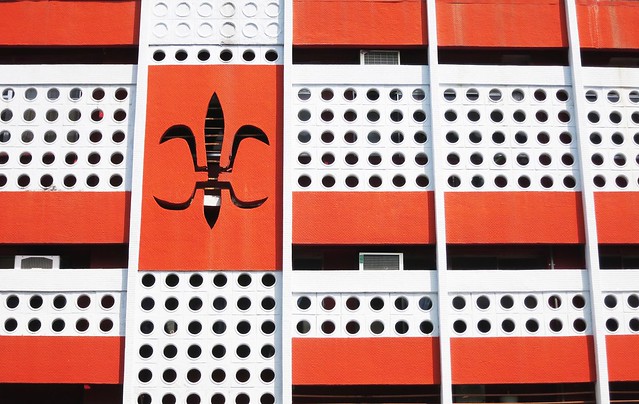
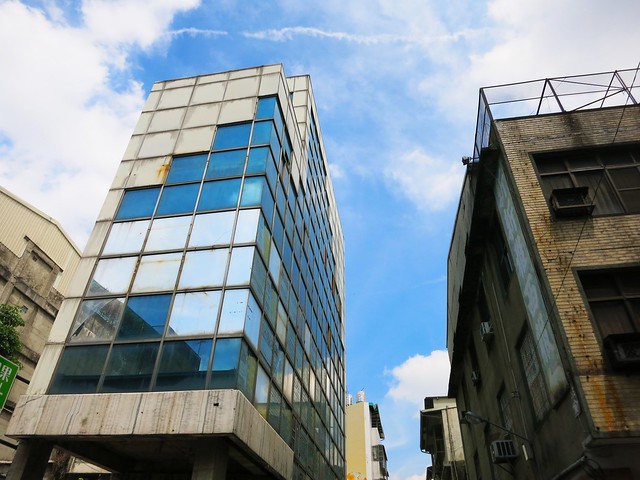
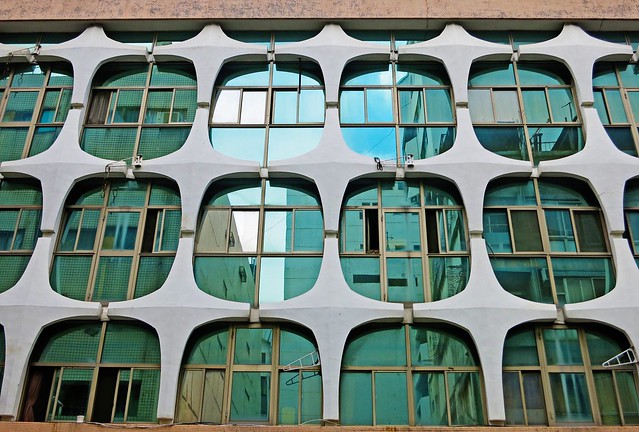
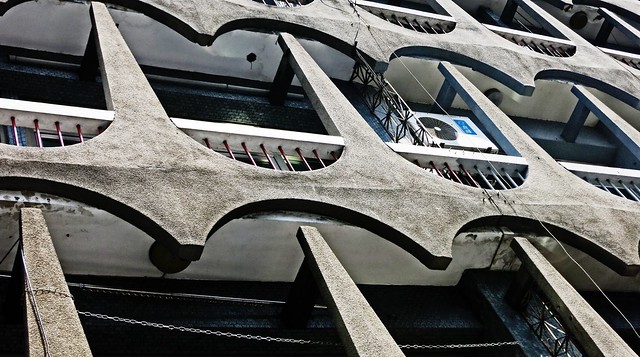
It was up where I found the true glory of the 1960s' when Taiwan was just beginning to embark on its first phase of the export economy.

These were the bold new designs, or very friendly knockoffs of Britalism and its functional modularity. It speaks to the rising cosmopolitanism of Taiwan's growing entrepreneurial elite-- a sentiment that was later checked by a deliberate state-driven turn toward the Chinese Cultural Renaissance Movement.

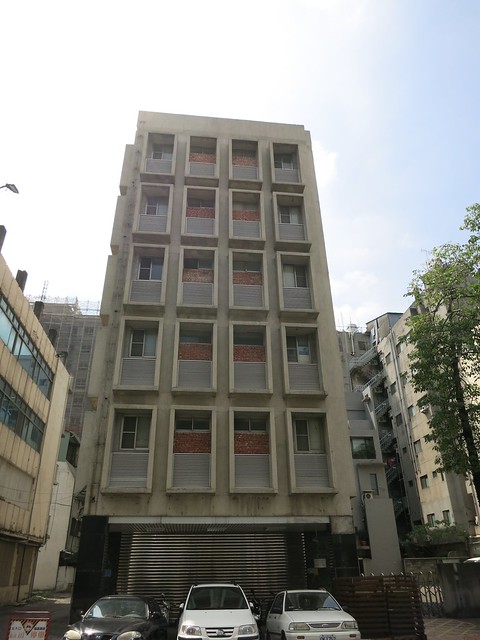
Now, many of the buildings sit vacant as long overdue investment opportunities. Other buildings are clearly in use, though they are often kept as low rent locations for illicit business.
Untitled Untitled Untitled Untitled

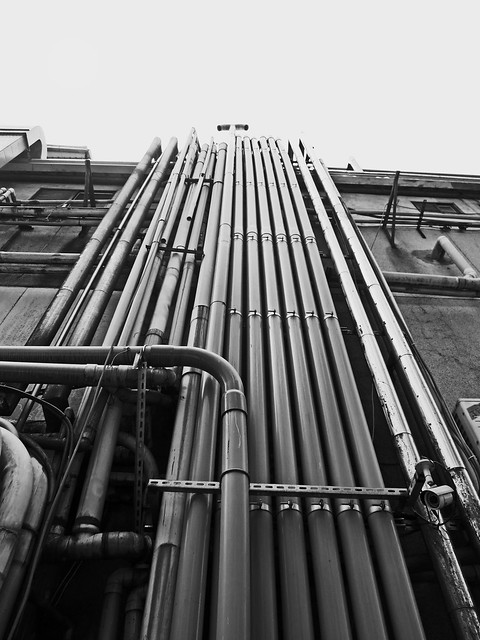
It is clear that, in many cases, the concrete box was not simply the end of the conversation, but it certainly was the beginning, as builders sought to pace government demands for demonstrations of the ruling junta's economic necessity.
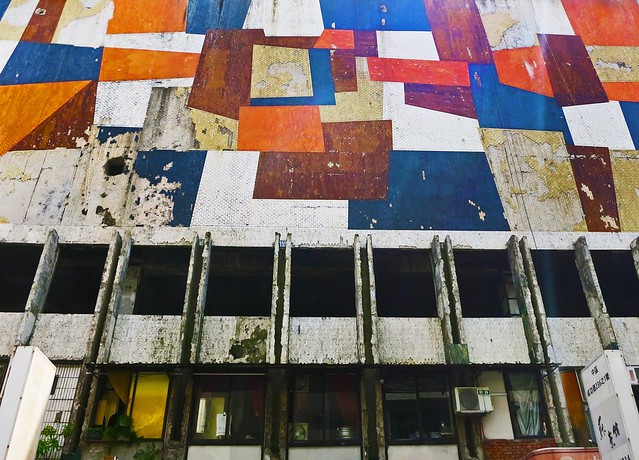
Untitled Untitled Untitled Untitled Untitled Untitled Untitled

A few structures stand as reminders of the booming 80's, when Taichung really began its sprawl, and the line between the metropole and the township faded into a blanket of cement.
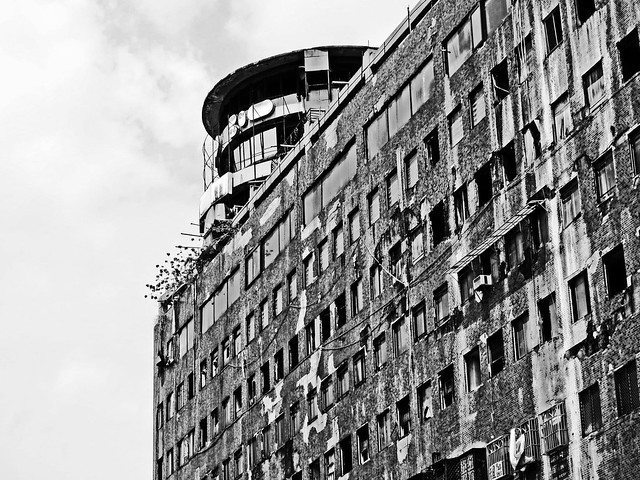
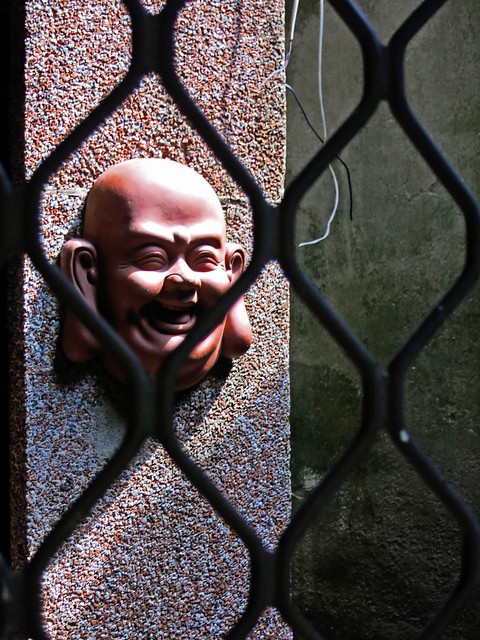
Untitled Untitled Untitled Untitled Untitled

By the late 1990's Taichung's downtown was a hive of activity as chip heads from all over the area converged on Electronics Street to pick up the latest in pirated games and software from the backs of passing trucks. Electronics Street has suffered the same fate as Radio Shack in the digital age. 
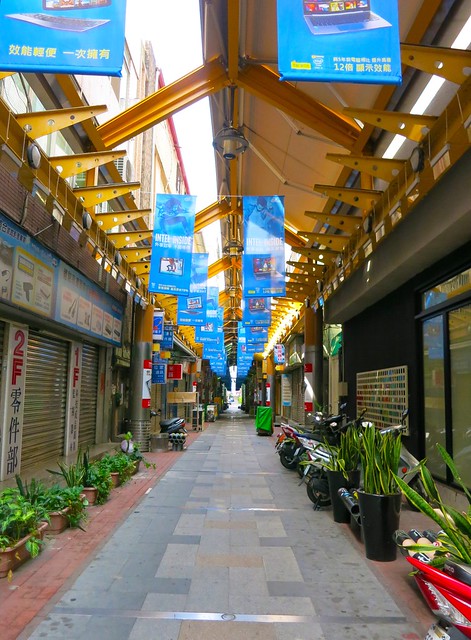
Untitled Untitled

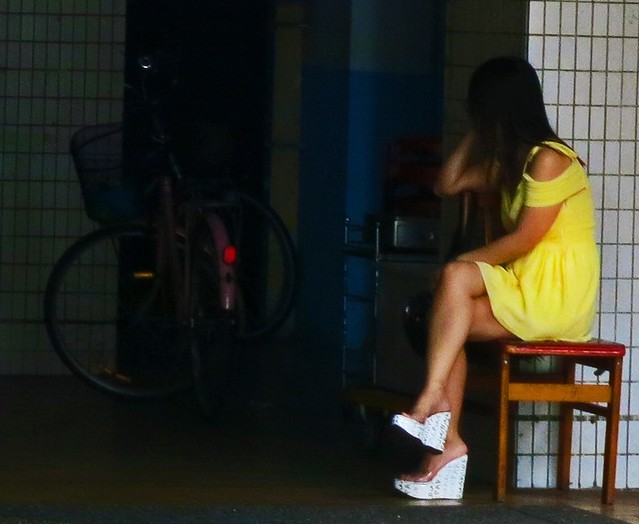
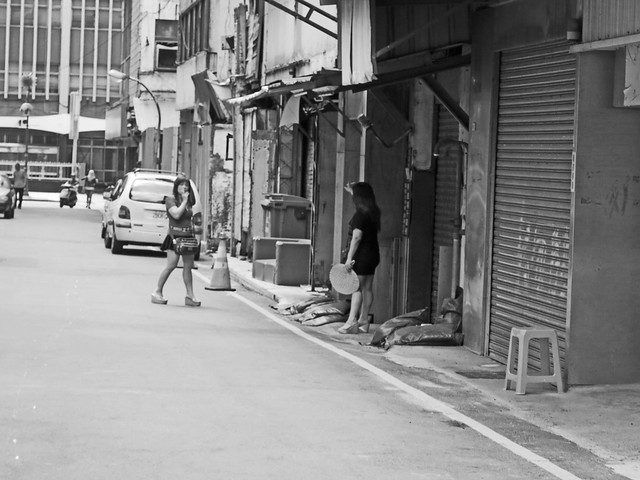
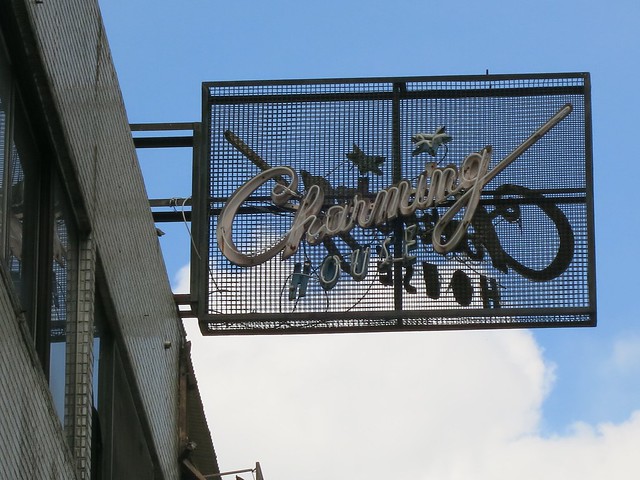
Closer to Taichung Park, there is an older craft that is still being plied on the streets. Although there are numerous other places for sex workers to operate, Taichung Park and its surroundings has been the traditional center. With many of the younger, higher paid sex workers opting for the life inide the insulating shell of legitimacy found in a KTV or massage/skin care parlor, there are still some who work the streets. 

When I first arrived in Taichung, prostitution was still legal in the city and it was the publicly licensed brothels where a long career in prostitution was said to come to an end. 

Now, without legal oversight, the ladies of the night and apparently also the day, who are a bit past their prime, work from the doorways and alleys around private, less controlled establishments. 
Untitled Untitled Untitled

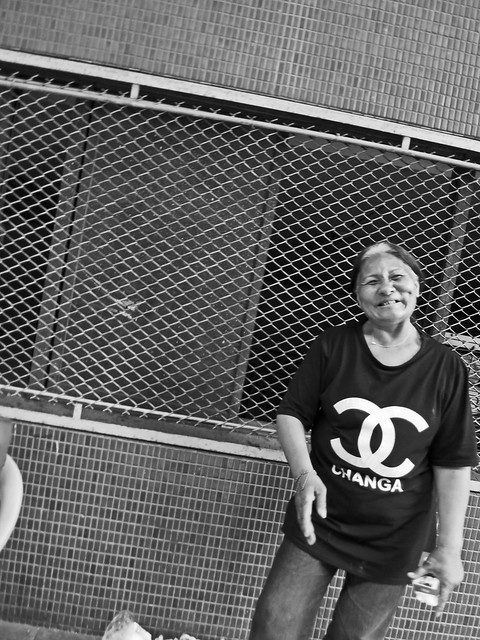
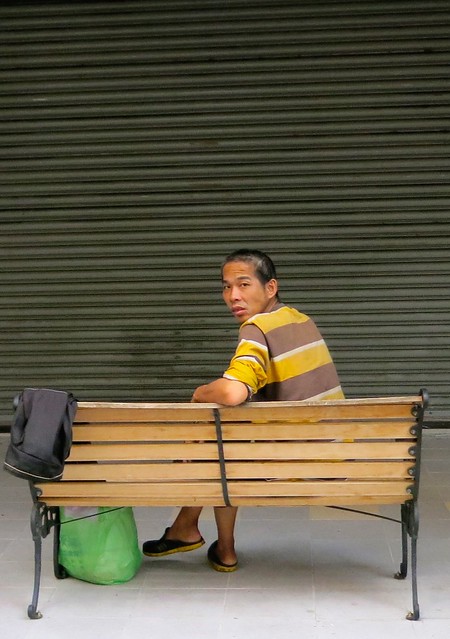
The area is really about the people who live there and make their lives there. This is what I found to be so fascinating. 

There are those who have been in business at a certain location and simply will not go elsewhere, possibly having bought the unit and are tied to it. 

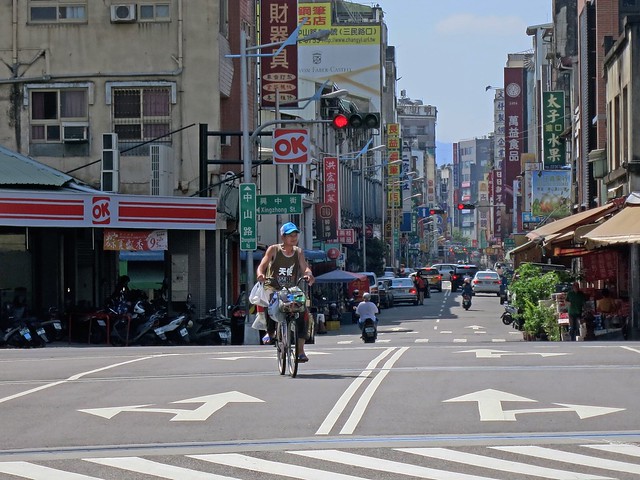
Other people are on their way to or from somewhere else, or heading to the train station. 
Untitled Untitled Untitled Untitled Untitled Untitled Untitled Untitled Untitled Untitled

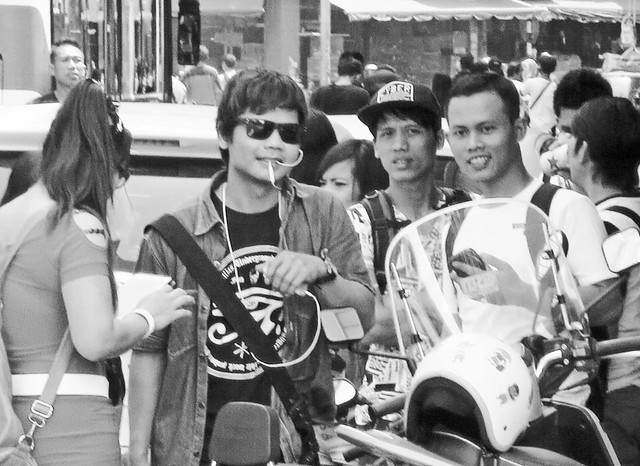
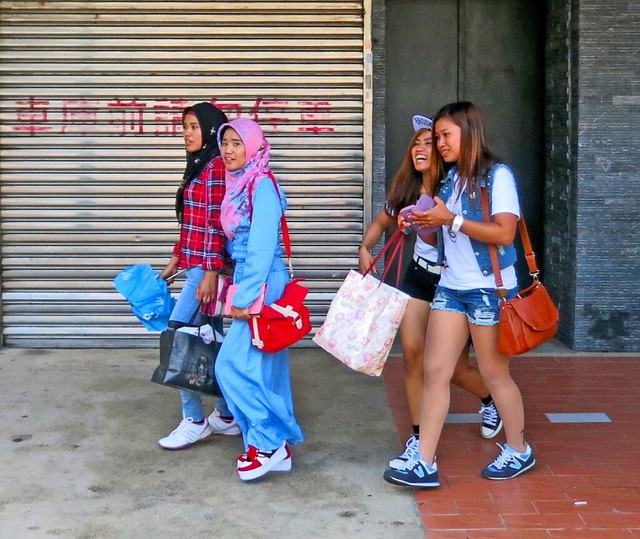
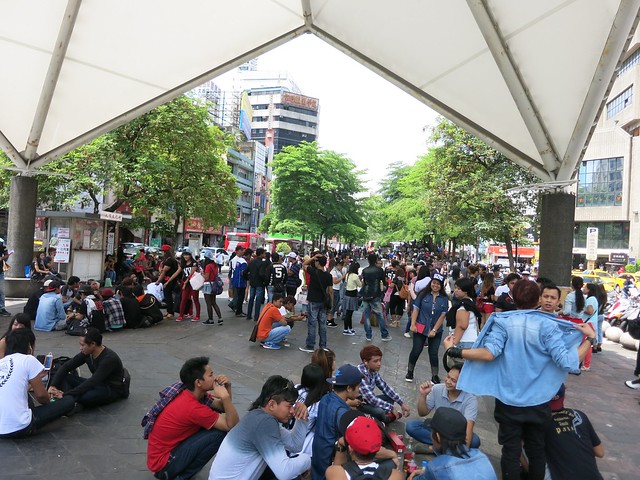
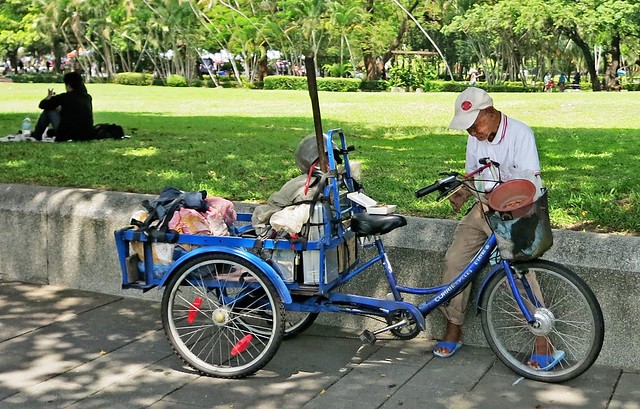
Taichung Park still fills up every weekend as the meeting point between Taichung's many cultures. 
Untitled Untitled

Taiwanese foreign culture is one of the local cultures that is most overlooked by academics and the government, which often wrongly views "foreigners" and "foreign culture" as something that is isolated, contained, liminal and...foreign. 

On the contrary, the culture and cultures that are created by foreigners in Taiwan provide a vibrant, burgeoning cultural landscape that pervades many aspects of our lives. Foreign culture is, in fact, a Taiwanese culture. 

These are the people who have been brought together through a contracted employment program that was devised in the late 80's to bring cheap foreign labor to Taiwan to work in manufacturing, agriculture and health care as a means to pay workers less than minimum wage. 

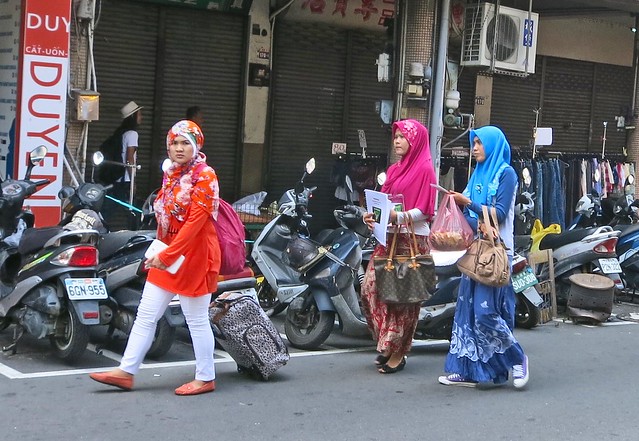
The foreign workers are recruited from Indonesia, Thailand, Vietnam and the Philippines on three-year visas. They are often housed in factory dormitories, though healthcare providers may live with their employer. 

When Taiwan's labor market first opened to foreign workers there was a noticeable public outcry rooted in racism. There was the fear that infectious diseases and petty crime would skyrocket posing a danger to public health and safety. There was also a vocal opposition to allowing another woman into the home. Women feared their husbands would be easily seduced. 

Public fears have since subsided, but there is still a noticeable tinge of extant racism directed toward foreign workers and other "dark people". 

The real danger has, in most cases, come from the employer, as foreign workers, and foreigners in general, are a vulnerable class of people in Taiwan. In many cases employers have taken advantage of their foreign staff. There have also been several cases of sexual assault when the employer feels the agreement covers more than simply housework, as the case involving former KMT heavyweight, Elmer Feng, demonstrates.     

Foreign workers now play a significant role in childcare, healthcare, manufacturing, entertainment, and many other aspects of daily life. Moreover, many former foreign workers are marrying local Taiwanese and becoming naturalized citizens. These are realms which were once the domain of only the closest members of a family. Foreign Culture is Taiwanese Culture! 

Untitled

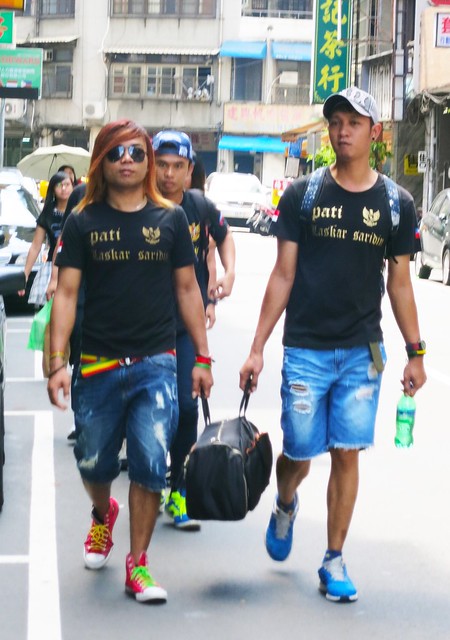
Taiwan's foreign workers have carved out a very rich cultural center in in Taichung City, adding a revitalizing effect. 
Untitled Untitled Untitled

Old Taichung is under constant transformation. It speaks to Taiwan's rich past and also to Taiwan's possible future. A simple bike ride through old Taichung helps to uncover more than a simple tour of rotting infrastructure. It uncovers much of Taiwan's potential in its narrative of unfolding. 
Untitled Untitled Untitled

Wednesday, May 6, 2015

Exercises To Help Strengthen The Lower Back And Core In Cyclists


My last couple of years have been in and out of the saddle with sciatica/piriformis syndrome and an unstable spine in the lower back. Despite my use of core exercises, daily stretching and regular massage, I have still had trouble in the lower back. A few hard rides before New Year had erased my gains and I found I was chasing my spine back into place. 

After a couple weeks of light riding, the sciatica erupted again at the end of January as a dull, steady pain ran down my leg and into my upper calf. It took about three days to really appear. It was Super Bowl Sunday that I had to admit to being off the bike indefinitely. 

After a less than stellar ride with a physician friend, he directed me toward Foundation Training as recommended by Dr. Eric Goodman. I am always skeptical. I am not one to jump on to internet exercise or diet fads. I am a firm believer in the logical simplicity of human physiology. 

As a sufferer of prolonged, daily acute pain-- Imagine a deep migraine in your hip and leg that comes and goes for weeks and months-- I am also a willing test subject. Sometimes in Taiwan it is hard to find sport related treatment information. 

I have been using the exercises above and have felt immediate results and prolonged results. The inflammation in my hip and leg has almost completely subsided. My back is becoming more stable. I used to go to bed with a perfect trough along my spine. I would wake up with the curvature flattened out. Lately the movement has greatly, greatly reduced. I will continue with these exercises and whatever else Goodman has for FREE on YouTube. 

The exercises make physiological sense. I know there are many others out there suffering with recurring lower back issues from cycling, and like me, want nothing more to be back in the saddle eating mountains. 


DISCLAIMER: I am not employed by or receiving any compensation of any kind from Dr. Goodman or any other organization. My experiences are mine alone and I am not responsible for any injury incurred from following or improperly following the instructions in the video. 

Tuesday, May 5, 2015

BREAKING! Taiwan Tourism Bureau Infotisement Doesn't Suck.

IMG_3530


The Taiwan Tourism Bureau has a paid cycling tourism infotisement in the latest volume of the Smithsonian Magazine.


Over the last two decades, Taiwan has transformed into a cyclist's paradise, opening thousands of kilometers of interwoven bikeways through some of the island's most beautiful landscapes. The extensive new network of routes has earned the country many accolades, including a spot on Lonely Planet's 2012 Best Countries to Visit list and CNN Travel's top "Cycling Routes That'll Take Your Breath Away," and for good reason. By bike, visitors can cruise past hillsides painted with colorful flower farms, marvel at the geology of Taroko Gorge's marble walls, follow old rail lines through retired mining tunnels, cross thrill-inducing suspension bridges and sample sweet pineapple cakes from local farm stands. 
The countless routes provide plenty of opportunities for individual exploration, but here are six of the most spectacular bikeways to fuel the imagination.
My biggest quibbles would be that Sun Moon Lake is not a route for cyclists, but for non-cyclists who want to hop on a bike for the first time in decades and follow the shore. It is an environment that, at least on weekends, is not suitable for regular cyclists. 

The other issues I might have would be inviting cyclists to jump into the streets of the Xinyi District with no knowledge of how Taiwan traffic functions, and the loop through a bunch of prefab buddhas and a brand new temple of concrete and rebar. For me, personally, it does nothing. Someone might be into those things. Bagua Shan can be great, but the Buddha they affixed to the site of the former Japanese Shinto Shrine is a bit of a contrivance. 

The Yuli Bikeway and the interior of the Rift Valley is exquisite. Taroko Gorge is also something a visiting cyclist should hope to see. Though Taroko is best visited early before the hordes of tourists and motor coach trains start up the gorge after 9:00am.

A Giant Step Backwards: LA Times Promotes Giant

Untitled

Something is afoot as there seems to be a sudden influx in cycling related news regarding bicycles and Taiwan. And why not? There is something to be sold. 

Tiffany Hsu has a very lengthy piece that made it into the Los Angeles Times detailing Giant as a major shaker in the bicycle industry. Hsu does an admirable job in her reporting as she refrains from annexing Taiwan to China or creating artificial conflict in that regard. The more interesting pieces of the article are the points where Giant CEO, Anthony Lo, speaks his mind and reveals a little bit about Giant, the company's trajectory, and moreover, it sheds a little light on how Giant is writing its own mythology.
Tony Lo says he has the solution for traffic- and smog-choked Los Angeles: Get people to hop on bikes. 
For Lo, it’s a convenient proposal to make. He’s chief executive of Giant Manufacturing Co., a Taiwan-based company with U.S. headquarters in Newbury Park that calls itself the world’s largest bicycle producer by revenue.Such concerns weigh heavily on the small island nation, which is trying to reduce its reliance on fossil fuels as smog drifts across the strait separating Taiwan’s western coast from China.
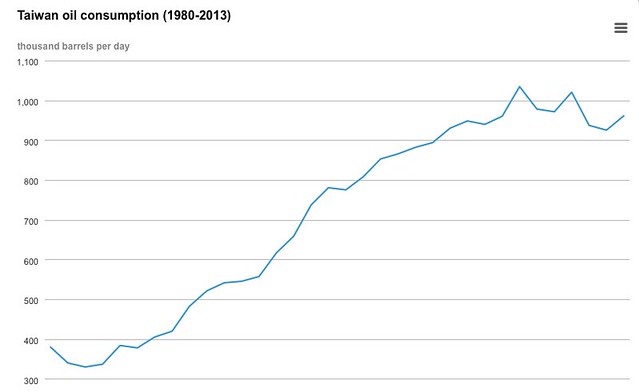
Of course, as I have recently written in an earlier post, it is not entirely accurate to simply blame China for our own air pollution. For much of the year Taiwan's air pollution is the result of domestic polluters and our reliance on coal-fired power plants. Naphtha cracker production is also a major source of airborne pollution as we have seen with the Formosa Plastics foundry in Yunlin, which was recently the focus of a protest against PM2.5 emissions as the topic has gained some political traction. Taiwan continues to rely on the burning of fossil fuels with two recent dips, which correlate to periods of negative economic growth.
Since 1980 In recent years the Taiwanese have embraced cycling culture as never before, Lo told a group of American journalists last week. 
“In the past 10 years, Taiwan has turned from a biking desert into a biking island,” he said at Giant’s original manufacturing and assembly plant in the Dajia District of Taichung City. “If Taiwan can do this under not very favorable conditions, there’s no place where it cannot happen.” 
The number of motorcycles and scooters in the country is declining, he said. Increased demand for bikes allowed Giant to launch a hotel that caters to cyclists, a public bike rental system with more than 5,000 bicycles and a brand dedicated to women called Liv.
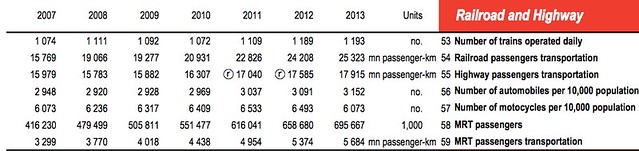
Mr. Lo's assessment is a cynical one at best. According to the government's own statistics (through 2013), while the number of scooter drivers has dropped in recent years to 2007 numbers of 6073 scooters per 10,000 residents, the number of private automobiles has risen to 3152 for every 10,000 residents, an increase of 204 vehicles. The data spanning from 2007 to 2013 shows shows very little change in the reduction of private motor vehicles and, at first glance, appears to follow Taiwan's economic health as opposed to an interest in physical health. The numbers do not include bicycles for transportation, but the real difference seems to be from mass transit, such as trains and MRT systems which respectively saw large increases in ridership with the introduction of more frequent trains an expanded MRT systems. The bicycle is really insignificant in Taiwan's transportation infrastructure.

Auto Stats

Of Course, Tony Lo should know this. Both Lo and Giant's founder and president, King Liu, have close ties to the government as the latter served as a special presidential advisor on transportation and bicycle policy.

This partnership between the corporation and the government has produced little by means of emissions reduction-- the U Bike program being the only meaningful program that is aimed at transportation-- and instead focused largely on the more lucrative side of the business, which is to view the bicycle as a tool for prestige and leisure. I have written multiple times that there is nothing wrong with leisure cycling. It is a great way to exercise and see Taiwan. I would also argue that it does little to reduce emissions as it is simply replacing other activities that also do not produce emissions-- activities such as jogging, badminton and crochet. I might also argue that the focus on leisure cycling could potentially be adding to the very problem Giant claims to be solving. Since leisure cycling does not act to limit an individual's regular carbon emissions associated with necessary transportation it is important to look at Giant's goal of producing and selling more product.

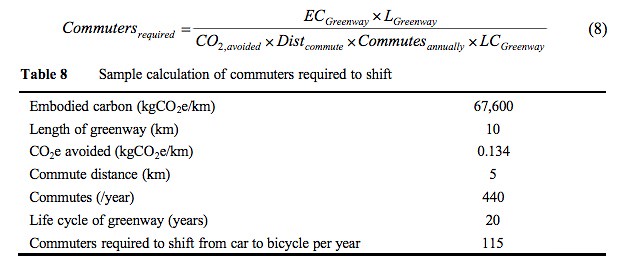
Greenway If we consider the environmental impact of bicycle production, it is far lighter than a car. On the other hand, industrial bicycle production requires sourcing raw materials, energy from fossil fuels, toxins and other emissions. It is important to consider the greater environmental impact of these machines of leisure. As Giant has helped reduce the cost of leisure and recreation bicycles, it has increased the number of carbon fiber frames and components on the roads. Carbon fiber is not a commonly recyclable material and will often end up in a landfill. The longer a bike lasts, the smaller impact it will have. Unfortunately, the bikes Giant wishes to sell are the bikes with the highest profit and the highest rates of turnover.  Giant's recommendation to the government has been to construct more leisure cycling paths. One of the best studies on the topic concludes over the course of the 20 year lifespan of a bicycle path, it would require 115 cyclists 440 commutes per year over 5km to offset the carbon footprint of the cycle path. Of course, this is for commuters in which the cycling is a substitute for other forms of transportation. Read the whole paper HERE.
Giant launched in 1972 making bike parts for companies such as Schwinn Bicycle Co. but introduced its own brand in 1981 after losing orders to China. 
Not long after, Giant and its Taiwanese rivals decided to focus on high-end bikes to distinguish themselves from the cheaper models churned out by Chinese competitors.
I find this section of Hsu's piece very interesting as it almost entirely focuses on the Chairman, Tony Lo, rather than the president and founder, King Liu.

Giant has, at great expense, promoted the story of King Liu to capture the hearts and minds of Taiwanese. I personally enjoy this recent characterisation from Want Want China Times:

I find King Liu a very interesting case, in examining how much of the story was left on the editing room floor.

The King Liu story is built upon the foundations of a Horatio Alger narrative-- scrappy a down-on-his-luck figure overcomes adversity to pull himself up by his bootstraps and realize his ultimate boon.
He began his own business raising eels at the age of 35, but he was brought to the brink of bankruptcy when a typhoon destroyed his eel ponds. 
He subsequently founded Giant in 1972 as a contracted manufacturer of bicycles, where he struggled for three years to keep the new company from collapsing.
Just when he was able to turn his company from running in the red to running in the black, a client whose order accounted for three-fourths of Giant's revenue suddenly stopped working with Liu's company. 
More miseries lied ahead, he says in the book. At the age of 63, Liu was diagnosed with gastric cancer and had to have half of his stomach removed, and then many of Taiwan's bicycle component makers moved overseas, causing Giant to lose nearly all of its suppliers overnight. 
At 73, Liu found himself plagued with sleep apnea, blood clots, and a slipped disc. Despite the obstacles, he decided it was time to ride around Taiwan on his own Giant bicycle in defiance of the opposition of every one of his family members and friends.
In many ways this is the Taiwanese monomyth that resonates throughout Taiwanese culture. As the locus of multiple colonization projects, Taiwan's social, economic and political structures have been forced to adapt to changing realities. Taiwanese have a history of pragmatic change and adaptation. The unfolding narrative is one of survivors. An examination of Taiwanese popular music and literature is full of fantastic tales of the wandering man who leaves home to make his fortune, only to return home or to dream of returning to his hometown. Songs such as, 離開故鄉來流浪, 舊皮箱的流浪兒 and 出外人 are classic examples of the popular image of the wandering man.

The myth of King Liu is, in my opinion, deliberate in this type of imagery to appeal to an existing sense of local pride. The moniker "Bicycle Kingdom" that is often used in fawning print articles is a cute reference to King Liu. 

What Giant seems to ignore in the mythologizing of King Liu, was the mighty hand of the KMT party-state and the role of the Lo family in Giant's success.

By the mid 1960's Taiwan was entering unfamiliar territory. As a sojourn state, the prospects of American aid in "retaking the mainland" were quite dim. Taiwan was under strict martial law with an strong state controlled economy (price restrictions, monopolies and tariffs). Taiwan had been protected from world economic fluctuations due to artificial government stimulation, few foreign investments and the infusion of American aid. (See Gold;1986)

Under pressure from the United States, Taiwan embarked on economic reforms that stemmed from multiple state directed plans to use Kuomintang funds to spur investment and economic growth in the private sector. As the term "private enterprise" tended to euphemistically mean "owned by local Taiwanese", the state hoped to curtail opposition. These SMEs became subcontractors for Japanese manufacturers in an export economy. Taiwanese' close ties to Japan made the arrangement a smooth transition. By 1972, the KMT party state searched for a new 6 year plan and investments to boost the economy. This is the time of King Liu's misfortune with eels. He essentially was given a KMT backed loan to switch from the local economy to the export economy. There is speculation that Tony Lo's "mainlander" background may have served as a buffer or guarantee for the fledgling bike manufacturer and its state patron. I am curious if Lo will be stepping up to replace Liu as the "Visionary Giant". 
About 2,000 people work in Giant's Taichung complex. Roughly 20% of them hail from Vietnam and Thailand and are housed in dormitories. 
Like many other major economies, Taiwan is facing a disconnect between employers and the workforce. Many companies have positions to fill but can’t find the needed applicants locally. 
“We don’t have enough labor in Taiwan,” Lo said. “Young people don’t want to go into manufacturing.”
I find the quote above to be quite interesting. In Taiwan we often see tycoons and wealthy politicians lament the "laziness" of young Taiwanese. In one recent Want Want China Times article: 

Pan Wei-kang, a lawmaker from Taiwan's ruling Kuomintang, says members of the country's younger generation lack ambition and have lost competitiveness compared to their contemporaries in mainland China and the Philippines, writes our Chinese-language sister paper Want Daily.  
Pan said young people in Taiwan are generally well educated but many of them are unwilling to face reality. Many college graduates fail to find jobs and continue to depend on their parents financially or go on to graduate study or take part in working holiday visa programs to defer joining the workforce, the lawmaker said. 
These sentiments were often hurled at the students who came out in force to support the Sunflower Movement and are, in general, feeling ever marginalized in Taiwan.

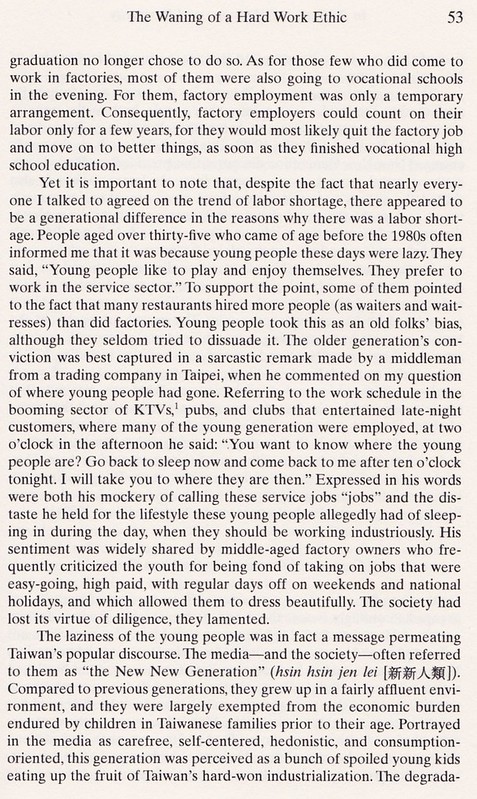
The anthropologist, Anru Lee, in her excellent work on labor in Taiwan In The Name of Harmony and Prosperity: Labor, Gender and Politics in Taiwan's Economic Restructuring, writes:


AnruLee

The myth that Taiwanese young people are spoiled and lazy is false. Young Taiwanese with college degrees take low starting salaries. Last year, Terry Gou, another famous tycoon based in Taiwan, insisted the young people of Taiwan were spoiled and that a reasonable starting salary for a college graduate at the technology colossus, Foxconn, should make NT22,000 per month (roughly USD$729). Many Taiwanese are pressured into working massive amounts of unpaid overtime. Many foreign workers make just over NT15000 per month. 

I was recently privy to both an applicant and potential employer's negotiation. The applicant has 10 years of experience as a buyer. She had been a stay-home mom for two years and was hoping to go back to work. She demanded NT26,000 per month. The potential employer would edge no higher than NT24,000. 

When we consider the problem of unaffordable housing from the current housing bubble, where the rich have saturated the housing market for safe investments, the rising cost of utilities, young people can not afford to work for Giant. 

Meanwhile....

Tony Lo is in China helping to shift the leading role of the Asian bicycle industry to a China based organization that will likely promote industry centered growth for whatever is best for the few at the very top of the food chain. 


Lee, Anru. 2004. In the Name of Harmony and Prosperity: Labor and Gender Politics in Taiwan's Economic Restructuring. New York, State University of New York Pres. 

 Gold, Thomas B. 1986. State and Society in the Taiwan Miracle. New York, M.E. Sharpe, Inc. ISBN 0-87332-399-8

Wednesday, April 29, 2015

MOTC Launches Bicycle Route Advisory App: It is yours for free... if you can find it.

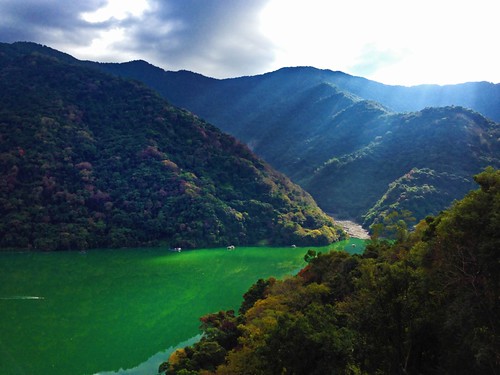
Wanda Reservoir  

Taiwan's Ministry of Transportation and Communications has, apparently, launched a new web service, including a mobile app. to help cyclists better navigate their way around Taiwan. The service is in Chinese and English. 
The app, prepared by the Directorate General of Highways under MOTC, aims to serve people interested in a biking tour of the Fulung- Toucheng section of Highway 2, Taroko-Wuling section of Highway 8 and Highway 14-A, Xindian-Wulai section of Highway 9-A, Taitung-Changpin section of Highway 11, Puli-Wuling section of Highway 14 and Highway 14-A, and Chukou-Alishan section of Highway 18.
The service also includes information on hill gradients, lodging, restaurants and services along Taiwan's six busiest cycling routes. 

The app. is all yours... if you can find it.  

As this writer has experienced, the service and mobile app. is elusive and does not appear in the MOTC press release or the residual media reports. 

If anyone can find this service, please direct me to it and I will update this post. 

Focus Taiwan

Want Want China Times

Taiwan News

MOTC Website

It may or may not be related to the Inno-Biker app. from the Taiwan External Trade Development Council.  

Or it may be related to the Institute of Transportation's GoBiker app. with was released in 2012. The Institute of Transportation under the MOTC seems to be an extra bureaucratic layer meant to duplicate, confuse and mis/redirect web inquiries. The MOTC and IOT sites are not linked, but seem to fall under the same authority. 

I'm glad they are making it easy on us. 

Oh... Taiwan Information Technology Specialists... What would we ever do without you?

Tuesday, April 28, 2015

Chinese Manufacturers Eat Merida's Lunch

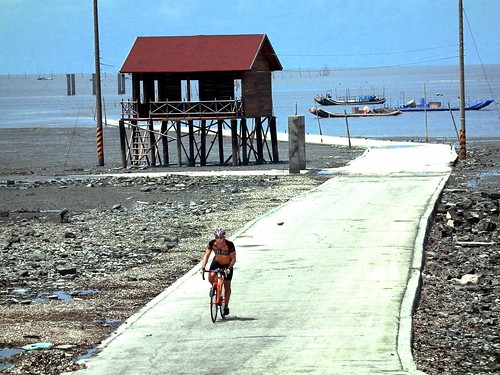
Changhua Wetlands
 
Bike Europe is reporting that Merida's profits have declined compared to last year. 

This reminds me of a conversation I had with a reporter from Bike Europe during Taipei Cycle as we amiably sparred over the prospect of Chinese manufacturers edging out Taiwanese companies for both design and production. 

The reporter seemed to doubt that China would ever displace Taiwanese manufacturers as he felt they had done a very good job holding onto sensitive data and processes that enabled the Taiwanese firms to merely exploit cheaper Chinese labor without losing any advantage. I was doubtful. I always revisit the great debate over silicon wafer manufacturing in China from 2002, when Taiwanese firms and economists alike declared that there would be no leakage of sensitive technology to China through Taiwanese operations in that country. We see how that all worked out. 

We then saw the world rally around ECFA, the trade agreement signed between Taiwan and China with the aim, as Fortune mentions, to "end Taiwan's economic isolation." Regardless of Taiwan's decades of deep supply side economic ties to the United States, Japan and Europe. 

Giant's Tony Lo was an early champion of ECFA as evidenced in this Taipei Times article:
Anthony Lo (羅祥安), chief executive officer of local bicycle maker Giant Global Group (巨大集團), said the government needs to establish a vision.
“What Taiwanese enterprises want to see is the government striving to help businesses build unique brands that can provide innovative products and services,” Lo said on the sidelines of the forum.
Lo said Taiwan needs to integrate into regional markets as soon as possible so local firms can enjoy the trading privileges that other nation’s companies do, such as tariff exemptions.
“The markets are changing so fast that the rules have been reset, and if we don’t catch up, it is going to be harder for us to hold our own in the global market,” he added.
If anyone would like a little more spice with your shock doctrine, you can also read up on the threat to Taiwan without signing the Cross-Strait Services Agreement, a non-procedural agreement that was illegally passed, then assailed by the Sunflower Movement. 

Despite the promises of greater exports to China and increased sales of Taiwanese goods to the billions in need of a toothbrush, The View from Taiwan points out how ECFA has not improved Taiwanese exports vs. Chinese imports. 

Ho hum....

So what was the cause of Merida's profit troubles? 
JPMorgan Securities Ltd. reported in the Taipei Times that, “A lack of fundamental improvement in the outlook of its Chinese business remains the biggest structural issue facing Merida Industry Co.” Given Merida’s continued weakness in business in China amid intensifying competition with Chinese manufacturers, JPMorgan foresees a 7 percent increase in turnover this year. 
Last year Merida officially opened a new Chinese factory with an annual capacity of 2 million units making it the number two premium bike manufacturer in the world.
Moreover, the Chinese sport and leisure bicycle business has failed to materialize in all its glory due to pollution and a preference for alternative forms of superficial prestige. Even the Tour of Beijing, which was to serve as a major marketing tool for high-end/high margin bicycles in China has been shelved due to concerns regarding sponsorship, organization and China's notoriously toxic smog. 
Lots of bike industry eggs in this one basket. 

Maybe the next administration will discover a regional friend with mutual interests.... Oh, hello Philippines!