body{background-attachment: fixed ! important; }

Thursday, March 17, 2011

Bikes Are Fun... and More. Incorporating the Bike Into Our Lives


I have been told a few times to quit over thinking the bike. "Bikes are fun".

This is true... Bikes are fun! But I think if we simply focus on one single aspect of riding a bicycle, in this case "fun", we lose track of so many of the other opportunities and challenges bicycles provide.

Yes, bicycles are fun. They are also a multi-billion dollar industry. They are tools. They are recreational. They are utilitarian and political in how they are used by political actors and activists to promote change. Bicycles, at their most basic, allow for all types of physical and social mobility to occur. They are transformative.

Bikes can be a lot of things.

In Taiwan we have seen private companies and the government put a growing focus on recreation and leisure, which is fine, but it is often at the expense of all the other qualities a bicycle can provide. I have seen a growing emphasis on leisure over transportation infrastructure. There is money to be made in leisure and tourism... and so I can understand why there is such an emphasis on simply recreation.

Luckily, some urban areas like Kaohsiung are working hard to ensure the bike can become more than just a toy for use in "other" places. Bicycles need to be localized and incorporated into a part of the transportation grid and as a way of life. This can not happen without metropoles that are willing to facilitate the bike and make space for its use, and bike companies willing to produce bikes for the way people live. This is where we need to see greater commitment.

Then I come across this.

Here is an excellent piece from The City Fix on what Kaohsiung has been up to.

In a country where there is nearly one motorbike for every two people, Kaohsiung has 766 motorbikes for every 1,000 city residents. To get citizens off their motorcycles and scooters, Kaohsiung instituted Taiwan’s first urban bicycle rental program. Kaohsiung’s City Public Bike (C-Bike) program includes 4,500 bikes at 50 rental locations. Bike rentals through the program aren’t free, but the government offers subsidies to encourage citizens to use the city’s more than 150 kilometers of bike paths (the first-of-their-kind in Taiwan.) Kaohsiung’s efforts have led CNN to name it the third most bike-friendly city in Asia.

Tuesday, March 15, 2011

Well Spoke: Bike Links


  • In the aftermath of the Sendai earthquake, some athletes have come together to raise money for some of the victims. If you are interested, you can follow the links provided by Craig Johns at Taiwan Racing.
  • Taiwan's BioLogic has been hard at work on an iPhone mount for your bike. This will allow you to better tune out traffic and ignore other cyclists with a game of Angry Birds.
  • The Tour de Taiwan is getting ready to launch March 19th. Keep your eyes peeled for its use as a propaganda tool. Yes, I am serious.
  • Taipei Cycle kicks off this weekend. Be sure to stop by the booth operated by Leeche International Sports Co., Ltd and say hello from Taiwan In Cycles. I hope they will be more professional and courteous with you than they were with me. For a real look at a company with class, see Primavera Cycles. Lots of stuff to see in Nangang.

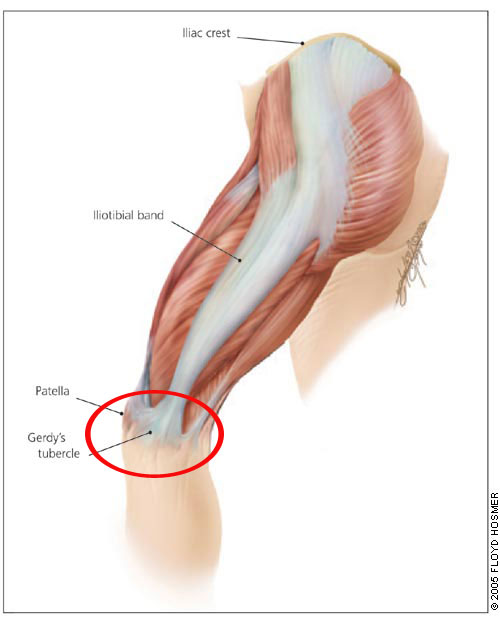
Treating My Illiotibial Band (IT Band)

Where My Pain is Located

As many of you may already know, I have been down with a bit of an injury that had been dogging me for over two weeks.

After writing a little bit about this problem, which has been aggravated by a new bike sitting in my house, I have received several messages regarding riders who have experienced knee and IT band pain.

What is the IT Band?

For me this is the second time I have dealt with this issue, and I have found some treatments to be more effective than others. In extreme cases a doctor may use steroid treatments or procedures to deaden the nerves to make full motion more bearable.

The first stage of treatment is R.I.C.E. (Rest. Ice. Compression. Elevation). This helps reduce acute pain and allows for the second stage of treatment to become bearable.

From my experience, the most effective way of reducing this type of pain is from stretching. There are numerous stretches that can be done to reduce friction and pull on the IT band.

For some people, the location of the pain may be a symptom of an imbalance elsewhere. Knee pain may be due to an imbalance in the hip or an IT band that has tightened further up the leg.

In my recent case, the problem was a calf muscle that had tightened and started pulling on the lower part of the IT band. For this I have been doing calf stretches as well. These stretches have had immediate results.

Aside from stretching, I have also been using forms of massage to help the muscles relax. I find if I spend a little time in the shower using my knuckles to really work the leg muscles, the soreness subsides. This is probably just a good habit anyway if you are a regular athlete.

The last part of how I have been dealing with my knee issue is looking back at what happened leading up to the injury.

As athletes, we tend to over do it. We push ourselves to be stronger, faster and better. This can push us over the edge to injury. We often bite off more than we can chew.

For a few of my riding partners, I have seen them move too fast into long rides. It takes a plan and preparation to build the strength necessary to do all the rides you want to do. It takes patience as well.

For my own injury it may be a combination of factors.

First, I have not been as active after my bike broke. My fitness may have waned and then like a junkie going back to the regular dose after a stint at rehab, I suffered. I am not sure this is the case.

On the day my knee flared up, I felt a light cramp in my calf after a brisk morning ride to our scheduled meeting place. I wanted to hammer out there to get there early and have breakfast. The cramp never fully materialized and I rode 70km before the pain started in. It seems a small cramp had actually materialized in my calf and I later discovered a small ball of tight tissue that felt tender under pressure. Bingo!

I had also been riding a different bike with a different geometry that what I was used to. This may have changed how I ride and which parts of the muscles I was working.

I noticed my pedal form had changed with the borrowed bike and I needed to shift my cleats. I have always hated finding the right cleat position. I used to get all kinds of cramps as I dialed in my former position. It never felt right.

I recently learned a new guideline to find a good position for the cleat.

One Suggested Fit Method

Find the bumps before the big and little toe. Then find the center point between them. This is a good indication of where your cleat should be centered. This has helped me tremendously.

At this point my knee feels great.

I hope some of you other riders out there who are experiencing similar issues can benefit from my experience.

Sunday, March 13, 2011

New Seven In Pictures: Don't Hate Me Because I'm Beautiful...


On Saturday I went to T-Mosaic and picked up my new bike. Sadly, my leg is not 100% yet and so I can't really get a full appreciation for the feel and handling. Also, the wheels I ordered arrived in the wrong color, so I will be using some less attractive loaners while I wait for the Fulcrum Racing 1 set to arrive.

My initial review is: WOW!

Here are a few photos I took Sunday around Taichung.

Here's my new bike in pictures.

Enjoy!


Frame: Seven Axiom SL
Fork: Seven 5E
Group: Campagnolo Chorus 11 (53/39 to 12-27)
Headset: Chris King (Silver)
Bars: Deda Newton
Bartape: Fitzik (White)
Stem: Deda 90mm
Seatpost: Selcof ti
Saddle: Fitzik Arione (White)
Wheelset: Fulcrum Racing 1
Tires: Continental 4000GP 23/25c
Pedals: Crank Brothers Egg Beaters NEW Pedals Pending

Saturday, March 12, 2011

And The IT Band Played On: Saturday Surrender


Saturday I met up with Simon, Michael, Dominic and Emily for an attempt at Bagua Shan.

This was my first time riding with Dominic and Emily, so I was disappointed when I had to withdraw early due to continued pain from the IT band.

I limped home after climbing most of Bagua Shan with one leg.


I really need to applaud Emily for her effort. She started as a novice just a few months ago and managed to ride all the way out from Dongshih to join the ride.

By the time she returned home she had ridden 145km. A century is not too far off.

Thanks for the ride!

Now I will be continuing my regimen of massage, ice, rest, and stretching. Time for R.I.C.E.

Rest
Ice
Compression
Elevation


Thursday, March 10, 2011

Valuable Tech Notes and More: Long Chainstays?

Here is a fantastic article about Frame Geometry and how it translates into bike handling.

When I first saw the CAD drawing and measurements for my new bike, I was a little surprised to see the 410mm chainstays were a little longer than I was expecting. I hadn't specified too much comfort as I seem to have an iron ass, and I wanted something a little on the racier side. After making some comparisons to other bikes I like, I noticed it has become fashionable to have chainstays between 405 to 408mm in length. Manufacturers have been shrinking the rear triangle for "stiffness" or the belief in "stiffness".

In the article, Darren Baum, a master in titanium, lay it out:

In Darren’s opinion, longer chain stays help deliver a better quality ride. When you climb, the bike has more traction. When you go through a corner, the bike trails further and you can hop on the pedals earlier. The intended use of the bike is a big consideration however.

When chainstays started getting shorter throughout history (late 60′s, early 70′s), it was when riders started getting more powerful and the technology didn’t exist to make the materials strong enough for the desired stiffness. Therefore the chainstays were designed shorter in order to make the bike stiffer. A good bike was considered one that you could barely fit a Tally-Ho cigarette paper in between the rear wheel and the seat tube. This design had nothing to do with handling. It was all about making the bike stiffer. People started identifying this small rear triangle as a “race bike”, and therefore a race bike must handle better. This never changed as materials progressed.

These days the materials exist to make a long chainstay that is still very stiff. However if you have a longer rear end, the bike naturally needs to be manufactured with more material and therefore will be heavier. These days in the industry there is a race for the lightest spec’d bike. What does Baum do with their bikes? They recommend making the rear end as long as acceptable by the customer.

If you’re flexible and can bend forward, 412mm is what Baum will recommend. If the rider sits more upright, the chainstay might go as long as 420mm. If the rider is really tall (i.e. over 6’3″), and the femer is very long, 430mm might be required. The reason for this starts to relate back to seat tube angle and pedalling technique, however I think we might leave that one for another discussion.


The whole thing is worth a read.

Also:

Here is a little video off You Tube about the process Seven Cycles uses to build frames. A couple of shots include two of my frame builders.


Taiwanese Amateurs To See Brest in August


Taiwan Focus Reports:

Taipei, March 10 (CNA) Taiwan's first international cycling marathon will take place in Pingtung County in May on a new road around a bay in the southern county, the Tourism Bureau announced Thursday.

The Dapeng Bay International Cycling Marathon, sanctioned by French cycling club Audax Club Parisien, will run May 21-22 on the 12.3 km road around Dapeng Bay, said Johnson Sheu, director of the Dapeng Bay Scenic Area Administration, at a press conference held at the Ministry of Transportation and Communications.

The news came following an announcement that
47 local cyclists are scheduled to participate in the 2011 Paris-Brest-Paris 1,200 km event -- the world's oldest bicycling event on the open road -- in August 21-25.

Led by Cheng Wen-chang, who in 2007 became the first person from Taiwan to complete the cycling challenge, the participants finished 200km, 300km, 400km and 600km rides this year to qualify for the French event, which began in 1891.

"It will be a great achievement if I can complete the ride," said Hana Hung, one of eight female cyclists to register for the race.

The cyclists will ride individually and will try to complete the ride, also called the Brevet, within 90 hours.

The French event, beginning on the southern side of Paris and traveling west 600 km to the port city of Brest on the Atlantic Ocean and returning alone

What I find really exciting about this news is that Taiwanese are integrating themselves into world cycling. With more Taiwanese interested and passionate about cycling, we can only hope to see more Taiwanese included in global cycling events. As the sport in Taiwan matures, the possibility of a Taiwanese breaking in to the pro peloton becomes even more likely.