body{background-attachment: fixed ! important; }
Showing posts with label Giant. Show all posts

Tuesday, April 26, 2016

Keeping Swiss Time: Inside DT Swiss-Taichung

Untitled

When most riders shop for a new bicycle, most of the emphasis is placed squarely upon the frame. Is it light enough? Is it stiff enough? Will it make me faster? Is it sexier than I am? The frame is really the heart of the bike. It is the truss that supports all other systems. So if the frame is the heart, then the soul would have to be found in the wheels. To reference Willian S. Burroughs in Words of Advice for Young People, "...not every soul is worth buying."

If riding a bicycle is, as Robin Williams believed, as close as you can get to human powered flight, the wheels serve to tether us to terra firma...if just barely. Wheels are an extension of our senses on the road--a palm to read the braille of the road or the scuff of the track. They transmit the earth below us into our bodies and we telegraph our reply back into them as the circuit of communication with our machines. Riding a route is to physically experience the terrain with all of our senses. The wheel is what gives a cyclist the super powers to climb up or to plunge down alpine slopes or skim the earth at blurring speeds powered by no more than our own legs. We owe so much of our saddle top experience to the input we receive from our wheels, and yet, they tend to be the most neglected of a bicycle's components as their value is the least understood by the consumer. Bike brands know this and the wheel becomes the sacrificial lamb in generating the most palatable MSRP.

For cyclists who understand the vital role an excellent set of wheels plays into ride performance (possibly more important that the groupset), a wheel upgrade is usually a first priority.

When it comes to building a complete, high performance wheelset, there are few manufacturers that can compare to the pedigree of DT Swiss, the wheel and shock manufacturer from Biel, Switzerland.

Although DT Swiss can follow its roots all the way back to the Swiss metallurgic culture of the 15th century (and possibly beyond), as the technology for drawing wire matured in and around Biel, the modern incarnation of DT Swiss AG was forged through a partnership amid the fractured remains of the United Wireworks in 1994.

Since its inception, DT Swiss has cultivated a loyal following with cyclists and with other brands in search of an OEM capable of supporting a reliable supply chain with the industrial experience from which to customize, launch and brand new wheelsets.

Although DT Swiss now offers a wide range of products for road and MTB cycling, the core of the company's success rides with its pairing of the now legendary 240 hubs with its patented spoke designs, including the super light weight Aerolite bladed spokes. The varied combinations of these two components have allowed DT Swiss to provide a complete, light, reliable and high performance wheelset in several configurations for a variety of uses.

DT Swiss products can be seen performing at the highest levels through the company's sponsorship of both road and MTB cycling teams. DT Swiss extends sponsorship to the professional peloton in IAM cycling as well as Team Stolting, 8Bar, Focus CX Team, Cube Action Team, Intense Factory Team, Scott Odlo, Yeti Factory Race Team and many others.  


Untitled
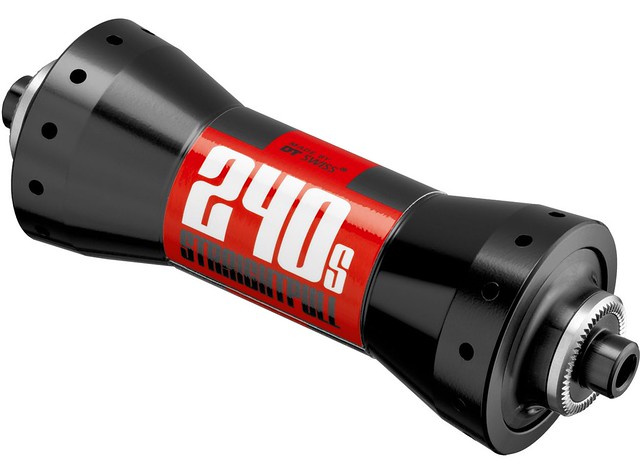
DT Swiss 240s Hubs

Here at TiC, I am usually very critical, wary and pretty standoffish when it comes to articles that appear to promote a product, brand or technology. Sometimes I am downright ornery. The equipment I use and write about is all based on my own (un?)educated selection, using my own money just like everyone else. As a consumer I always view product and brand promotion in the cycling press with a sprinkle of suspicion as there always seems to be a bit of patron politics at work and I am always left wondering what the reviewer really felt, but didn't want to offend their patron in print. I have always maintained full disclosure as part of my responsibility to the reader. This case is no different.

When I was offered the opportunity to visit the DT Swiss facility in Taichung, I had to give it some serious consideration. I finally decided I could, in good conscience, tour the facility and publish an article as long as I was free to write unobstructed and unhindered by those nice people at DT Swiss.

As a former customer of DT Swiss, it was my opinion that any weight my writing may lend to the company, will be matched in quality, reliability, support and corporate equity. If this had been another company I felt produced substandard products or lacked a wide net of support, I would not do it or I would not be shy about highlighting the negatives. I would hate it if my enthusiastic recommendation nudged someone over the edge to buying a product that turned out to be unsafe, with an evasive warranty, or complete shit. This matters to me.  
Untitled
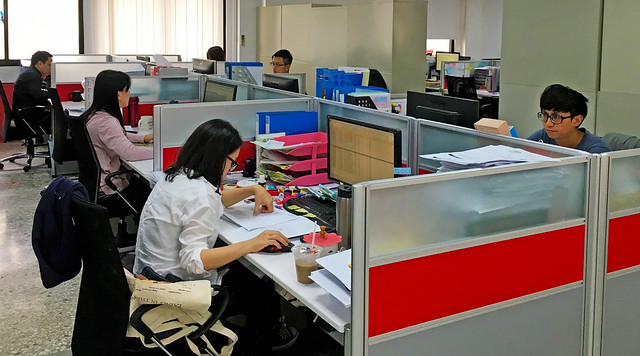
DT Swiss-Taichung Office

In 2007, DT Swiss extended their operations to Taiwan, where they now employ 180 full-time office and production employees at three different Taiwan locations. The move put the Swiss manufacturer directly in the epicenter of the bicycle industry, which paved the way for closer cooperation between the supply chain, the manufacturer and the end user. It was a move that made it possible to inject DT Swiss production standards into a greater number of products and brands through OEM partnerships. You may be riding on DT Swiss technology without even knowing it.

Currently, DT Swiss handles production for Scott Syncros wheelsets, as well as supplying high-end hubs for other highly regarded brands, such as: Giant, Specialized, Trek and Cannonade-- allowing brands to market an in-house wheelset rather than having to reinvent... the...wheel (ahem!...sorry).

Moreover, DT Swiss handles OEM work from over 400 international customers, including: FFWD, Reynolds, ENVE, Intense, Pivot, Yeti, Canyon, Cube, Ghost, Rose, Orbea, Felt, Fuji, Ibis, Santa Cruz, Rocky Mountain, Norco, Devinci, KTM, Merida, GT and a whole universe of other established brands.
Untitled
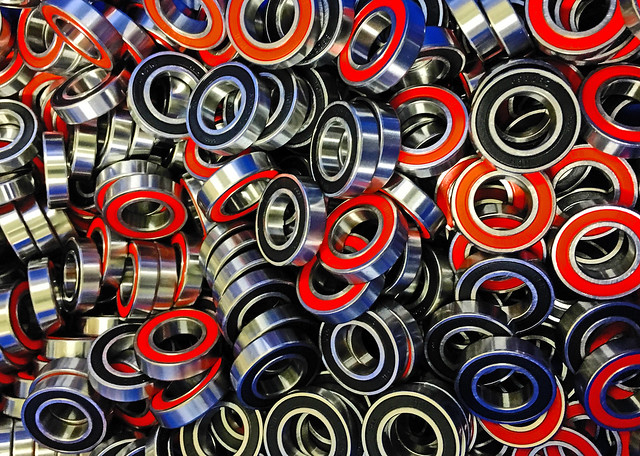
Bearings

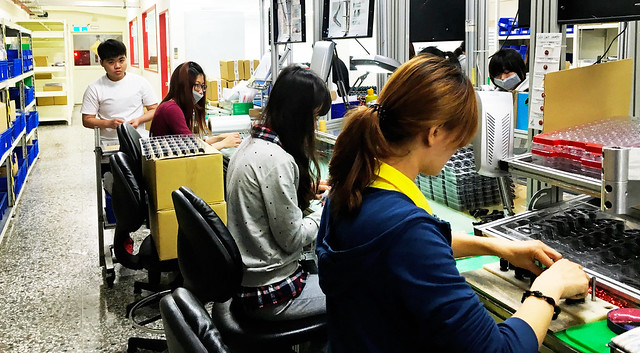
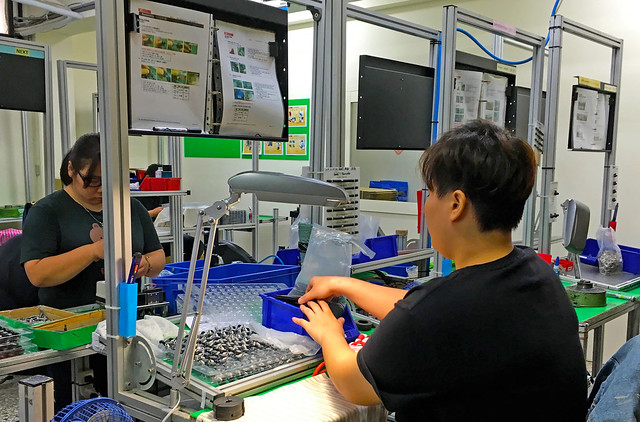
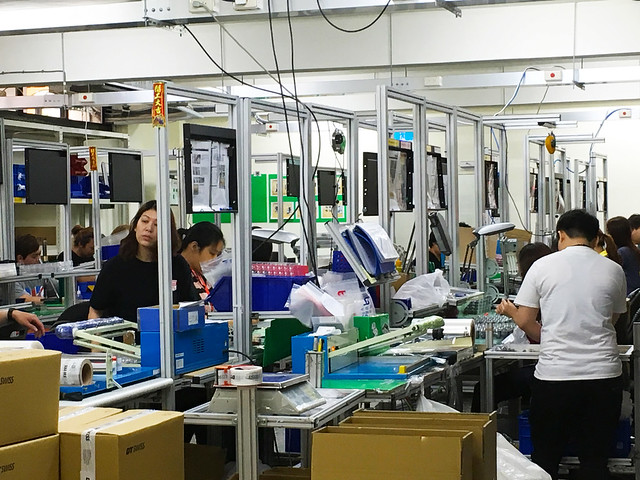
Having worked in light industrial jobs a time or two in the past, the factory tour was completely familiar as we passed from floor to floor and room to room in a sequence that fits the logic of synchronized production. While manufacturing work is not necessarily Hollywood sexy, bathed in key lighting and dry ice, the facilities were clean, orderly, and a completely scaled replication of the home facilities in Biel. This allows the company to retain tight controls on quality and procedures.
Untitled
Hub Production

Those storied front and rear hubs come into the Taichung facility from a regional supply chain that allows DT Swiss to better leverage its volume against the higher quality and cost of each component. This gives the company space to offer higher performance at lower price points; a factor many smaller companies do not have the clout by volume to attain and thus rely on lower quality internals to compete at a certain price point. Some may complain that DT hubs are not the cheapest, but there seems to be more of a companywide inclination toward the quality end of the spectrum. 

Untitled
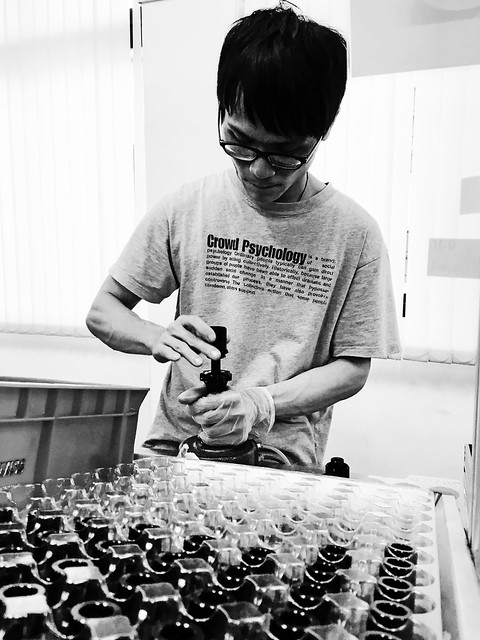
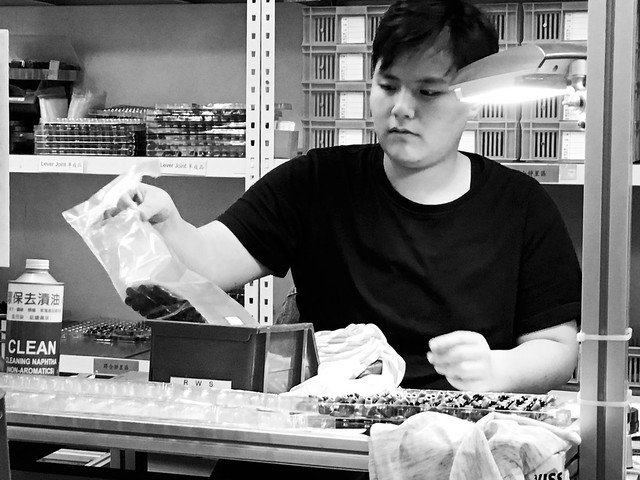
The bearing seats, ring nuts and inner hub shells are lightly greased and then packed into place. The axle and bearing are then slid into place, followed by the second bearing. The ring nut and shims are then prepped and installed. Rear hubs have the ratchet greased followed by the spring to hold it firm and then the assembly is capped by the rotor. Adapters are pushed together from either end before the finished hub is sent out for labelling.
Untitled

Untitled

Untitled
Aside from the individual parts, bearings, springs, caps et al, the hubs are completely assembled in-house, where the process and integrity can be tightly managed.
Untitled
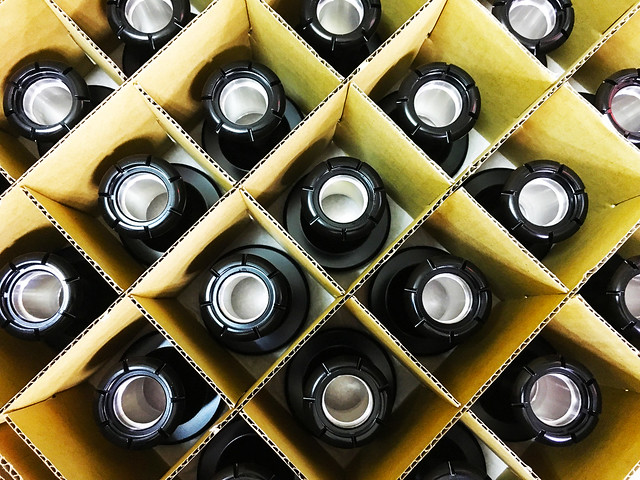
Hub Shells

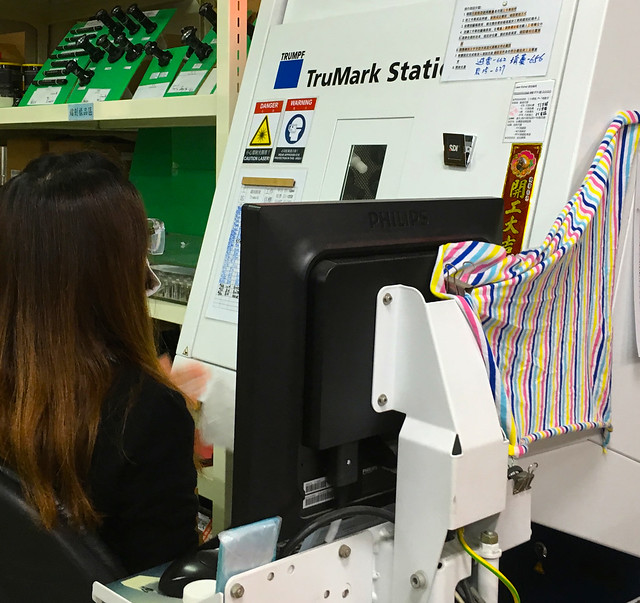
In some cases, hub shells are laser etched with logos or design details per customer request. Giant specs a large number of laser etched hubs from DT Swiss.
Untitled

Untitled
Quality Control

One thing I was trying to quietly keep an eye on, was the extent of the quality control systems in place at DT Swiss. When customers find their components were manufactured in Asia, there often seems to be an unfounded fear that the quality will somehow suffer. I think anywhere in the world there are cases where suppliers attempt to move the goalposts and get away with skipping procedures and of skimping on QC in an effort to shave a few more pennies off production. At DT Swiss, I saw similar controls as you would expect to find in any light industrial environment.

I once worked in a factory cutting Carl Zeiss lenses--arguably one of the most celebrated lenses for precision and quality. The quality controls and factory environment were, in a broader sense, nearly identical to DT Swiss.

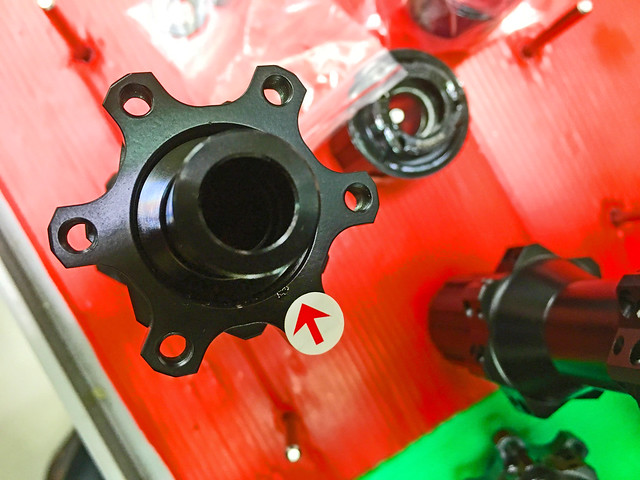
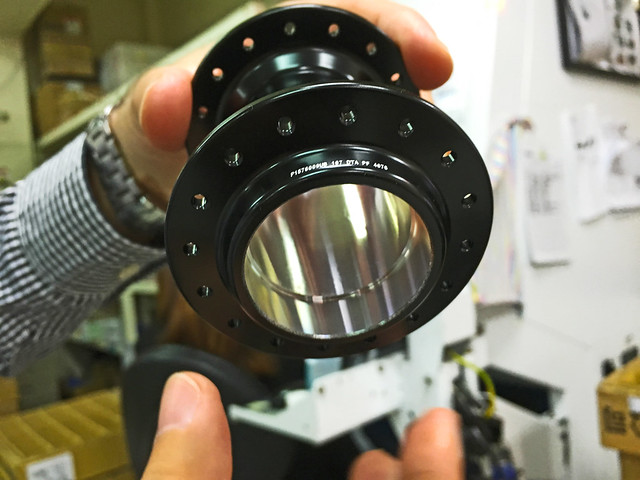
Each hub is inspected along the way for flaws (these don't even have to be functional flaws) before it reaches the next stage in assembly. The hub pictured above has a slight inclusion in the coating and was duly marked and removed from production, and the cause traced and remedied.

Hubs are all marked with an individual serial number so that any anomaly can be traced, addressed and corrected.
Untitled
Serial Numbers
Untitled
Greasing

Untitled
Production Management

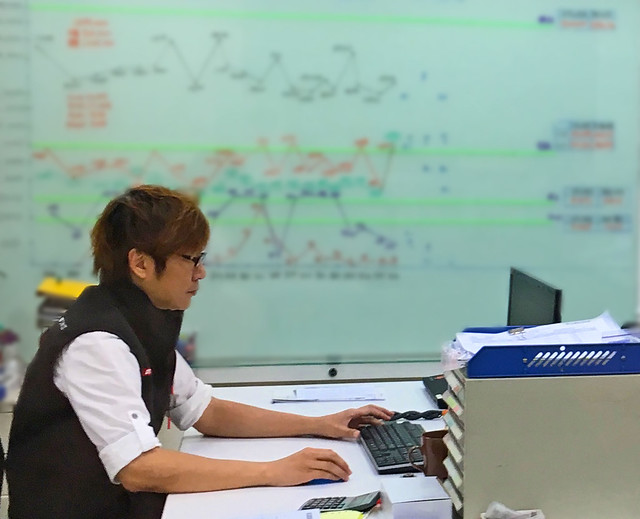
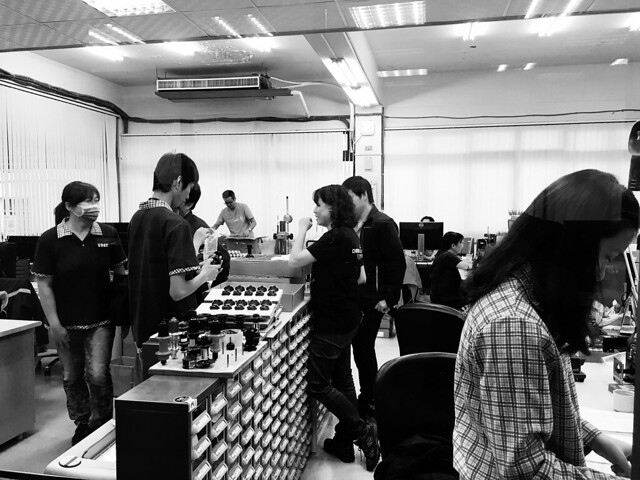
I was also surprised to see how the production management monitored quality, output and customer orders. The atmosphere in the production office seemed collaborative and low pressure. This is very important in maintaining quality. Sometimes high pressure or the threat of instability in production can lead to an environment that reduces both quality and efficiency.

I know what an adversarial work environment looks like, and how little it accomplishes. This seemed like a healthy work environment filled with young professionals. I asked about employee compensation, and while I couldn't nail down specific numbers, I was assured that employees were both well trained and well compensated compared to similar occupations in the local economy.
UntitledUntitled
DT Swiss Ratchets

My overall impression of DT Swiss hub production is that they run a very tight, professional facility with adequate quality control systems within an amicable environment that, from my brief tour, seemed conducive to maintaining a healthy exchange of vital information that could have some bearing on the final product. The employees worked with the speed of experience, but nothing slapdash and definitely not the lazy "差不多了" (whatever/good enough!) sentiments I have heard about from the work culture of some... neighboring countries... ahem!

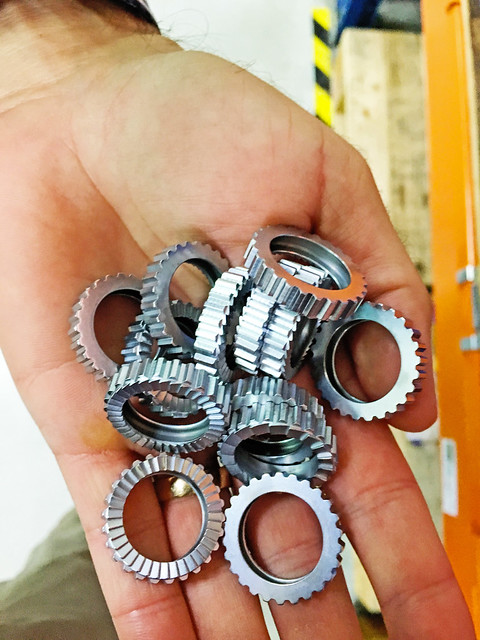
The DT Swiss 240 series of hub is probably one of the best and most reliable hubs on the mass market and may even be comparable to some of the big names in smaller production houses. For years I have considered the 240 to be in the same elite category as Chris King, Phil Wood, Hope, and White Industries. I had actually been thinking about 240s the last time around if I hadn't bought a complete wheelset. True! DT Swiss uses their patented, "Star Ratchet" system in the freewheel to provide instant acceleration in an easily maintained package. One of my few complaints with using Chris King hubs was that they were finicky to the extreme. A couple hundred miles in the saddle and I would be adjusting the tension of the free hub. DT 240s have a reputation for being tight, light, durable and easy. They may not have the same bling factor as Kings, but for a rider who just wants to go fast and go now, the eye candy can come later. 

For me, I really like easy. Living in Taiwan, space is a premium. You can't be spending every weekend with your bike, its components and internals, strewn all over the coffee table. You also can't be running back the have your hubs dissected after each surprise rain squall on an April afternoon. The less I need to remember about maintenance, the more I like it.    
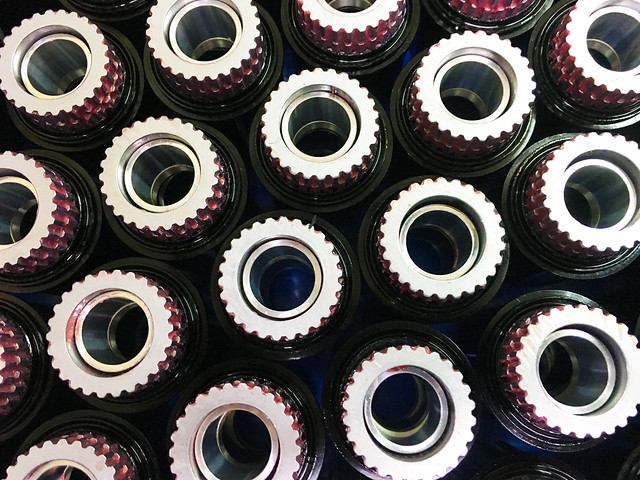
Untitled
Ratchets

Untitled
Spoke Coil

From the world of hubs, I was taken into the other world of DT Swiss, Taichung-- the world of spokes.

Spokes really give life to any wheel. Count, gauge, weight, stress, length, lacing, material and nipple quality all play a factor for giving any wheel its seemingly magical properties to transform the quality of any ride and provide the longevity that makes a wheel safe for thousands of kilometers of riding. At any given time the entire weight of a rider is balanced upon the tight matrix of tiny wires that keep our wheels from collapsing into a mess of tattered and bent material on the side of the road.

One of my Tuesday night rides involves cresting an unlit section of hill over the outstretched starry lights that clutter the void above western Taichung between Dadu and Shalu. The route takes me up and down 4 miles of gradients averaging over 7%, where I have hit 70kph on some sections of the descent, while keeping ahead of any vehicle traffic. Every drainage grate I hit, I feel a little bite of fear. It always scares the hell out of me that one of these nights a grate will reach up and grab my wheel or the impact will harm the wheel's integrity and in an instant. It is a sobering fear and a very human fear. Vigilance. Nobody wants to die on the road. It scares the hell out of me.

It also reminds me that I need to trust my equipment. If I feel I have made a good choice in my wheelset, I feel less fear and stay off the brakes (braking is a great way to slip). In cycling there is a psychological necessity to trust your equipment. If you are constantly in fear of some terminal failure, you will always hold back and never risk taking things too far. If a product has threatened to fail on you before, do you want to roll the dice a second time? I reach the crest of that hill, take a breath, look behind me, then jump on the pedals into the abyss. I know my bike will take care of me. The trust is there. 

A well built, reliable, strong and true wheelset is essential for building that trust with your equipment and it really starts with the spokes. A spoke may be, individually, less than 2.0mm in diameter, but together in a wheel, they hold, not only the weight of the bike and rider, but they also must hold up to the stresses of velocity during heroic descents, track precisely under the forces digging into banked curves, and push against gravity wrestling up thigh snapping climbs.

Take your bike down and just spend a few minutes looking at the design of the wheel, and then appreciate how the evenly measures stresses pulling on that skinny hoop are what keep you from burying your face into the pavement on your next outing. The inside of a wheel is mostly air.   

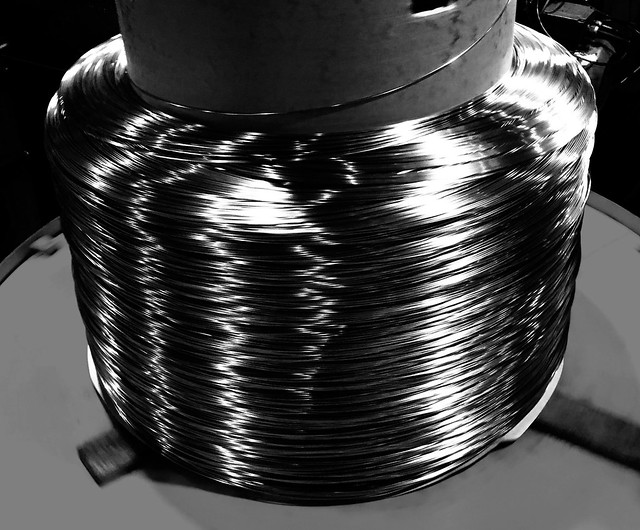
To make high quality spokes, DT Swiss spokes start their lives of drudgery as a massive 700kg wire coil. Each coil can produce approximately 100,000 spokes with DT Swiss turning out around 200 million spokes annually.
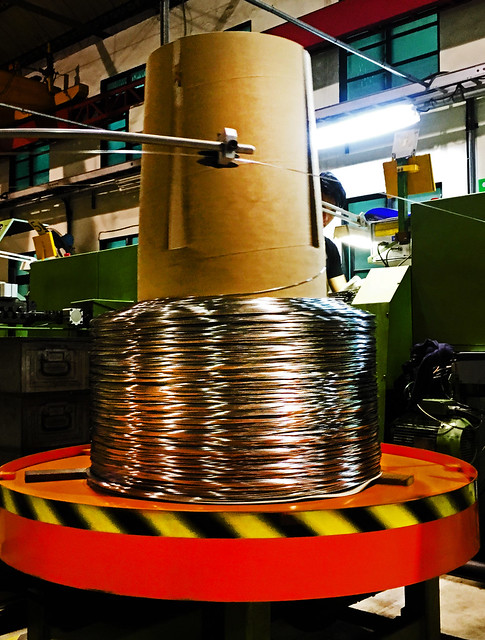
   
Untitled


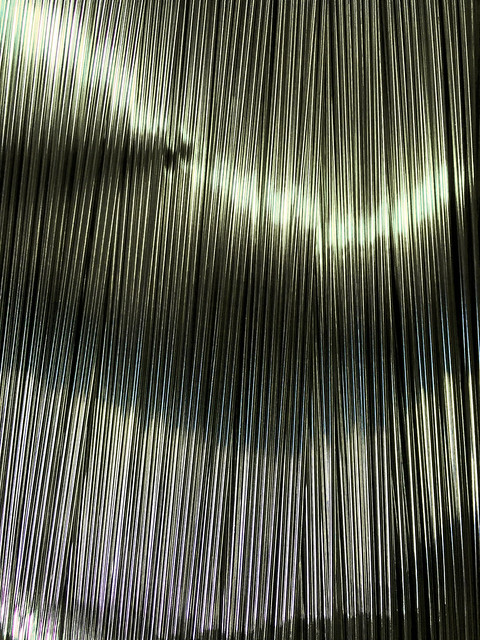
The wire is unspooled and slowly fed through the machinery that straightens the wire while avoiding any stress on the spoke that could compromise its structural integrity.

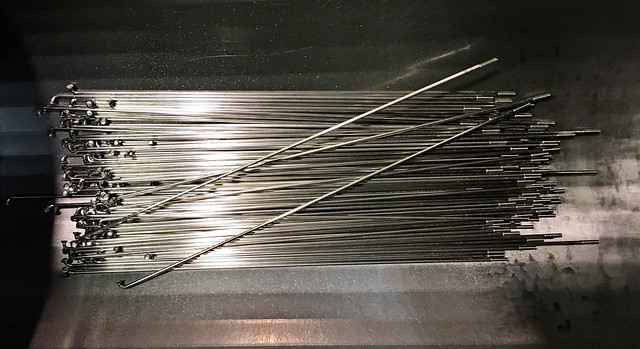
The spokes are cut to length, receive their threads, and J-bend before they are collected in the hopper.
Untitled
Newly Minted Spokes
Untitled

Untitled
Spoke Integrity Check

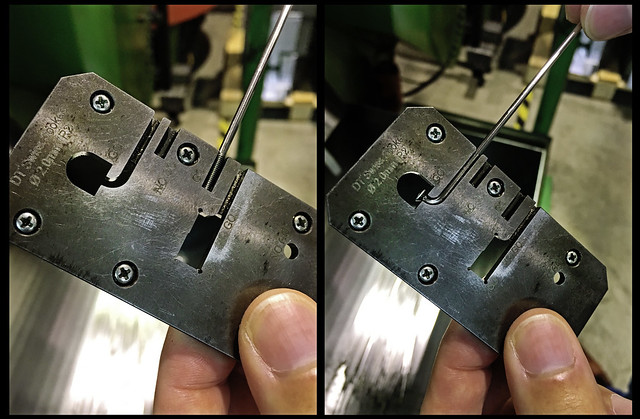
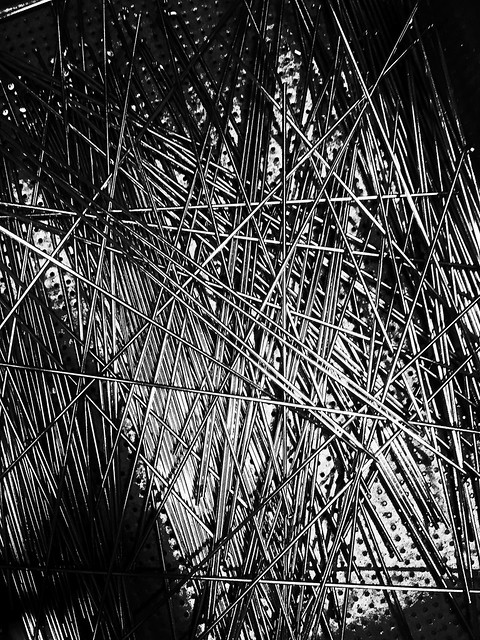
The spokes are inspected for quality in their thread length and in the J-bend with the flange sitting flush. Spokes that do not meet DT Swiss standards are collected and rejected.
Untitled
Rejects

Some DT Swiss butted and bladed spokes, spokes like the Aeorlite, undergo a cold forging process that subjects the spokes to a type of ultrasonic treatment for strength and lightness.

Another highly secretive process that remained hidden from view, behind imposing steel doors-- doors too technologically sensitive to be photographed-- was the process used to "blacken" spokes with a deep coloring process, which, unlike paint, prevents the spoke from discoloring from wear or from contact vibration in cross-spoke patterns.    
Untitled
Overstock

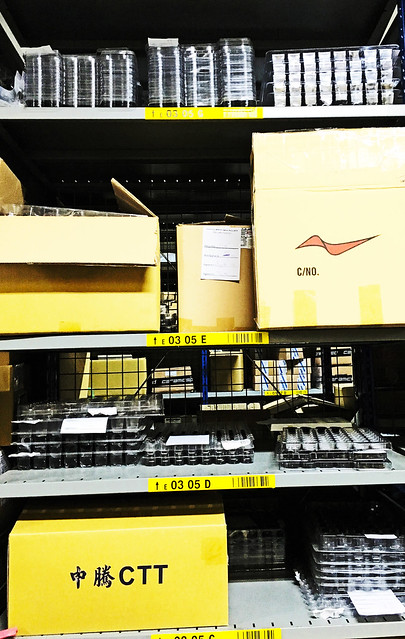
With custom orders, DT Swiss keeps a ready supply in overstock, so that customers can quickly respond to a rush order without having to wait for the machinery to be scheduled for another run. This adds flexibility and keeps production costs down. It is far cheaper to run a few extra units for overstock, than to set up for an entirely new production run.

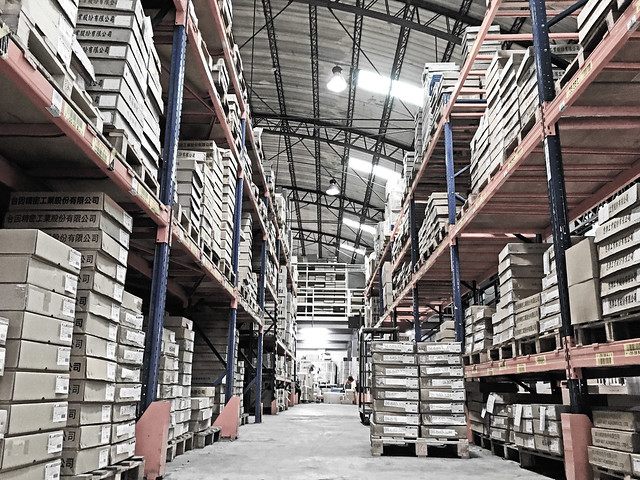
DT Swiss keeps materials and supplies warehoused on site for immediate access. The entire facility seemed compliant with international regulations and guidelines. I recall having to jump through the ISO hoops several years ago to gain certification. Not long after the ISO evaluation succeeded, the procedures and guidelines were replaced with business as usual. I did not see anything at DT Swiss that remotely looked like business as usual.

I left feeling satisfied with the integrity and quality of DT  Swiss products and production methods, and I felt my questions had all been answered in a satisfactory manner. It is only with this in mind that I felt I could, in good conscience, write an extensive, fair and thoughtful review of a wheelset offered by DT Swiss. Once the test period has concluded, Taiwan in Cycles will publish the review in full.

Now I have an excuse to ride the hell out of a set of wheels...like my life depends on it.

Stay tuned for a review of the DT Swiss Dicut RR21 Wheelset.

Many DT Swiss components may get their uncelebrated start within the walls of the nondescript Taichung production facility, but many of these nearly identical parts may lead the most extraordinary of mechanical lives, limited only by a rider's own sense of adventure.     
Untitled
Warehouse

Tuesday, May 5, 2015

A Giant Step Backwards: LA Times Promotes Giant

Untitled

Something is afoot as there seems to be a sudden influx in cycling related news regarding bicycles and Taiwan. And why not? There is something to be sold. 

Tiffany Hsu has a very lengthy piece that made it into the Los Angeles Times detailing Giant as a major shaker in the bicycle industry. Hsu does an admirable job in her reporting as she refrains from annexing Taiwan to China or creating artificial conflict in that regard. The more interesting pieces of the article are the points where Giant CEO, Anthony Lo, speaks his mind and reveals a little bit about Giant, the company's trajectory, and moreover, it sheds a little light on how Giant is writing its own mythology.
Tony Lo says he has the solution for traffic- and smog-choked Los Angeles: Get people to hop on bikes. 
For Lo, it’s a convenient proposal to make. He’s chief executive of Giant Manufacturing Co., a Taiwan-based company with U.S. headquarters in Newbury Park that calls itself the world’s largest bicycle producer by revenue.Such concerns weigh heavily on the small island nation, which is trying to reduce its reliance on fossil fuels as smog drifts across the strait separating Taiwan’s western coast from China.
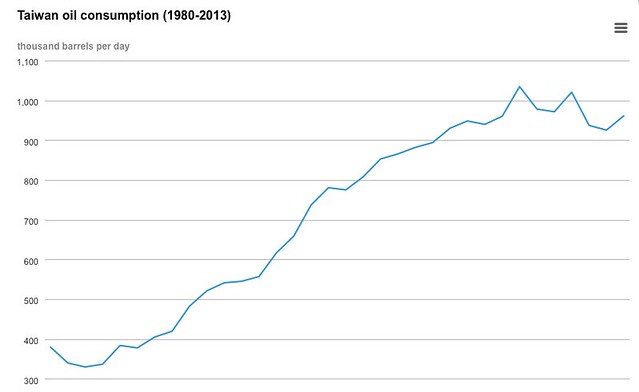
Of course, as I have recently written in an earlier post, it is not entirely accurate to simply blame China for our own air pollution. For much of the year Taiwan's air pollution is the result of domestic polluters and our reliance on coal-fired power plants. Naphtha cracker production is also a major source of airborne pollution as we have seen with the Formosa Plastics foundry in Yunlin, which was recently the focus of a protest against PM2.5 emissions as the topic has gained some political traction. Taiwan continues to rely on the burning of fossil fuels with two recent dips, which correlate to periods of negative economic growth.
Since 1980 In recent years the Taiwanese have embraced cycling culture as never before, Lo told a group of American journalists last week. 
“In the past 10 years, Taiwan has turned from a biking desert into a biking island,” he said at Giant’s original manufacturing and assembly plant in the Dajia District of Taichung City. “If Taiwan can do this under not very favorable conditions, there’s no place where it cannot happen.” 
The number of motorcycles and scooters in the country is declining, he said. Increased demand for bikes allowed Giant to launch a hotel that caters to cyclists, a public bike rental system with more than 5,000 bicycles and a brand dedicated to women called Liv.
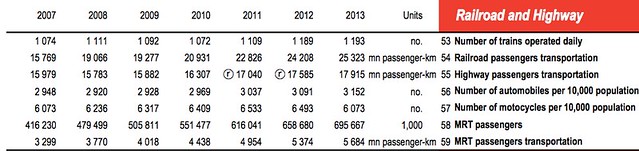
Mr. Lo's assessment is a cynical one at best. According to the government's own statistics (through 2013), while the number of scooter drivers has dropped in recent years to 2007 numbers of 6073 scooters per 10,000 residents, the number of private automobiles has risen to 3152 for every 10,000 residents, an increase of 204 vehicles. The data spanning from 2007 to 2013 shows shows very little change in the reduction of private motor vehicles and, at first glance, appears to follow Taiwan's economic health as opposed to an interest in physical health. The numbers do not include bicycles for transportation, but the real difference seems to be from mass transit, such as trains and MRT systems which respectively saw large increases in ridership with the introduction of more frequent trains an expanded MRT systems. The bicycle is really insignificant in Taiwan's transportation infrastructure.

Auto Stats

Of Course, Tony Lo should know this. Both Lo and Giant's founder and president, King Liu, have close ties to the government as the latter served as a special presidential advisor on transportation and bicycle policy.

This partnership between the corporation and the government has produced little by means of emissions reduction-- the U Bike program being the only meaningful program that is aimed at transportation-- and instead focused largely on the more lucrative side of the business, which is to view the bicycle as a tool for prestige and leisure. I have written multiple times that there is nothing wrong with leisure cycling. It is a great way to exercise and see Taiwan. I would also argue that it does little to reduce emissions as it is simply replacing other activities that also do not produce emissions-- activities such as jogging, badminton and crochet. I might also argue that the focus on leisure cycling could potentially be adding to the very problem Giant claims to be solving. Since leisure cycling does not act to limit an individual's regular carbon emissions associated with necessary transportation it is important to look at Giant's goal of producing and selling more product.

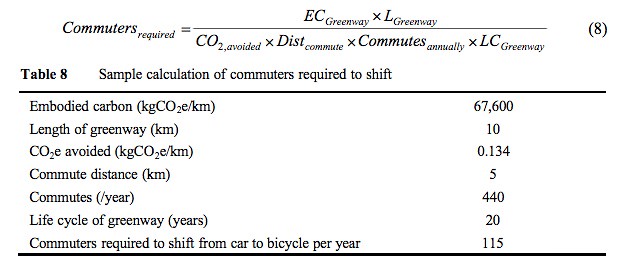
Greenway If we consider the environmental impact of bicycle production, it is far lighter than a car. On the other hand, industrial bicycle production requires sourcing raw materials, energy from fossil fuels, toxins and other emissions. It is important to consider the greater environmental impact of these machines of leisure. As Giant has helped reduce the cost of leisure and recreation bicycles, it has increased the number of carbon fiber frames and components on the roads. Carbon fiber is not a commonly recyclable material and will often end up in a landfill. The longer a bike lasts, the smaller impact it will have. Unfortunately, the bikes Giant wishes to sell are the bikes with the highest profit and the highest rates of turnover.  Giant's recommendation to the government has been to construct more leisure cycling paths. One of the best studies on the topic concludes over the course of the 20 year lifespan of a bicycle path, it would require 115 cyclists 440 commutes per year over 5km to offset the carbon footprint of the cycle path. Of course, this is for commuters in which the cycling is a substitute for other forms of transportation. Read the whole paper HERE.
Giant launched in 1972 making bike parts for companies such as Schwinn Bicycle Co. but introduced its own brand in 1981 after losing orders to China. 
Not long after, Giant and its Taiwanese rivals decided to focus on high-end bikes to distinguish themselves from the cheaper models churned out by Chinese competitors.
I find this section of Hsu's piece very interesting as it almost entirely focuses on the Chairman, Tony Lo, rather than the president and founder, King Liu.

Giant has, at great expense, promoted the story of King Liu to capture the hearts and minds of Taiwanese. I personally enjoy this recent characterisation from Want Want China Times:

I find King Liu a very interesting case, in examining how much of the story was left on the editing room floor.

The King Liu story is built upon the foundations of a Horatio Alger narrative-- scrappy a down-on-his-luck figure overcomes adversity to pull himself up by his bootstraps and realize his ultimate boon.
He began his own business raising eels at the age of 35, but he was brought to the brink of bankruptcy when a typhoon destroyed his eel ponds. 
He subsequently founded Giant in 1972 as a contracted manufacturer of bicycles, where he struggled for three years to keep the new company from collapsing.
Just when he was able to turn his company from running in the red to running in the black, a client whose order accounted for three-fourths of Giant's revenue suddenly stopped working with Liu's company. 
More miseries lied ahead, he says in the book. At the age of 63, Liu was diagnosed with gastric cancer and had to have half of his stomach removed, and then many of Taiwan's bicycle component makers moved overseas, causing Giant to lose nearly all of its suppliers overnight. 
At 73, Liu found himself plagued with sleep apnea, blood clots, and a slipped disc. Despite the obstacles, he decided it was time to ride around Taiwan on his own Giant bicycle in defiance of the opposition of every one of his family members and friends.
In many ways this is the Taiwanese monomyth that resonates throughout Taiwanese culture. As the locus of multiple colonization projects, Taiwan's social, economic and political structures have been forced to adapt to changing realities. Taiwanese have a history of pragmatic change and adaptation. The unfolding narrative is one of survivors. An examination of Taiwanese popular music and literature is full of fantastic tales of the wandering man who leaves home to make his fortune, only to return home or to dream of returning to his hometown. Songs such as, 離開故鄉來流浪, 舊皮箱的流浪兒 and 出外人 are classic examples of the popular image of the wandering man.

The myth of King Liu is, in my opinion, deliberate in this type of imagery to appeal to an existing sense of local pride. The moniker "Bicycle Kingdom" that is often used in fawning print articles is a cute reference to King Liu. 

What Giant seems to ignore in the mythologizing of King Liu, was the mighty hand of the KMT party-state and the role of the Lo family in Giant's success.

By the mid 1960's Taiwan was entering unfamiliar territory. As a sojourn state, the prospects of American aid in "retaking the mainland" were quite dim. Taiwan was under strict martial law with an strong state controlled economy (price restrictions, monopolies and tariffs). Taiwan had been protected from world economic fluctuations due to artificial government stimulation, few foreign investments and the infusion of American aid. (See Gold;1986)

Under pressure from the United States, Taiwan embarked on economic reforms that stemmed from multiple state directed plans to use Kuomintang funds to spur investment and economic growth in the private sector. As the term "private enterprise" tended to euphemistically mean "owned by local Taiwanese", the state hoped to curtail opposition. These SMEs became subcontractors for Japanese manufacturers in an export economy. Taiwanese' close ties to Japan made the arrangement a smooth transition. By 1972, the KMT party state searched for a new 6 year plan and investments to boost the economy. This is the time of King Liu's misfortune with eels. He essentially was given a KMT backed loan to switch from the local economy to the export economy. There is speculation that Tony Lo's "mainlander" background may have served as a buffer or guarantee for the fledgling bike manufacturer and its state patron. I am curious if Lo will be stepping up to replace Liu as the "Visionary Giant". 
About 2,000 people work in Giant's Taichung complex. Roughly 20% of them hail from Vietnam and Thailand and are housed in dormitories. 
Like many other major economies, Taiwan is facing a disconnect between employers and the workforce. Many companies have positions to fill but can’t find the needed applicants locally. 
“We don’t have enough labor in Taiwan,” Lo said. “Young people don’t want to go into manufacturing.”
I find the quote above to be quite interesting. In Taiwan we often see tycoons and wealthy politicians lament the "laziness" of young Taiwanese. In one recent Want Want China Times article: 

Pan Wei-kang, a lawmaker from Taiwan's ruling Kuomintang, says members of the country's younger generation lack ambition and have lost competitiveness compared to their contemporaries in mainland China and the Philippines, writes our Chinese-language sister paper Want Daily.  
Pan said young people in Taiwan are generally well educated but many of them are unwilling to face reality. Many college graduates fail to find jobs and continue to depend on their parents financially or go on to graduate study or take part in working holiday visa programs to defer joining the workforce, the lawmaker said. 
These sentiments were often hurled at the students who came out in force to support the Sunflower Movement and are, in general, feeling ever marginalized in Taiwan.

The anthropologist, Anru Lee, in her excellent work on labor in Taiwan In The Name of Harmony and Prosperity: Labor, Gender and Politics in Taiwan's Economic Restructuring, writes:


AnruLee

The myth that Taiwanese young people are spoiled and lazy is false. Young Taiwanese with college degrees take low starting salaries. Last year, Terry Gou, another famous tycoon based in Taiwan, insisted the young people of Taiwan were spoiled and that a reasonable starting salary for a college graduate at the technology colossus, Foxconn, should make NT22,000 per month (roughly USD$729). Many Taiwanese are pressured into working massive amounts of unpaid overtime. Many foreign workers make just over NT15000 per month. 

I was recently privy to both an applicant and potential employer's negotiation. The applicant has 10 years of experience as a buyer. She had been a stay-home mom for two years and was hoping to go back to work. She demanded NT26,000 per month. The potential employer would edge no higher than NT24,000. 

When we consider the problem of unaffordable housing from the current housing bubble, where the rich have saturated the housing market for safe investments, the rising cost of utilities, young people can not afford to work for Giant. 

Meanwhile....

Tony Lo is in China helping to shift the leading role of the Asian bicycle industry to a China based organization that will likely promote industry centered growth for whatever is best for the few at the very top of the food chain. 


Lee, Anru. 2004. In the Name of Harmony and Prosperity: Labor and Gender Politics in Taiwan's Economic Restructuring. New York, State University of New York Pres. 

 Gold, Thomas B. 1986. State and Society in the Taiwan Miracle. New York, M.E. Sharpe, Inc. ISBN 0-87332-399-8

Sunday, December 28, 2014

New York Times is Cycling Taiwan: You Pay What You Get For...


Biking over Wuling

A couple Taiwan cycling related stories have been worming their way through the social media this week.

The first is a beautifully integrated info-tisement, of the kind that are becoming irritatingly common these days, as trusted sources of information have been desperate for content and started pimping for private businesses (CNN anyone?). The quid-pro-quo of content for cash is nothing new, but it is becoming even more prevalent in the internet age.

The article comes from the Grey Lady herself in the In Transit blog by Diane Daniel and briefly touts a bicycle tour of Taiwan.

To be more specific, the blog uses its space to promote one bicycle tour of Taiwan from a company called Bicycle Adventures located not far from where I grew up.

You can always tell when something is amiss when an article about cycling in Taiwan includes one of two things: a) a reference to the Taiwan Tourism Bureau, and b) a reference to the mythological founding of Taiwan cycling by Giant's King Liu... "who having descended from on high in gleaming raiments, astride a snorting white stallion, thrust Tony Lo's gleaming bald head into the sands of the Tajia River and said, let there be cycling... and there was cycling."-- Book of Giant 3:13.

This article has both.

The price of the tour is a whopping USD $3945, which is pretty steep by any standard and Taiwan is in no way ready to command this type of cash for an experience that can be had for much less and more fun with some free information, such as the information provided on this blog and others, and a map. Taiwan is safe and relatively easy country to explore, even without any command of Mandarin what so ever as evidenced by decades of McGill University grads who wash through each year.

Upon reading the entire article and browsing the company's itinerary, I was struck by a couple of things.

The NYT says:
While traversing the island’s five mountain ranges, riders visit two national parks in near-rain-forest settings of up to 8,000 feet. One of the biggest challenges will be an uphill ride in the Taroko Gorge, a 65-mile climb that features stunning scenery, traditional villages and several tunnel passages.

At first I thought this was one baddass trip... imagining Alishan, Lugu, Wuling, Baling.... all the great climbs in one ride. In reality, the majority of climbing is done on a single trip up to Dayuling, and back to Taroko. The trip never even touches the western side of Taiwan, where there are some incredible and tour-worthy routes.

The other piece of information that caught my eye, and probably the most damning, is the bikes used in the tour will be rentals (probably from Giant).

If you have the means to spring for such an expensive vacation, for godsakes, bring your own bike... a bike you know intimately. Nothing could be worse that negotiating a landscape on an entirely unfamiliar machine that may or may not be sized and geared to fit the rider.

Lastly, the tour seeks to guide visitors to "Cultural stops". With an informed guide with local knowledge, cultural stops are at every stop. Here we see selected museums and tourist centered locations. It is common practice in Taiwan for tour guides to establish a patronage network with hotels, markets and trinket dealers. It seems here, the Taiwan Tourism Bureau has gotten in on the action.

This brings me to a much greater and more philosophical problem that is not directly related to this article, but to the general problem of the current Taiwan Tourism Bureau in general.

The Taiwan Tourism Bureau is greatly influenced by partisan politics. Over the past 30 years we have seen a protracted struggle for the official representation of Taiwan, both internally and externally. The current administration has been completely tone deaf to the actual identities of Taiwanese citizens and has veered far from the Taiwan centered viewpoint that had been adopted (often poorly) under the Chen administration to more closely identify with the views of the higher echelons of the Chinese Nationalist Party, which has maintained an often pejorative view of Taiwan as a mere degraded periphery of a great China.

This cleavage between views influences how Taiwan is represented internationally and locally... from culture and history, to the portrayal of Taiwan's very diverse population of overlapping ethnicities.

I fail to see how the Taiwan Tourism Bureau can best represent for consumption, the amazing strata of Taiwanese life.... when it is continuously informed by an ideological stance that positions Taiwan far, far from the center, in an area that is steeped in the ethnic chauvinism of the Chinese nationalist world view.

_________________________________________________

Bottoms Up!

Taiwan makes the news for fining drunk cyclists.

The beer and the bicycle have long been an item in the gossip pages of cycling magazines. There are numerous products on the market that integrate the two hobbies. Some frames even come with bottle openers welded to the tubing.

Should we drink and ride? Probably not. Maybe... oh heck, I dunno....

I really don't think I am the right person to write about this.

This somehow reminds me that there are some really great beers coming into Taiwan.

My favorite beers from the Elysian Brewery are now on sale all over the place.  The No.1 from Taiwan's 23 Brewing Company is pretty good for us North Westerners who like hoppy beers. Jolly's Thai Restaurant and Brewery has some nice beers... I think they have food too, but I don't recall. And how can anyone refuse the new beer from Chthonic?

Ummmm... don't drink and ride?! Stay in school.